You Feel Colder As You Age: The Science Reason Why
Older people report feeling colder, enough that it is clearly happening, but why has been a mystery. Until now.
Older people report feeling colder, enough that it is clearly happening, but why has been a mystery. Until now.


Plants can undergo the same extreme 'chromosome shattering' seen in some human cancers and developmental syndromes, UC Davis researchers have found. Chromosome shattering, or 'chromothripsis,' has until now only been seen in animal cells.
The process could be applied in plant breeding as a way to create haploid plants with genetic material from only one parent, said Ek Han Tan, a postdoctoral researcher in the UC Davis Department of Plant Biology and first author on the paper. Although plants don't get cancer, it might also allow cancer researchers to use the laboratory plant Arabidopsis as a model to study chromosome behavior in cancer.
A new study demonstrates that the atypical trajectory of cortical/brain development in autism spectrum disorder (ASD) extends well beyond young childhood and into late adolescence and young adulthood.
A considerable amount of work has focused on early structural brain development in ASD utilizing magnetic resonance imaging (MRI). This body of work has revealed evidence for brain overgrowth during the early postnatal years that appears largely absent later in development in ASD. Although several studies of cortical brain structure in adolescence and young adulthood in ASD have been completed, the vast majority has utilized cross-sectional (i.e., one point in time) designs.

Over geologic time, the work of rain and other processes that chemically dissolve rocks into constituent molecules that wash out to sea can diminish mountains and reshape continents.
Scientists are interested in the rates of these chemical weathering processes because they have big implications for the planet's carbon cycle, which shuttles carbon dioxide between land, sea, and air and influences global temperatures.
A new study, published online on June 8 in the journal Nature Geoscience, by a team of scientists from Stanford and Germany's GFZ Research Center for Geosciences reveals that, contrary to expectations, weathering rates over the past 2 million years do not appear to have varied significantly between glacial and interglacial periods.
Gaze following to distant space has been documented in many species such as primates, domesticated goats, several bird species, dolphins, fur seals, the red-footed tortoise and wolves. Gaze following is therefore a basic response found in many taxa. Dogs may present a special case as we find evidence that they are able to follow human gaze to objects such as food or toys, but not for the comparatively simpler task of following gaze into distant space.
Extremely poor vision can be caused by strabismus in early childhood or by a displaced optical axis.
Amblyopia is caused not by organic damage to the eyes but by the brain incorrectly fitting together the images the eyes provide. As a result, the ability to see an object in sharp focus is severely limited. This occurs in more than one in 20 of the German population, as Heike M. Elflein et al. show in a recent original article in Deutsches Ärzteblatt International (Dtsch Arztebl Int 2015; 112(19): 338-44).
The authors' study analyzed the visual acuity of over 3200 individuals aged between 35 and 44 years and determined the frequency and causes of amblyopia.
The advent of online social networks has led to the rapid development of tools for understanding the interactions between members of the network, their activity, the connections, the hubs and nodes. Science 2.0 was founded with that as one of its four pillars. But any relationship between lots of entities, be it users of Facebook or the genes and proteins in our bodies, can be analyzed with the same tools.
Now a paper shows how social network analysis can be used to understand and identify the biomarkers in our bodies for diseases, including different types of cancer.
Housing improvements could reduce malaria cases by half in some settings, according to research published in the open access Malaria Journal.
As mosquitoes become resistant to insecticides and malaria parasites become resistant to drugs, researchers looked at how making changes to houses might contribute to tackling the deadly disease.
Researchers reviewed 90 studies in Africa, Asia and South America comparing malaria cases in traditional houses (mud, stone, bamboo or wood walls; thatched, mud or wood roofs; earth or wood floors) and modern houses (closed eaves, ceilings, screened doors and windows).
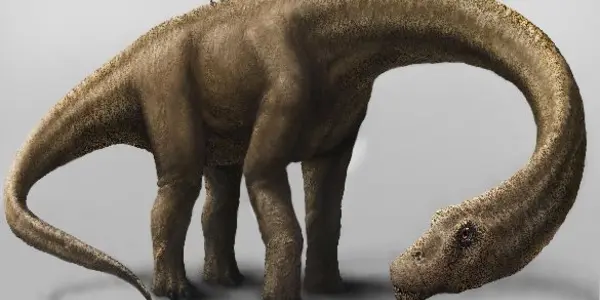
Scientists at the University of Liverpool have shown that the most complete giant sauropod dinosaur, Dreadnoughtus, discovered by palaeontologists in South America in 2014, was not as large as previously thought.
Found in Patagonia, the huge fossil had almost all of the major bones intact, allowing scientists to confidently estimate its overall size - measuring in at 26 meters long. Preserved in rock, it is thought that the animal was close to maturity but not fully grown when it died, and may have grown to be even larger. The long-necked, plant-eating dinosaur was the biggest to ever walk the earth.
A research group has developed an assay whereby cultured human breast epithelial cells rebuild the three-dimensional tissue architecture of the mammary gland.
A transparent gel is used in which cells divide and spread, similar to the developing mammary gland during puberty. Specifically, cells divide and generate hollow ducts that form a network of branches and terminate in grape-like structures. Throughout the reproductive lifespan of a woman, the mammary gland is constantly remodeled and renewed in order to guarantee milk production even after multiple pregnancies.
A variety of factors including questions about risk and reluctance to offend patients limits clinician willingness to prescribe a potentially life-saving medication that counteracts the effects of an opioid overdose, according to a Kaiser Permanente Colorado study published today in the Journal of General Internal Medicine.
The number of fatal overdoses from opioid medications has quadrupled in the U.S. since 1999. According to the Centers for Disease Control and Prevention (CDC), each day 44 people die of prescription painkiller overdoses. In the event of an overdose, opioids depress respiration until breathing stops. The drug naloxone reverses these effects on the body and can be life-saving.
Researchers have discovered that a rabbit virus can deliver a one-two punch, killing some kinds of cancer cells while eliminating a common and dangerous complication of bone marrow transplants. For patients with blood cancers such as leukemia and multiple myeloma, a bone marrow transplant can be both curative and perilous. It replenishes marrow lost to disease or chemotherapy but raises the risk that newly transplanted white blood cells will attack the recipient's body.
Now researchers say the myxoma virus, found in rabbits, can do double duty, quelling the unwanted side effects of a bone marrow transplant and destroying cancer cells.
New research has revealed that parasitic 'vampire' plants that attach onto and derive nutrients from another living plant may benefit the abundance and diversity of surrounding vegetation and animal life.
By altering the densities of the hemiparasite (a parasitic plant that also photosynthesises) Rhinanthus minor, in the Castle Hill National Nature Reserve in Sussex, ecologists from the Universities of York, Sussex and Lincoln were able to assess the impacts of the 'vampire' plants on the biodiversity of a species-rich semi-natural grassland. The scientists compared the plant and invertebrate communities in areas where R. minor was removed, left at natural densities, or increased in abundance.