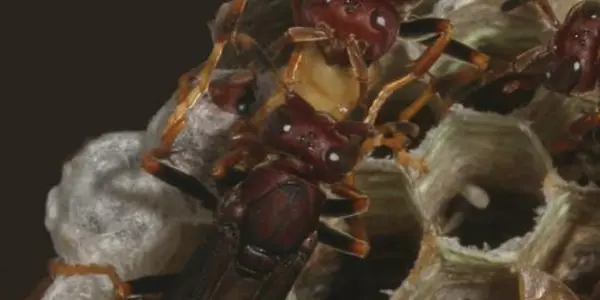
You Feel Colder As You Age: The Science Reason Why
Older people report feeling colder, enough that it is clearly happening, but why has been a mystery. Until now.
Older people report feeling colder, enough that it is clearly happening, but why has been a mystery. Until now.


If you want cheap medicine, Canadian taxpayers make it possible to get a great deal, but when it comes to new medicines, Canada is behind similar countries, according to a new report which ranks it 16th out of 18 comparable OECD countries. Only 23% of 141 Health Canada-approved new medicines were included in public plans, ranking Canada 17 out of 18 there. Public drug plans in Canada make new medicines available only on a conditional, case-by-case basis, resulting in more administration, longer wait times for patients before beginning treatment, increased paperwork for physicians and no guarantee that patients will receive coverage.The report further notes that:

A remote galaxy shining with infrared light equal to more than 300,000,000,000,000 suns has been discovered using data from NASA's Wide-field Infrared Survey Explorer (WISE. The galaxy, belongs to a new class of objects nicknamed extremely luminous infrared galaxies, or ELIRGs.The galaxy, known as WISE J224607.57-052635.0, may have a behemoth black hole at its belly, gorging itself on gas, but is certainly the most luminous discovered to-date.Supermassive black holes grow by drawing gas and matter into a disk around them. The disk heats up to beyond-sizzling temperatures of millions of degrees, blasting out high-energy, visible, ultraviolet, and X-ray light. The light is blocked by surrounding cocoons of dust. As the dust heats up, it radiates infrared light.
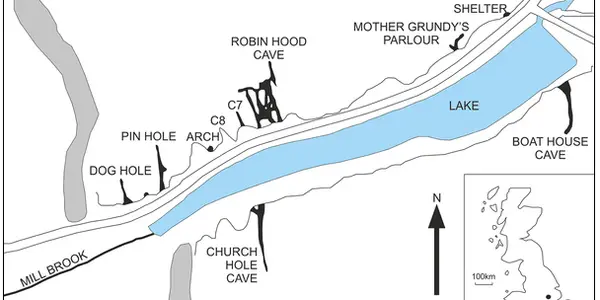
A new analysis of Ice Age birds has revealed that many of the birds were larger - despite what is commonly believed, the authors say it reflects the richness and greater productivity of the environment in the Ice Age.They picture an unusual mix of birds in one space, the Middle Palaeolithic (Marine Oxygen Isotope Stage 3) deposits of Pin Hole, Creswell Crags, Derbyshire in England, and a distinct Neanderthal Dawn Chorus.
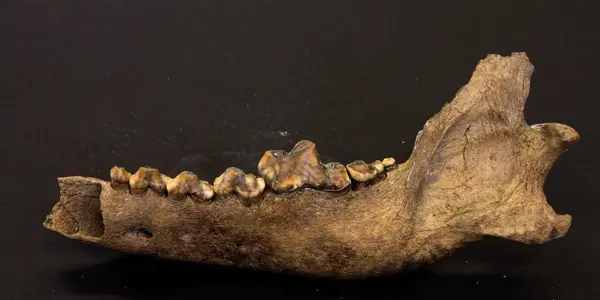
A new genomic analysis of an ancient Taimyr wolf bone reveals that dogs and humans may have been a match far longer than previously believed. Earlier genome-based estimates have suggested that the ancestors of modern-day dogs diverged from wolves no more than 16,000 years ago, after the last Ice Age, but new 35,000 year-old radiocarbon dating shows the Taimyr wolf represents the most recent common ancestor of modern wolves and dogs.
Measles needs only a two-dose vaccine during childhood for lifelong immunity while the influenza virus mutates constantly and requires a yearly shot to get even a certain percentage of protection. What explains that? Surface proteins that the measles virus uses to enter cells are ineffective if they suffer any mutation, meaning that any changes to the virus come at a major cost, according to a new paper.
239 representatives from Finnish small and medium-sized businesses responded to new survey by the Lappeenranta University of Technology about external and internal obstacles for productivity improvement experienced by companies. The results of the survey reveal that there have been three shifts in the key obstacles that have restrained the improvement of productivity since 1997:(1) Obstacles to the improvement of productivity have shifted from internal to external obstacles. It is no longer competition from outside or navigating market forces, it is high wages and ancillary costs, like social security and taxes, legislation, and trade union activities by employees.
Mathematical biologist Dr. Jamie Wood wanted to know how birds collectively negotiate man-made obstacles such as wind turbines which lie in their flight paths and that led to a research project with colleagues in the Departments of Biology and Mathematics at York and scientists at the Animal and Plant Health Agency which found that the social structure of groups of migratory birds may have a significant effect on their vulnerability to avoid collisions with obstacles, particularly wind turbines.The researchers created a range of computer simulations to explore if social hierarchies are beneficial to navigation, and how collision risk is affected by environmental conditions and the birds’ desire to maintain an efficient direct flight path.
More than 500,000 people in the United States die each year of cancer-related causes and a new study has identified the mechanism behind one of the most common mutations that help cancer cells replicate limitlessly.
Approximately 85 percent of cancer cells obtain their limitless replicative potential through the reactivation of a specific protein called telomerase (TERT). Recent cancer research has shown that highly recurrent mutations in the promoter of the TERT gene are the most common genetic mutations in many cancers, including adult glioblastoma and hepatocellular carcinoma.
A recent study from the World Health
Organization (WHO)
A study presented at the European Congress of Endocrinology in Dublin suggests that some men suffering from testosterone deficiency may be missed under current clinical guidelines, while others are misdiagnosed with testosterone deficiency.

Anna Reusch, a doctoral student at ETH Zurich's Geological Institute, was making a routine research vessel run on Lake Neuchâtel when she noticed an unusual shape on the control panel screen.
At a depth of over 100 mettrs, she found something no one had ever detected before: a crater measuring 10 meters deep and 160 meters in diameter.
Reusch investigates the sediment in the lakes on the western Swiss Plateau for traces of past earthquakes, which involves taking high-resolution measurements of the floor of Lake Neuchâtel to find evidence of tectonically active zones that could trigger major earthquakes. The period Reusch is looking at is geologically speaking very recent: sometime in the past 12,000 years.
The U.S. Centers for Disease Control and Prevention estimates that drug-resistant bacteria sicken two million U.S. residents annually and cause about 23,000 deaths. Federal officials have called combating antibiotic resistance a national priority. To aid in that effort, a second-generation antibiotic has shown early effectiveness against common bacterial infections that pose a serious health threat to children and adults. Researchers discovered it by changing the chemical structure of an old antibiotic named spectinomycin, a safe but weak drug first introduced in the 1960s.