Kids Helping Kids Is Universal - But Cultures Help Differently
A simple game reveals a universal instinct in kids
A simple game reveals a universal instinct in kids


75 marine scientists have sent a letter to President Obama scolding the administration for its policies on seismic airgun blasting in the Atlantic Ocean,

New York City professes to be tolerant, diverse and outcome-oriented in many ways - education for elites is not among them. 6 percent of 8th graders will get to go to one of 8 specialized elite schools, based on test scores and all of the racial, social and income inequality that perpetuates.

Modern smartphones are wonderful devices - they let us check email we won't reply to until we get to a desktop, they take pictures and sometimes they even make a poor quality phone call. But that convenience comes with a price: it is easy to avoid thinking for ourselves, was a caution. And it is warranted, finds a paper in Computers in Human Behavior, which suggests that smartphone users who are intuitive thinkers, more prone to relying on gut feelings and instincts when making decisions, frequently use their device's search engine rather than their own brainpower.

People with diabetes are more prone to anxiety and depression than those with other chronic diseases that require similar levels of management. The reasons for this aren't well understood, but Joslin Diabetes Center researchers have discovered one potential explanation.
Genetically modifying mice to make their brains resistant to insulin, the Joslin scientists first found that the animals exhibited behaviors that suggest anxiety and depression, and then pinpointed a mechanism that lowers levels of the key neurotransmitter dopamine in areas of the brain associated with those conditions.
Here's the rub with friction -- scientists don't really know how it works. Sure, humans have been harnessing the power of friction since rubbing two sticks together to build the first fire, but the physics of friction remains largely in the dark.
In a new paper in Nature Materials, Brandeis University professor Zvonomir Dogic and his lab explored friction at the microscopic level. They discovered that the force generating friction is much stronger than previously thought. The discovery is an important step toward understanding the physics of the cellular and molecular world and designing the next generation of microscopic and nanotechnologies.
The research was conducted as part of the Brandeis University Materials Research Science and Engineering Center.
In a study of 2,609 patients from a pediatric intensive care unit in a children's hospital in Spain, investigators found that more boys than girls were admitted (57.5% vs. 42.5%) but death rates were higher in girls (4.9% vs. 3.3%).
Girls died from a broader range of causes while boys died most often from respiratory and polytraumatic injuries, which could reflect an increased likelihood to engage in risky activities or behave more carelessly, the authors conclude.
"The unexpected female vulnerability that we have found could be partly explained by differences in age and occurrence of nosocomial infection," said Dr. Maria Esther Esteban, senior author of the American Journal of Human Biology study. "This should be explored in future research."
A small experiment has found that people are quicker to categorize a face as being male when it is shown to the left side of the brain. The conclusion was drawn from an analysis of responses from 42 volunteers who were asked to focus on a cross in the center of a computer screen. They were then shown faces, which were morphed from 100 percent male to 100 percent female across 280 trials, and were asked to categorize the faces as either female or male as quickly as possible. When an image was presented to the left side of the brain, it was generally considered more male, even though it was correctly perceived as more female when presented to the right side of the brain.
A new study shows that alcohol consumption of individuals appears to increase with the number of friends in their drinking group.
Most alcohol use among young people occurs in a social context, and peer substance use has long been established as an important predictor of alcohol and other substance use among youngsters. Past research suggests that the mere presence of others seems to have an effect on drinking behaviour, but most of those studies relied on data gathered from experiments performed in artificial laboratory settings or from surveys conducted after drinking sessions have ended, which are notoriously inaccurate.
A recent study found that people without three risk factors by age 45 were diagnosed with heart failure 11 to 13 years later, on average, than people who had those risk factors.Heart failure, a chronic condition in which the heart cannot pump enough blood to meet the body's needs, can be pushed off by not developing obesity, hypertension and diabetes, the researchers found. People who had only one or two of the risk factors, but not all three, developed heart failure an average of three to 11 years earlier than people with none of the risk factors.
Two recent studies failed to find a connection between testosterone therapy in men and heart problems, contradicting claims that prompted the U.S. Food and Drug Administration to investigate its safety. The new studies include a meta-analysis of data from 29 studies involving more than 120,000 men and an observational study from a Wisconsin health system. Since people who are anti-science always assume researchers are for sale if the conclusion is not criticizing medicine, it is noted early on that neither study had any industry funding.

Gene expression, the process by which our DNA provides the recipe used to direct the synthesis of proteins and other molecules, is how we develop and survive.To-date, science has made breathtaking progress, studying one single gene at a time, but a new approach developed by Harvard geneticist George Church, Ph.D., can help uncover how tandem gene circuits dictate life processes, such as the healthy development of tissue or the triggering of a particular disease, and can also be used for directing precision stem cell differentiation for regenerative medicine and growing organ transplants.
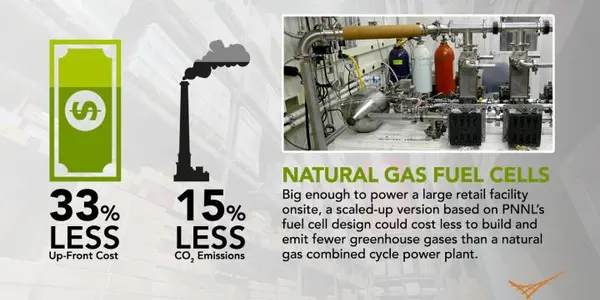
Walmart, Costco and other 'big box stores' or facilities like hospitals could use a fuel cell that runs off the natural gas that already flows in pipelines below city streets and eliminate the electricity 'middle man', which is good for the environment. Instead of drawing electricity from the power grid, that often ends up being converted from coal, natural gas or nuclear power, facilities could instead go direct and use natural gas-powered solid oxide fuel cells. It would lower their electric costs, increase power reliability and reduce greenhouse gas emissions, according to a cost-benefit analysis.