Kids Helping Kids Is Universal - But Cultures Help Differently
A simple game reveals a universal instinct in kids
A simple game reveals a universal instinct in kids


How people perceive and taste alcohol depends on genetic factors, and that influences whether they "like" and consume alcoholic beverages, according to a nutritionist
and colleagues at Penn State's College of Agricultural Sciences.
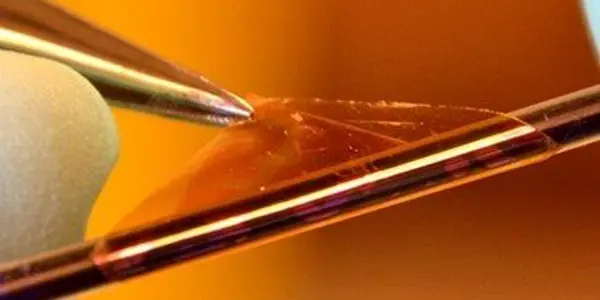
The iPhone 6 is apparently flexible, though that's a not a good thing; people are warping them when they sit down, and people without abnormal strength can simply twist them in their hands.
But that won't always be a design and construction defect. As tech company LG demonstrated this summer with the unveiling of its 18-inch flexible screen, the next generation of roll-up displays is tantalizingly close.
While it is well-known that Americans conserve electricity more than, for example, Canadians, and that CO2 emissions from energy productions have plummeted to 20 year lows without raising prices, an environmental group and scholars from UC Irvine and Stanford University are saying that won't last - they believe that unless people can't afford electricity generated by fossil fuels, expansion of cleaner energy sources, such as wind and solar, will be harmed.
Bereft of expensive subsidies and mandates, solar is not ready and wind never will be. Solar clearly needs more basic research and natural gas, long touted by environmental groups, seems to be the ideal bridge for Americans, since lobbyists for environmental groups make sure nuclear is kept out of circulation.
Researchers have developed two new anticancer peptide vaccines and two peptide inhibitors as part of a larger peptide immunotherapy effort, according to two studies published in OncoImmunology.
Researchers from at The Ohio State University Comprehensive Cancer Center identify new peptide vaccines and inhibitors that target the HER-3 and IGF-1R receptors. All four agents elicited significant anti-tumor responses in human cancer cell lines and in animal models.

Natural gas hydraulic fracturing - fracking - has been wonderful for CO2 emissions while keeping energy costs for poor people manageable but a few sites have been treating fracking wastewater and returning it to rivers.
A new study finds that this is just as risky as dumping any municipal treated wastewater back into rivers. As runoff, it is safe but it shouldn't be done in volume. In the case of fracking wastewater, existing facilities are not equipped to thoroughly deal with halides so until they are ready, it's simply better to use fracking wastewater for fracking.
A new study by researchers found that the majority of players were able to return to play after having knee surgery to repair an anterior cruciate ligament (ACL) injury.
But age matters. athletes who had ACL surgery when they were in high school or younger were much more likely to suffer repeat ACL reinjuries than athletes who experienced their first ACL injury during collegiate play.
A key indicator of how successfully one species of monkey will breed can be determined by skin color, a new study has shown. Skin coloration in male and female rhesus macaques is an inherited quality – the first example of heritability for a sexually-selected trait to be described in any mammal.
The team collected more than 250 facial images of free-ranging rhesus macaques, which are native to South, Central and Southeast Asia and which display red skin coloring around the face, as well as the genital and hind-quarter areas.

So much for patriarchy. When it comes to evolution, female populations have always been larger than male populations throughout human history, according to a new study in Investigative Genetics which used paternal genetic information to analyse the demographic history of males and females in worldwide populations.
Diabetes doubled in the U.S. from 1990 to 2008 and while it remains high, new data suggest at least it isn't continuing to rise across the board. Rates among adults from 2008 and 2012 for adults leveled among whites, though it continued to increase in Hispanic and black adults, according to a study in JAMA.
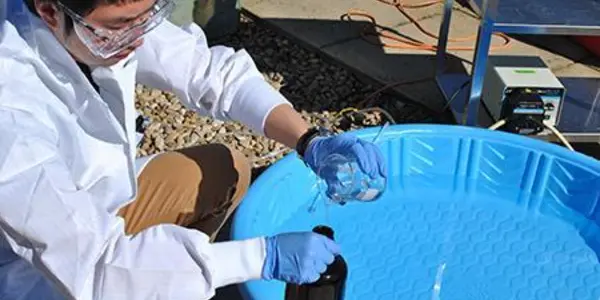
Civil engineering scholars have created a method that uses solar energy to accelerate pond reclamation efforts by industry and that means cleaning up oil sands tailings could be a lot greener.
Instead of using UV lamps as a light source to treat oil sands process affected water (OSPW) retained in tailings ponds, University of Alberta
professors Mohamed Gamal El-Din and James Bolton have found that using the sunlight as a renewable energy source treats the wastewater just as efficiently but at a much lower cost.
Oilsands tailings ponds contain a mixture of suspended solids, salts, and other dissolvable compounds like benzene, acids, and hydrocarbons. Typically, these tailings ponds take 20 plus years before they can be reclaimed.
Man has domesticated animals for almost long as man has domesticated crops. In both cases, humans have engaged in genetic modification, selecting the best traits possible.
Because of that legacy, livestock such as sheep offer an intriguing way to examine adaptation to climate change, with a genetic legacy of centuries of selected breeding and a wealth of livestock genome-wide data available.
In a first-of-its kind study that combined molecular and environmental data, professor Meng-Hua Li et al., performed a search for genes under environmental selection from domesticated sheep breeds.
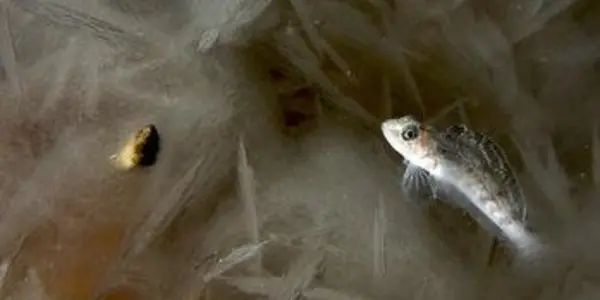
Five families of notothenioid fish inhabit the Southern Ocean, the frigid sea that encircles Antarctica, manufacture their own "antifreeze" proteins to survive.
Their ability to live in the icy seawater is so extraordinary that they make up more than 90 percent of the fish biomass of the region.
They also suffer an unfortunate side effect: The protein-bound ice crystals that accumulate inside their bodies resist melting even when temperatures warm.