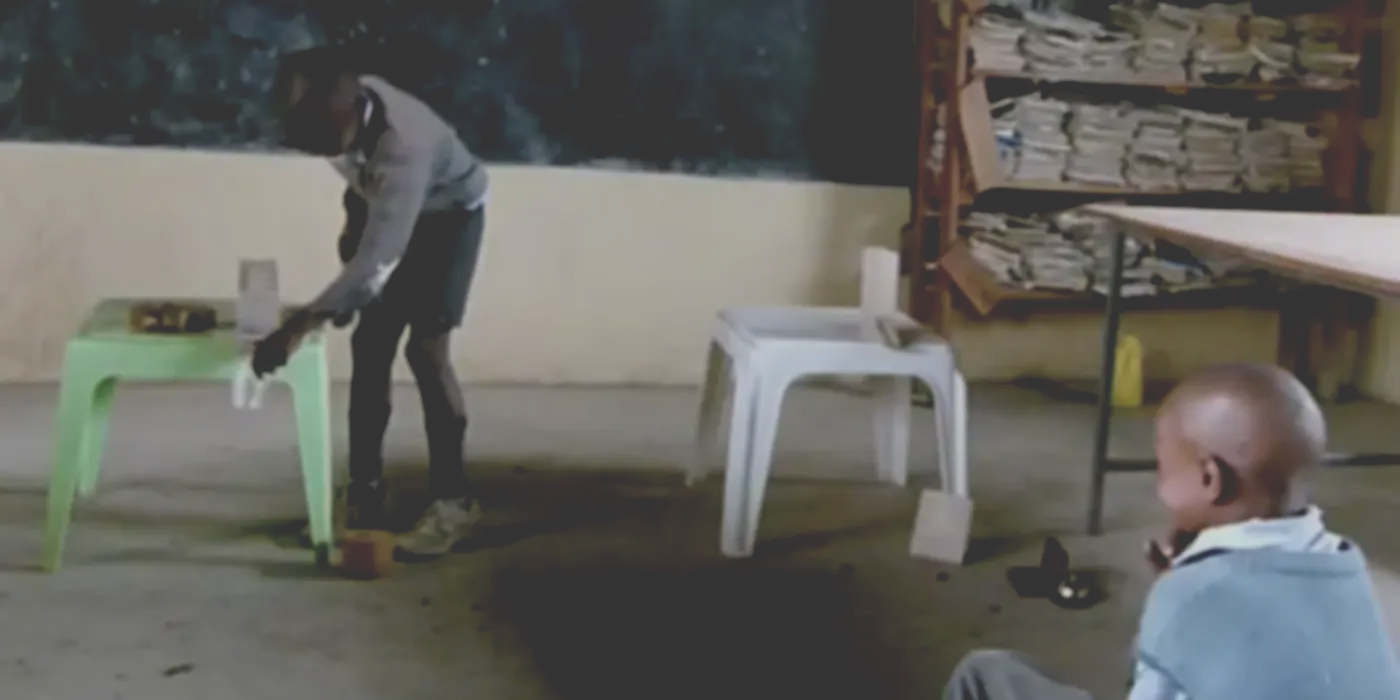
Kids Helping Kids Is Universal - But Cultures Help Differently
A simple game reveals a universal instinct in kids
A simple game reveals a universal instinct in kids

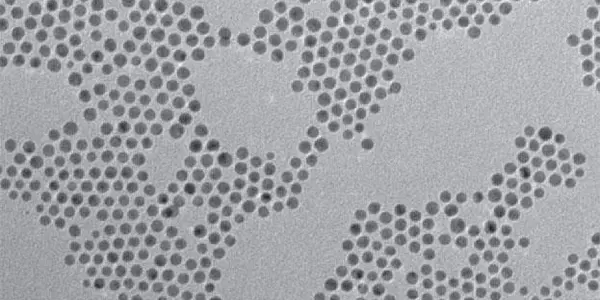
The appeal of artificial photosynthesis, in which the electrochemical reduction of carbon dioxide is used to produce clean, green and sustainable fuels, is that we can turn an atmospheric byproduct into a renewable energy technology.
However, finding a catalyst for reducing carbon dioxide that is highly selective and efficient has proven to be a huge scientific challenge.
Peidong Yang, a chemist with Berkeley Lab's Materials Sciences Division, led a study in which bimetallic nanoparticles of gold and copper were used as the catalyst for the carbon dioxide reduction. The results experimentally revealed for the first time the critical influence of the electronic and geometric effects in the reduction reaction.
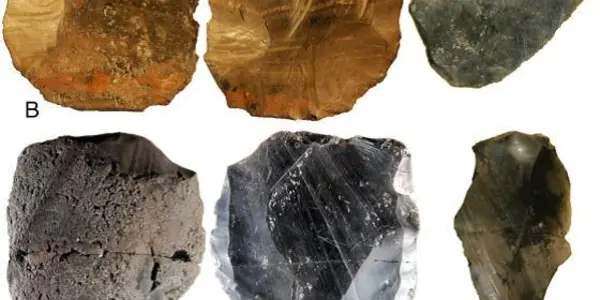
A new discovery of thousands of Stone Age tools has provided a major rethink about human innovation 325,000 years ago - and how early technological developments spread across the world.
The researchers found evidence which challenges the belief that a type of technology known as Levallois – where the flakes and blades of stones were used to make useful products such as hunting weapons – was invented in Africa and then spread to other continents as the human population expanded.
They discovered at an archaeological site in Armenia that these types of tools already existed there between 325,000 and 335,000 years ago, suggesting that local populations developed them out of a more basic type of technology, known as biface, which was also found at the site.

Many of the choices we make are informed by experiences we've had in the past but we know that sometimes it is better to throw all that out and take a risk on something new.
Scientists at the Howard Hughes Medical Institute's Janelia Research Campus have shown that the brain can temporarily disconnect information about past experience from decision-making circuits, thereby triggering random behavior.
Concrete is the world’s most-used construction material and thus a leading contributor to global warming, producing perhaps 10 percent of industry-generated greenhouse-gas emissions. Industry is already reducing greenhouse emissions, such as by using more natural gas and less coal to generate cost-effective electricity, and a new suggests another low-impact way go green - reducing concrete emissions by more than half and getting a stronger, more durable material using science rather than rationing.

Mother Nature may be out to kill us but we shouldn't take it personally. She is out to kill everything. We just never noticed in the past.
Today, thanks to long-term science projects, we can see how nature pits species off against each other. And biologists are studying streams to optimize how to prevent tallgrass prairies from turning into shrublands and forests.

People who practice yoga and meditation long term can learn to control a computer with their minds faster and better than people with little or no yoga or meditation experience, find biomedical engineers at the University of Minnesota writing in TECHNOLOGY.

The nice thing about telescopes is that we can look back in time - light that is reaching us now may have originated a few hundred million years after the Big Bang, which means astronomers can view the universe as it was when it was much younger.
But sometimes we can be fooled by entire galaxies. DDO 68, otherwise known as UGC 5340, a ragged collection of stars and gas clouds, at first was thought to be a recently-formed galaxy in our own cosmic neighborhood.
But it's not as young as it looks.
A cosmic oddity, dwarf galaxy DDO 68. Credit: NASA, ESA. Acknowledgement: A. Aloisi (Space Telescope Science Institute)
For some people, their own standard is much more demanding that anything the outside world could expect. Perfectionism is a bigger risk factor in suicide than it is credited for, says York University Psychology Professor Gordon Flett, who is calling for closer attention to its potential destructiveness, adding that clinical guidelines should include perfectionism as a separate factor for suicide risk assessment and intervention.
A new evolutionary psychology paper says that men and women have different age preferences regarding sexual partners - but it's primarily women realize their preferences.
The human papillomavirus (HPV) vaccine has been controversial in both the United States and European countries like Germany. It prevents about 70% of cervical cancers, cervical cancer is uncommon and highly treatable, and it will need another vaccine before girls who are given it even become adults. Along with those data issues, academic scientists and the public have been engaged in a culture war against pharmaceutical companies - that vaccines are exempt from ordinary lawsuits and that the vaccine was marketed heavily just after an expensive settlement by manufacturer Merck was not lost on the public.
Does simultaneously using a mobile phone, a laptop and other media devices change the structure of our brains? Sure, so did reading that sentence. We all have different experiences and therefore different brains.
No one knows you like you know yourself so if you think your memory is slipping, you may be onto something. Self-reported memory complaints are strong predictors of clinical memory impairment later in life.
Richard Kryscio, PhD, Chairman of the Department of of Biostatistics and Associate Director of the Alzheimer's Disease Center at the University of Kentucky, and colleagues asked 531 people with an average age of 73 and free of dementia if they had noticed any changes in their memory in the prior year. The participants were also given annual memory and thinking tests for an average of 10 years. After death, participants' brains were examined for evidence of Alzheimer's disease.