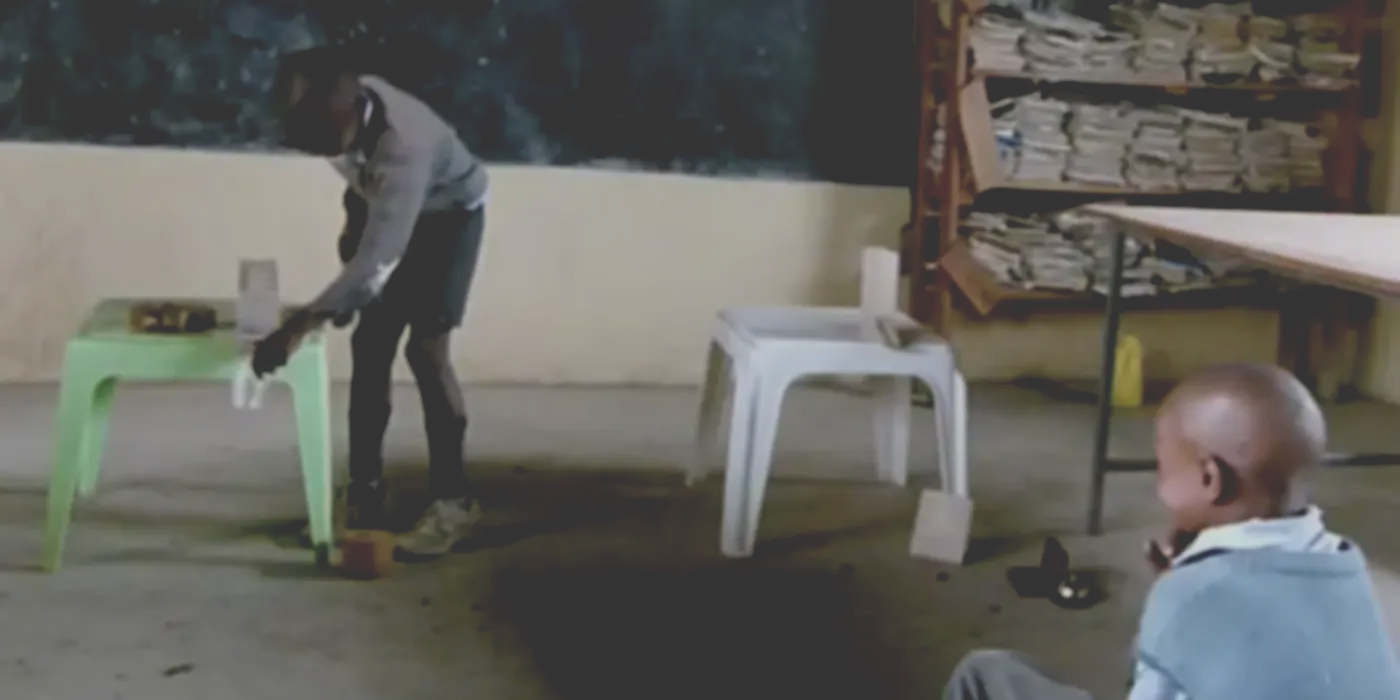
Kids Helping Kids Is Universal - But Cultures Help Differently
A simple game reveals a universal instinct in kids
A simple game reveals a universal instinct in kids


Calcium supplements are widely taken by women for bone health and some studies have suggested that calcium supplements bring with them an increased risk of cardiovascular disease.
A new study
examined supplemental calcium use and incident cardiovascular disease in a prospective cohort study of 74,245 women in the Nurses' Health Study. The women did not have cardiovascular disease or cancer at the start of the study. They were followed for 24 years to document risk of developing heart attack and stroke.
Can hurricanes cause stillbirths to rise sharply or is it epidemiologists torturing data until it confesses again?
A paper in the Journal of Epidemiology&Community Health says that Hurricanes Katrina and Rita are responsible for up to half of all recorded stillbirths in the worst hit areas and the true fetal death toll may even be higher because of the displacement of people whose homes were destroyed. Well, they use the weaseling "may have been" that has become famous in advocacy claims for meaning 'we are claiming causation but we can't prove it so we will hint at it'.
From the age of 30 onwards, physical inactivity exerts a greater impact on a woman's lifetime risk of developing heart disease than the other well-known risk factors, suggests research published online in the British Journal of Sports Medicine.
This includes overweight, the finding show, prompting the researchers to suggest that greater effort needs to be made to promote exercise.
The researchers wanted to quantify the changing contribution made to a woman's likelihood of developing heart disease across her lifetime for each of the known top four risk factors in Australia: excess weight (high BMI); smoking; high blood pressure; and physical inactivity.
Despite its name, the Dead Sea does support life, and not just in the sense of helping visitors float in its waters. Algae, bacteria, and fungi make up the limited number of species that can tolerate the extremely salty environment at the lowest point on Earth.
During implementation of the Affordable Care Act, states were pressured into increasing Medicaid coverage to higher incomes. Many did not want to do it, not because they were against health care but did not want a flawed program consuming even more of state budgets.
The federal government gives states a 100 percent subsidy - but only temporarily. Due to unwillingness by the government to negotiate a fix for Medicaid, 24 states have decided not to be burdened with the higher costs and worry that Medicaid, designed for the poorest and sickest, will be forcing those patients to compete with healthy 25-year-olds for appointments. Estimates were that up to 60 percent of new Medicaid patients would be people who drop private health insurance.

One of the most fascinating nearby planetary systems, 55 Cancri, is now less mysterious. Hopefully. The authors say theirs is the first viable model for the planetary system
of 55 Cancri, one the first stars discovered to have planets.Numerous studies since 2002 had failed to determine a plausible model for the masses and orbits of two giant planets located closer to 55 Cancri than Mercury is to our Sun. Astronomers had struggled to understand how these massive planets orbiting so close to their star could avoid a catastrophe such as one planet being flung into the star, or the two planets colliding with each other.

A spider in the Moroccan Sahara rolls like a tumbleweed and can do powerful, acrobatic flips through the air.Cebrennus rechenbergi runs for a short time, then stretches out its front legs, spinning into the air and returning to touch the ground with its hind legs. The move doubles the spider’s speed, to two meters per second. But since it uses so much energy, the maneuver is a last resort, called on only to escape predators. “I can’t see any other reason,” said Peter Jäger, a taxonomist at the Senckenberg Research Institute and Natural History Museum in Frankfurt, Germany, who identified the spider. “It is a costly move. If it performs this five to 10 times within one day, then it dies.”
Everyone has heard of the Cuban Missile Crisis, a stand-off over missiles off the shores of America. It's considered a highwater mark during a Cold War culture that was concerned about mutual assured destruction.Outside testing, nuclear weapons have not been detonated since 1945 but there have been ‘disturbing near misses in which nuclear weapons were nearly used inadvertently’ owing to miscalculation, error or sloppy practices. Not once, but nearly 13 times since 1962 - and the risk of nuclear weapons being detonated today is higher than people know.

A team of scientists has found that the woody growth of forests in north Borneo is half as great again as in the most productive forests of north-west Amazonia, an average difference of 3.2 tons of wood per hectare per year.
The new study, published today in the Journal of Ecology, examined differences in above-ground wood production (one component of the total uptake of carbon by plants) which is critically important in the global cycling of carbon.
Trees are taller for a given diameter in Southeast Asia compared with South America, meaning they gain more biomass per unit of diameter growth, and this in part explains the differences observed.
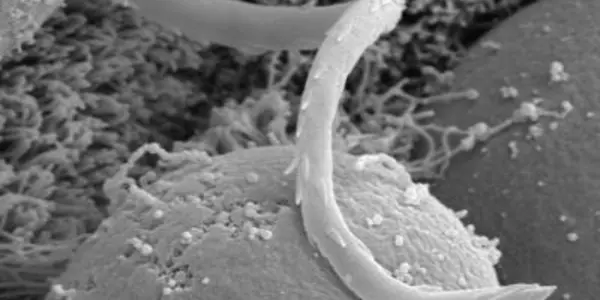
A genomic investigation by University of British Columbia researchers has revealed that a lethal parasite infecting a wide range of insects actually originated from pond scum, but has completely shed its green past on its evolutionary journey.
A team led by UBC Botany Prof. Patrick Keeling sequenced the genome of Helicosporidium – an intracellular parasite that can kill juvenile blackflies, caterpillars, beetles and mosquitoes – and found it evolved from algae like another notorious pathogen: malaria.

A comparison of the genomes of polar bears and brown bears reveals that the polar bear is a much younger species than previously believed, having diverged from brown bears less than 500,000 years ago.
Patients whose lost red blood cells are recycled and given back to them during heart surgery have healthier blood cells compared to those who get transfusions of blood stored in a blood bank, according to the results of a small study at Johns Hopkins.
To recycle the blood, a machine known as a cell saver is used to collect what a patient loses during surgery, rinse away unneeded fat and tissue and then centrifuge and separate the red cells, which are then returned to the patient if thy need it. Disposable parts of the cell saver, which can be used to process multiple units of blood, cost around $120, compared to $240 for each unit of banked blood.