You Feel Colder As You Age: The Science Reason Why
Older people report feeling colder, enough that it is clearly happening, but why has been a mystery. Until now.
Older people report feeling colder, enough that it is clearly happening, but why has been a mystery. Until now.


Experimental techniques and computer simulations have determined a new way of predicting how water dissolves crystalline structures like those found in natural stone and cement.
In a new study, the team shows that their method is more efficient at predicting the dissolution rates of crystalline structures in water than previous methods. The research could have wide-ranging impacts in diverse areas, including water quality and planning, environmental sustainability, corrosion resistance and cement construction.

Microscopy is the universal diagnostic method for detection of most globally important parasitic infections.
But it's not cheap. Methods developed in well-equipped laboratories are not available at the basic levels of the health care system due to lack of resources. Researchers at the Institute for Molecular Medicine Finland, FIMM, University of Helsinki and Karolinska Institutet, Sweden, have now shown that novel techniques for high-resolution imaging and image transfer over data networks may be utilized to solve these diagnostic problems.

The majority of all violent crime in Sweden is committed by a small number of people and they have a definable demographic - personality disorders, substance abuse problems and almost all males (92%) who early in life develop violent criminality and begin with a large number of non-violent crimes.
In their paper, the scholars at Sahlgrenska Academy examined 2.5 million people in Swedish criminal and population registers
and matched all convictions for violent crime in Sweden between 1973 and 2004 with nation-wide population register for those born between 1958 to 1980 (2.5 million).
In recent times, olive oil became one of the lowest health fads. Its popularity grew to such an extent that it became difficult to know if you were even buying olive oil, much less the extra virgin kind it might say on the label.
You may have been better off with the vegetable oil that might have been in it, as it turns out. Corn oil significantly reduces cholesterol with more favorable changes in total cholesterol (TC) and LDL-C than extra virgin olive oil, according to a new paper presented today at the American Society for Nutrition's Advances&Controversies in Clinical Nutrition Conference.
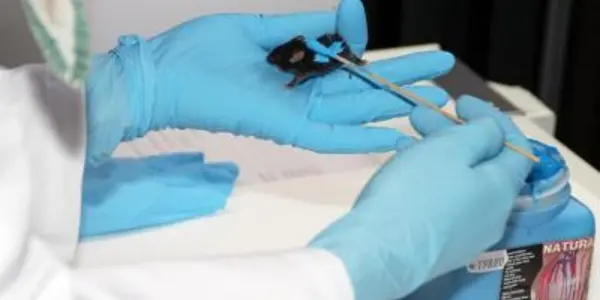
Researchers from the University of Southern Denmark have discovered that the skin is capable of communicating with the liver. The discovery has surprised the scientists, and they say that it may help our understanding of how skin diseases can affect the rest of the body.
Professor Susanne Mandrup and her research group in collaboration with Nils Færgeman's research group at the Department of Biochemistry and Molecular Biology at the University of Southern Denmark was actually studying something completely different when they made the groundbreaking discovery: That the skin, which is the body's largest organ, can "talk" to the liver.
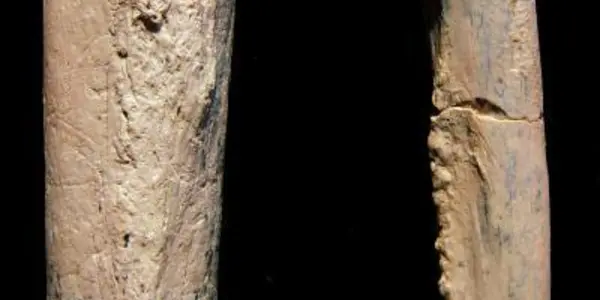
A human ancestor
dated to 1.34 million years old and belonging to Paranthropus boisei at the Olduvai Gorge World Heritage fossil site in Tanzania
is characterized by a "robust" jaw and skull bones and was a muscular creature with a gorilla-like upper body and more adaptive to its environment than previously thought, scientists have discovered.
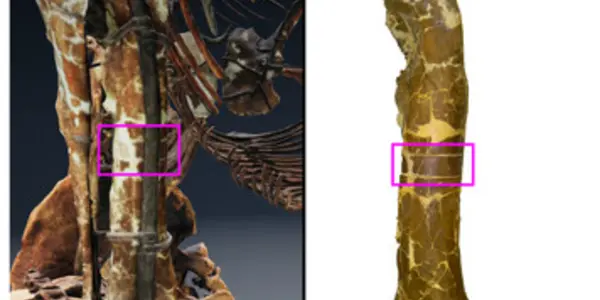
The partial skeleton -- including arm, hand, leg and foot fragments -- represents one of the most recent occurrences of P. boisei before its extinction in East Africa.
A breakthrough in understanding how cataracts form could be used to help prevent the world's leading cause of blindness, which currently affects nearly 20 million people worldwide.
It has long been known that human eyes have a powerful ability to focus because of three kinds of crystallin proteins in their lenses, maintaining transparency via a delicate balance of both repelling and attracting light.
Two types of crystallin are structural, but the third – dubbed a "chaperone" – keeps the others from clumping into cataracts if they're modified by genetic mutation, ultraviolet light or chemical damage.

The image of robotics in popular culture is classic science fiction; cogwheels, pistons and levers with perhaps a layer of rubberized skin: miniaturized robots of the future will be "soft".
"If I think of the robots of tomorrow, what comes to mind are the tentacles of an octopus or the trunk of an elephant rather than the mechanical arm of a crane or the inner workings of a watch. And if I think of micro-robots then I think of unicellular organisms moving in water. The robots of the future will be increasingly like biological organisms," explains Antonio De Simone of
International School of Advanced Studies (SISSA).
Life grew as a result of natural processes that used Earth's raw materials.
Models of life's origins almost always look to minerals for such essential tasks as the synthesis of life's molecular building blocks or the supply of metabolic energy, but this assumes that the mineral species found on Earth today are much the same as they were during Earth's first 550 million years — the Hadean Eon — when life emerged.
A new analysis of Hadean mineralogy
published in American Journal of Science
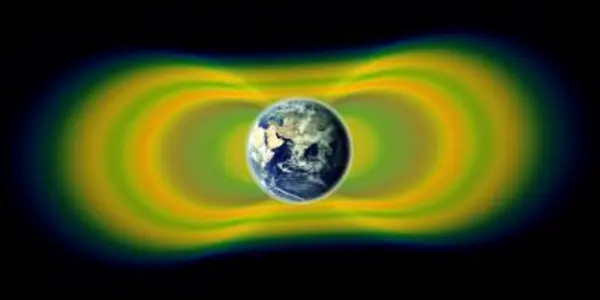
Over a year after being launched, NASA's Van Allen Probes mission continues to unravel the mysteries of Earth's high-energy radiation belts that encircle our planet and pose hazards to orbiting satellites and astronauts - termed the Van Allen Radiation Belts.
On May 24th of 2013, a magnitude 8.3 earthquake hit deep beneath the Sea of Okhotsk, between Russia's Kamchatka Peninsula and Japan. The main shock of the earthquake was located at 610 kilometers (379 miles) depth, a rupture in the mantle far below the Earth's crust.
By inverting seismic waves that were observed during the earthquake, researchers have found that this initial shock triggered four subsequent shocks. These four shocks were magnitudes 7.8, 8.0, 7.9, and 7.9. A pressure front from the initial earthquake propagated at a speed of approximately 4.0 kilometers (2.5 miles) per second, setting off three subsequent earthquakes in a line south of the main shock.
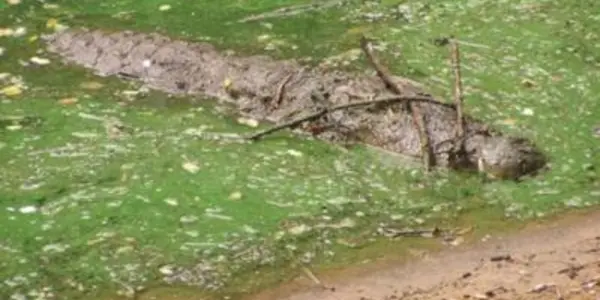
The crocodile is a pretty shrewd hunter - they even use lures to hunt their prey, according to Vladimir Dinets, assistant professor in the Department of Psychology at University of Tennessee, Knoxville, and colleagues, who say they have observed two crocodilian species, muggers and American alligators, using twigs and sticks to lure birds, particularly during nest-building time.