Robert Inventor

robertinventor

robertinventor

I'm Robert Walker, inventor & programmer. I have had a long term special interest in astronomy, and space science since the 1970s, and most of these blog posts currently are about Mars and space exploration. I'm the programmer for for Tune Smithy, B…
RSS Feed
No, There Isn't A Planet Called Nibiru, Soon To Hit Earth, And Often Visible In Your Photos Of The Sun :)

No, There Isn't A Planet Called Nibiru, Soon To Hit Earth, And Often Visible In Your Photos Of The Sun :)

This is a particularly silly story about Nibiru, published today (in the Daily Telegraph): The end of the world now predicted for December say doomsday groups: "Terrifying stuff. Apparently, the planet due to collide with us is often visible, you may have seen it already. If you spot a blob next to the sun when you take a photograph, it could be the deadly planet, not a reflection."

Could You See Moon City Lights Or A Greenhouse From Earth? Just For Fun

Could You See Moon City Lights Or A Greenhouse From Earth? Just For Fun

If there were humans on the Moon - would we see the settlement lights from the Earth? For instance during a thin crescent Moon - could we see the lights of civilization in the parts of the Moon in darkness? It's a fun question to answer I think, so let's give it a go.We can work it out backwards from the brightness of the full Moon. Looking out on the lunar surface from inside a Moon city, frame from the 1965 Russian film Luna (You can get this article as a kindle ebook)

Why Are Hydrated Salts A Slam Dunk Case For Flowing Water On Mars? And What Next?

Why Are Hydrated Salts A Slam Dunk Case For Flowing Water On Mars? And What Next?

Now we know, it's the second of those "Three mysteries" which they solved - by detection of water in the RSLs.  However, they didn't directly detect flowing water. Instead, they found hydrated salts. So let's look at this a bit more closely - why are they so confident this is evidence for flowing water? And what next - is there any way to follow it up, and what about the other mysteries?

India's Mars Orbiter Spacecraft  - Results Of First Year Of  Methane Search - Not Yet Announced

India's Mars Orbiter Spacecraft - Results Of First Year Of Methane Search - Not Yet Announced

The Indian ISRO space agency was going to announce the result of their first year of observations in Mars orbit - the Indian Times said - on Thursday.  But it didn't happen - seems it has been delayed! I look forward to hearing what they found - but seems that we have to wait some more.We can't really make any deduction about what they will say, as their research is embargoed until then - they can't say anything about it. But we should hear whether or not they have detected methane from orbit so far.

NASA Says Mars Mystery Solved - What Is It? - Three Mysteries About Recursive Slope Lineae

NASA Says Mars Mystery Solved - What Is It? - Three Mysteries About Recursive Slope Lineae

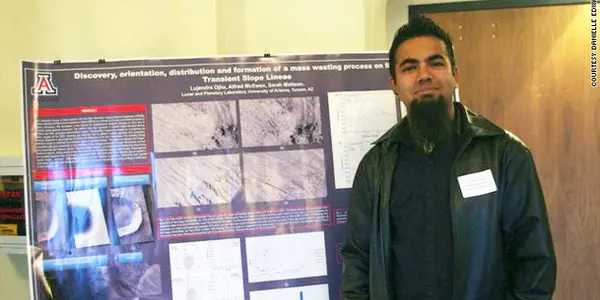
The internet is buzzing with the announcement from NASA that they are going to announce the solution of a longstanding Mars mystery on Monday. at 11.30 am EST. That's 4.30 pm BST. Then, as many of the news stories have pointed out, the list of speakers includes Lujendra Ojha, a Nepal born researcher from Katmandu who discovered the "Warm Seasonal Flows" as an undergraduate back in 2011. It would be surprising to include him unless the solved mystery is something to do with these streaks. now often called Recursive Slope Lineae. So, what are they, and what are the main mysteries about them?

Giant Asteroid Headed Your Way? - How We Can Detect And Deflect Them

Giant Asteroid Headed Your Way? - How We Can Detect And Deflect Them

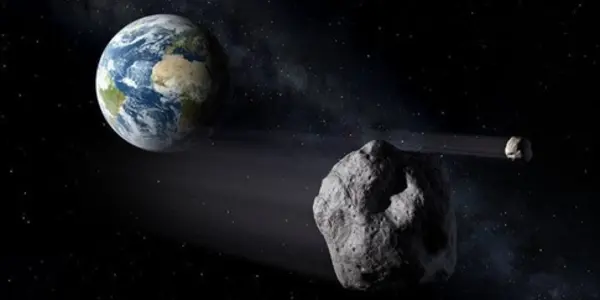
We get many sensational news stories, saying a giant asteroid will hit Earth, or will nearly miss us. Several so far this year. Many of us worry about these things. So what is the truth behind them?Actually astronomers have this well in hand for the largest asteroids. They have found 90% of the largest asteroids likely to hit Earth. This is mainly due to Pan-STARRS, which takes a 1.4 gigapixel image of a three degrees span of the night sky several times a minute. It continues to find a new large asteroid about once a month, and will find most of the remaining 10% by the 2020s.

September 24th, 2015 - Just Another Day In Space - Asteroid Flybys, "Blood Moons" And Armageddon Demystified

September 24th, 2015 - Just Another Day In Space - Asteroid Flybys, "Blood Moons" And Armageddon Demystified

Is anything going to happen on September 24th? Well, the astronomers say, no. It is an ordinary day in space, nothing remarkable of note at all on that day by way of asteroid flybys.Yes, it's true, as some news stories say, there is a distant flyby by a rather unremarkable asteroid. It is one of dozens that pass by Earth every month. It's not especially large as asteroids go. Indeed there's one more than double its size, passing closer, at a faster speed, on October 4th that nobody is interested in except perhaps a few astronomers.

Elon Musk's Idea To Nuke Mars - Feeble Compared With Comet Impacts On Mars

Elon Musk's Idea To Nuke Mars - Feeble Compared With Comet Impacts On Mars

This story has recently hit the news. I think it is reasonably clear he was half joking, not putting forward a worked out plan for Mars. But is there any potential in the idea? He talks about it here at 2 minutes in, just says "The fast way is to drop thermonuclear weapons on the poles": 

Could A Star Orbit A Planet? - Just For Fun

Could A Star Orbit A Planet? - Just For Fun

This is just for fun. At first sight this seems impossible - the smallest stars are heavier than the heaviest planets, and how can something heavier orbit something that is lighter? But what if you have a very dense star and very large very low density planet? And if you interpret "orbiting it" as "having barycenter (the "center of mass of the system") within the planet"? Also, could a star sometimes be lighter than a planet, is that possible at all? I'll also describe a way that a heavier object can, in a way, "orbit" a lighter one - a way to get a heavier star move in such a way that the barycenter of the system lies within a large low density planet - can you figure out how, before I get to it?