Robert Inventor

robertinventor

robertinventor

I'm Robert Walker, inventor & programmer. I have had a long term special interest in astronomy, and space science since the 1970s, and most of these blog posts currently are about Mars and space exploration. I'm the programmer for for Tune Smithy, B…
RSS Feed
Will  Astronauts Need To Augment Lunar Gravity? If So, How?

Will Astronauts Need To Augment Lunar Gravity? If So, How?

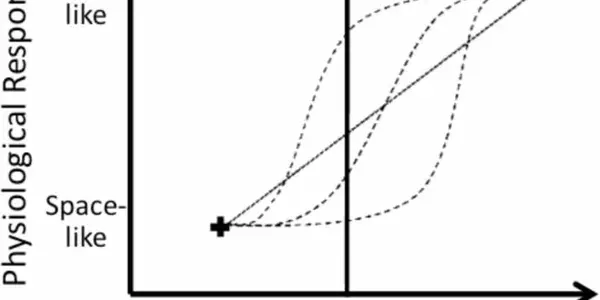
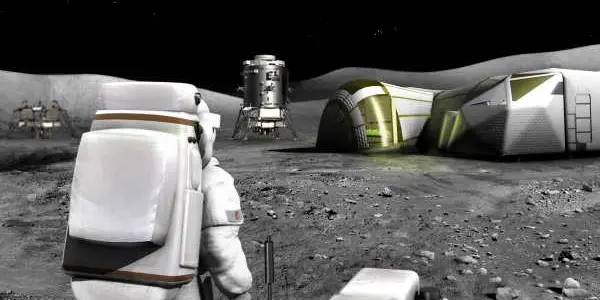
We might get our first humans living long term on the Moon by the 2020s. How will they cope with lunar gravity, and will it need to be augmented, and if so, how? There is a lot written about artificial gravity to counter health issues in zero gravity. but what about artificial gravity on the Moon?

Can A New Rule Trigger A Second EU Referendum? Petition 4.1 Millon Signatures, Over 12% Of Total Votes Cast

Can A New Rule Trigger A Second EU Referendum? Petition 4.1 Millon Signatures, Over 12% Of Total Votes Cast

This government petition to call for a second EU referendum in the UK has suddenly become very popular. The number of signatures has now reached over 12% of the total votes cast in the referendum, over 25% of the Remain votes, and over 23% of the Leave votes cast. However the situation seems clear that having called this referendum, the government are committed to the result, and there is no provision for a second referendum. Should there be for future referendums however? And why are so many people signing this petition? Let's take a look.

Case For Moon: Humanity's Gateway To  Solar System Exploration, Open Ended, Planetary Protection At Its Heart

Case For Moon: Humanity's Gateway To Solar System Exploration, Open Ended, Planetary Protection At Its Heart

I'll be on David Livingston's the Space Show this Friday, 27th May, to talk about my new "Case for Moon". It's main themes are: first, the Moon as our natural first destination in the solar system. Then, planetary protection and biologically reversible human exploration as core principles for human space exploration. Then, the Moon as a gateway for human exploration of the entire solar system, not just Mars.

Case For Moon - Open Ended Positive Future For Humans Based On Planetary Protection - Executive Summary

Case For Moon - Open Ended Positive Future For Humans Based On Planetary Protection - Executive Summary

Are you keen on humans in space, but skeptical about colonization of Mars as our first objective for space exploration? Do you think we will start with settlements supported from Earth, such as we already have in inhospitable places such as Antarctica? Do you think our exploration should be open ended with science as a core objective, and planetary protection and reversible biological exploration as core principles?

Could Anything Make Humans Extinct In The Near Future?

Could Anything Make Humans Extinct In The Near Future?

Untitled Document

This is one of the questions I get asked most often since I started to cover the topic of asteroid impacts. Will humans will become extinct within a decade, or within a century? And can this happen through natural disasters? For instance if you watch the movies you may think there's a chance of a giant asteroid impact which will make us extinct. But what's the real situation? 

Simple Ways To See Nibiru Is Totally Nuts - And Limits On Planets Hiding In Our Solar System

Simple Ways To See Nibiru Is Totally Nuts - And Limits On Planets Hiding In Our Solar System

In case you haven't heard of it, Nibiru is a totally nuts idea. Yet it gets many people very scared. I started to get messages about it as a result of writing articles about asteroid impacts, and how we can detect and deflect asteroids. It is possible to have beliefs that don't make any sense if you look at them closely. For instance, if you believe that you can have a square with every point on its edges equally distant from its center in ordinary geometry - that's impossible. That's a square circle. Nibiru is a belief of this sort.

Can We Risk Microbes From Human Crashes - On Mars? If Not, What Happens To Dreams To Colonize The Planet?

Can We Risk Microbes From Human Crashes - On Mars? If Not, What Happens To Dreams To Colonize The Planet?

I wrote this soon after ExoMars's successful launch to Mars, 2015. Hurray! In the program about the mission, before and during the launch, the presenters talked about the care they take to sterilize the lander of microbes to protect Mars. And indeed, kudos to all the space faring countries, and the planetary protection officers, for doing this. But in the same program they talked about ideas to send humans to Mars, talking about all its benefits. For some reason it never seems to occur to anyone to ask if humans can be sterilized in the same way as robots. There is nothing unusual about this - it's the same for programs from NASA, or programs about Mars on UK television, and anywhere.

Can We Let Humans Risk A Crash On Mars - If We Are Serious About Planetary Protection?

Can We Let Humans Risk A Crash On Mars - If We Are Serious About Planetary Protection?

Elon Musk hopes to land a hundred colonist hopefuls at a time as soon as the early 2030s. NASA also proposes its "Road Map to Mars" which could see human "boots on Mars" in the near future. It is hard enough to sterilize robots sufficiently to search for life on Mars. We can't sterilize human missions to the same standards.
If we go ahead with these plans, we will have to relax planetary protection measures. But is it the right time to do this? 

Can Humans Be Permitted To Crash On Mars - Implications For Planetary Protection.

Can Humans Be Permitted To Crash On Mars - Implications For Planetary Protection.

I can foresee a possible clash between those that want to send humans to Mars, and those who want to protect the planet from Earth life. Humans may go there in the near future, as soon as fifteen years into the future if Elon Musk is right, and in the fairly new future also if NASA'S "Road Map to Mars" goes through. Experts are exploring ways to permit humans on the surface with somewhat relaxed planetary protection measures. But is this a sensible way to proceed. Can we have a "compromise solution" here.