Robert Inventor

robertinventor

robertinventor

I'm Robert Walker, inventor & programmer. I have had a long term special interest in astronomy, and space science since the 1970s, and most of these blog posts currently are about Mars and space exploration. I'm the programmer for for Tune Smithy, B…
RSS Feed
Could Astronauts In The ISS Get All Their Oxygen & Food From Algae & Plants?

Could Astronauts In The ISS Get All Their Oxygen & Food From Algae & Plants?

Perhaps you saw the news recently about astronauts in the International Space Station eating their first home grown lettuce? It's just a beginning, but in the future, could they grow all their own food and get all their oxygen from plants? A little known series of experiments in Russia in the 1960s through to the 1980s suggests that they could. The research continues to this day, and we may see the first steps towards such a system taken in space in the near future.

Is The International Space Station The Most Expensive Single Item Ever Built?

Is The International Space Station The Most Expensive Single Item Ever Built?

Is the ISS the most expensive single human artifact ever, after adjusting for inflation? Well, to start with, it's a whole lot more expensive than a medieval cathedral anyway. First we need an estimate of the cost of the ISS, and this article in the Space Review estimates the total cost up to 2015 as $150 billion (in 2010 dollars). That's the total cost including all the international partners. So, how much did it cost to build a medieval cathedral?

Could Another (small) Satellite Orbit The International Space Station?

Could Another (small) Satellite Orbit The International Space Station?

This is just a fun question someone asked on Quora. It leads into a few interesting topics. First the ISS just isn't heavy enough for a satellite to enter into a true gravitational orbit around it. But, in theory at least, you can put a satellite into a temporary  orbit that looks from the point of view of the ISS as if it is in orbit around it.
For a while. It's not kept in place by any gravitational attraction to the ISS, so it is sort of an illusory orbit you could say in a way - but perhaps it is interesting.

Self Replicating Robots - Safer For Galaxy (and Earth) Than Human Colonists - Is This Why ETs Didn't Colonize Earth?

Self Replicating Robots - Safer For Galaxy (and Earth) Than Human Colonists - Is This Why ETs Didn't Colonize Earth?

Most people, when they think about exploring the galaxy, think about sending out human colonies. It's natural to think we would explore it just as we do the Earth, it's the only way we know. To send machines instead of humans, especially machines that can replicate, may seem frightening. But - I'd argue, humans colonies are by far the most scary way we could explore the galaxy. It might well be a case of "look out galaxy (and Earth), the monsters are coming" :). So what can we do? What is a responsible way to explore our galaxy, with current understanding of science, biology, and society,  and could this explain why our galaxy is not filled right to the brim already with extra terrestrials?

How Best To Explore An Entire Galaxy - Replicating Machines Or Colonies? Is This Why ET Isn't Here Yet?

How Best To Explore An Entire Galaxy - Replicating Machines Or Colonies? Is This Why ET Isn't Here Yet?

Most people, when they think about exploring the galaxy, think about sending out human colonies. It's natural to think we would explore it just as we do the Earth, it's the only way we know. And to send machines instead of humans, especially machines that can replicate, seems frightening. But - I'd argue instead, humans colonies are by far the most scary way we could explore the galaxy. At least at the current state of understanding of science, biology and society, it might well be a case of "look out galaxy, and Earth also, the monsters are coming" :). So what can we do? What is a responsible way to explore our galaxy, and could this explain why our galaxy is not filled right to the brim already with extra terrestrials?

Suggestion: The EM Drive Is Getting The Appropriate Level Of Attention From The Science Community

Suggestion: The EM Drive Is Getting The Appropriate Level Of Attention From The Science Community

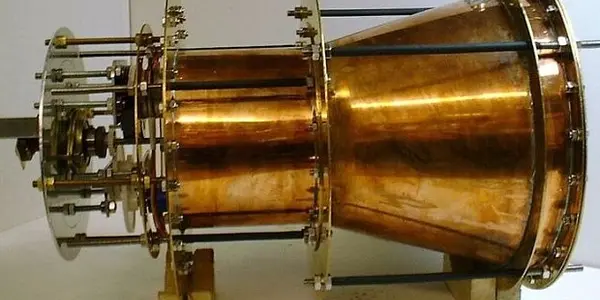
There have been many news stories saying that the EM Drive will solve almost all problems in interplanetary travel, permit low cost flying cars and who knows what else. Other stories say that it is flat out impossible and we shouldn't spend a single publicly funded research dollar on it. But I haven't seen a single article with the rather boring suggestion that perhaps in this case the research community has got it exactly right. That it's not a perpetual motion machine, doesn't deserve to be dismissed out of hand. But it's far too soon to justify huge research programs into it, even if it is a real effect. We just have to be patient and see how the experiment develops. So, here is a news story to say - that. In detail:

Kepler 452b - Things That Could Go Wrong With Habitability & If It Is - Could We Detect Intelligent Life There?

Kepler 452b - Things That Could Go Wrong With Habitability & If It Is - Could We Detect Intelligent Life There?

There is so much over enthusiastic hype about this planet today, I thought could do with a bit of more sober reporting of the results, interesting though they are. Much of that speculation derives from just one phrase in the press release I think, where they say:  "Today, and thousands of discoveries later, astronomers are on the cusp of finding something people have dreamed about for thousands of years -- another Earth." The idea of what that means by "another Earth" for astronomers who know the capabilities of Kepler, is rather different from what most of the general public would think of when you say "another Earth".

Asteroid Day Today, 30th June - Let's Find These Rocks And Deflect Them

Asteroid Day Today, 30th June - Let's Find These Rocks And Deflect Them

Today, 30th June is asteroid day, to raise awareness of the searches astronomers do to detect and eventually deflect asteroids. This is your chance also to actually do something about them by signing the 100x petition (which has been signed by many famous astronomers and astronauts).An asteroid impact is one of the few natural events we can actually prevent with our technology (unlike volcanoes, earthquakes and tsunami). With a few years or decades of warning, we can deflect them rather easily. But to find them in good time, first we need to detect them.

What Food Can You Share With An ET?

What Food Can You Share With An ET?

So, you are invited to a dinner by extraterrestrial hosts. Do you accept the invitation? And if so, which foods and beverages would be safe to eat? And, could you actually live long term on ET food? Or the other way around, if you have an ET guest, what food could you safely serve for them to eat?First, it's not likely that you would enjoy a dinner served in a sauce of liquid nitrogen or liquid methane :). So, let's assume that they are organic carbon based lifeforms from an Earth-like world or at least an environment with Earth type temperatures and conditions (including perhaps living in oceans of icy moons).

As Philae Awakes - Where Might Life Hide In Our Solar System?

As Philae Awakes - Where Might Life Hide In Our Solar System?

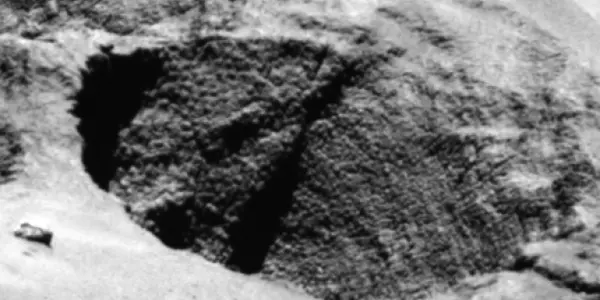
Now that Philae has woken up, we may be on the brink of major steps forward in our understanding of comets. We already know that perhaps as much as 30% of a comet consists of dust and organics. Now we'll be able to look at this close up. Why, though, do most scientists expect Philae to find pre-biotic chemistry? Is there any chance of life? Also, where else in the solar system can we look?