Robert Inventor

robertinventor

robertinventor

I'm Robert Walker, inventor & programmer. I have had a long term special interest in astronomy, and space science since the 1970s, and most of these blog posts currently are about Mars and space exploration. I'm the programmer for for Tune Smithy, B…
RSS Feed
Metronomes - Do You Need Them? And A Metronome Using Conducting Techniques For Visual Precision

Metronomes - Do You Need Them? And A Metronome Using Conducting Techniques For Visual Precision

The metronome seems such a simple thing, just a machine that goes tick tick, and you then play in time with it. So, why is it that beginner musicians often have so much difficulty keeping in time with it? And why is it that humans find it hard to play like a metronome, why doesn't that come natural to us?Many musicians and entire musical cultures with a wonderful sense of rhythm don't use a metronome at all. Yet many western musicians spend hours every day with the tool. Do we need it, does it help - and if so what's the best way to work with a metronome? And what about ways of working on rhythm without using a metronome at all?

Projects To Get To Space As Easily As We Cross Oceans - A Million Flights A Year Perhaps - Will We Be Ready?

Projects To Get To Space As Easily As We Cross Oceans - A Million Flights A Year Perhaps - Will We Be Ready?

Elon Musk's ideas are in the news right now, rockets with first stages that fly back to a soft landing under auto pilot. But you might be surprised to learn how many other ideas there are under active development, for low cost ways to get into orbit.
The British Skylon would fly directly into space from a reinforced airport, taking off like a plane, without need to discard anything (single stage to orbit). Then JP Aerospace plan airships to float up to 200,000 feet followed by transfer to a lighter than gossamer skinned, "orbital airship" that never lands, but can accelerate gradually through the near vacuum of the troposphere and above, to orbital velocities.

Rhythms In Maths -  Most Out Of Time Perfect Drummers Can Be -  Penrose Tiling Rhythm - Cantor's Set Rhythm,...

Rhythms In Maths - Most Out Of Time Perfect Drummers Can Be - Penrose Tiling Rhythm - Cantor's Set Rhythm,...

I'd like to share some of the amazing range of rhythms you can find, linking music and maths, some discovered only in the last few years. These include: fibonacci gamelan patterns - highly structured yet the pattern of beats never repeats; the rhythm you get if two musicians each with perfectly steady rhythm play as out of time as possible; the rhythm of the famous "Cantor's set"; and the fairly recent discovery that many rhythms of music throughout the world are "Euclidean rhythms" - uneven beat patterns pleasing to the ear made with a surprisingly simple construction.

Will We Build Colonies That Float Over Venus Like Buckminster Fuller's "Cloud Nine"?

Will We Build Colonies That Float Over Venus Like Buckminster Fuller's "Cloud Nine"?

This idea dates back to the Russians in the early 1970s. The surface of Venus is far too hot, and the atmosphere too dense, for Earth life. However, our air is a lifting gas on Venus with about half the lifting power of helium on Earth. A habitat filled with normal air will float high in the dense Venus atmosphere, The atmospheric pressure there is the same as Earth sea level (1 bar). Temperatures are perfect for Earth life too, just over 0°C.

Trouble With Terraforming Mars

Trouble With Terraforming Mars

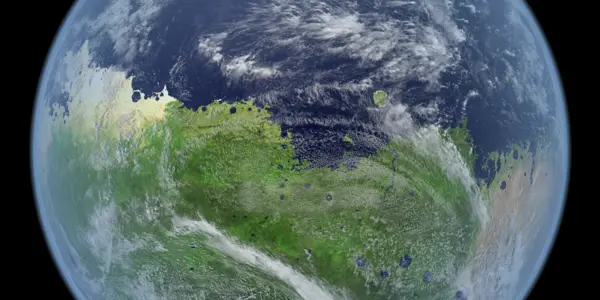
Most science fiction and news stories describe Mars terraforming as a long term but simple process. You warm up the planet first, with greenhouse gases, giant mirrors, impacting comets or some such. You land humans on the surface right away and they introduce lifeforms designed to live on Mars. Over a period of a thousand years or so, life spreads over the planet and transforms it, and Mars becomes a second Earth.

Need For Caution For An Early Mars Sample Return - Opinion Piece

Need For Caution For An Early Mars Sample Return - Opinion Piece

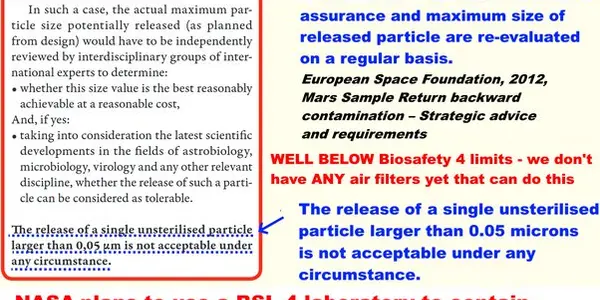
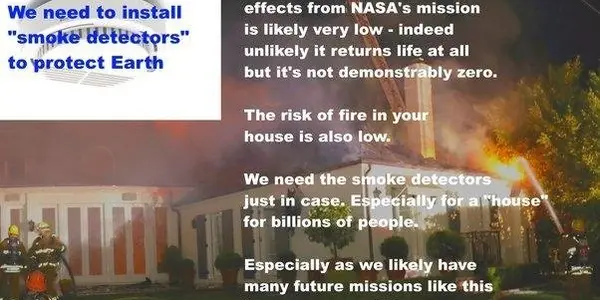
It seems like a great idea, doesn't it, to send an automated rover to Mars to gather samples of rocks and dust, and return it to Earth, to study in laboratories with all the specialist instruments we have here. You can understand why so many scientists and mission planners are keen on the idea.