Another rocket is going to crash into the moon but this time it isn't China doing aerospace the way they do virology. Instead, it is a SpaceX 40-foot long, 10,000-pound rocket segment that was used to launch the Firefly Aerospace Blue Ghost; the first private spacecraft to make a lunar landing without becoming scrap metal. If you are on the east coast of America, and have access to a telescope at 2:30 in the morning, you may be able to see the action - but it is going to be blink and you miss it. You will definitely see the result; a plume of dust stretching for miles.
NASA estimates the dent on the Einstein Crater will be about 15 feet deep and 90 feet across so our telescopes won't be able to see it but the U.S. Lunar Reconnaissance Orbiter and Korea’s Danuri orbiter will
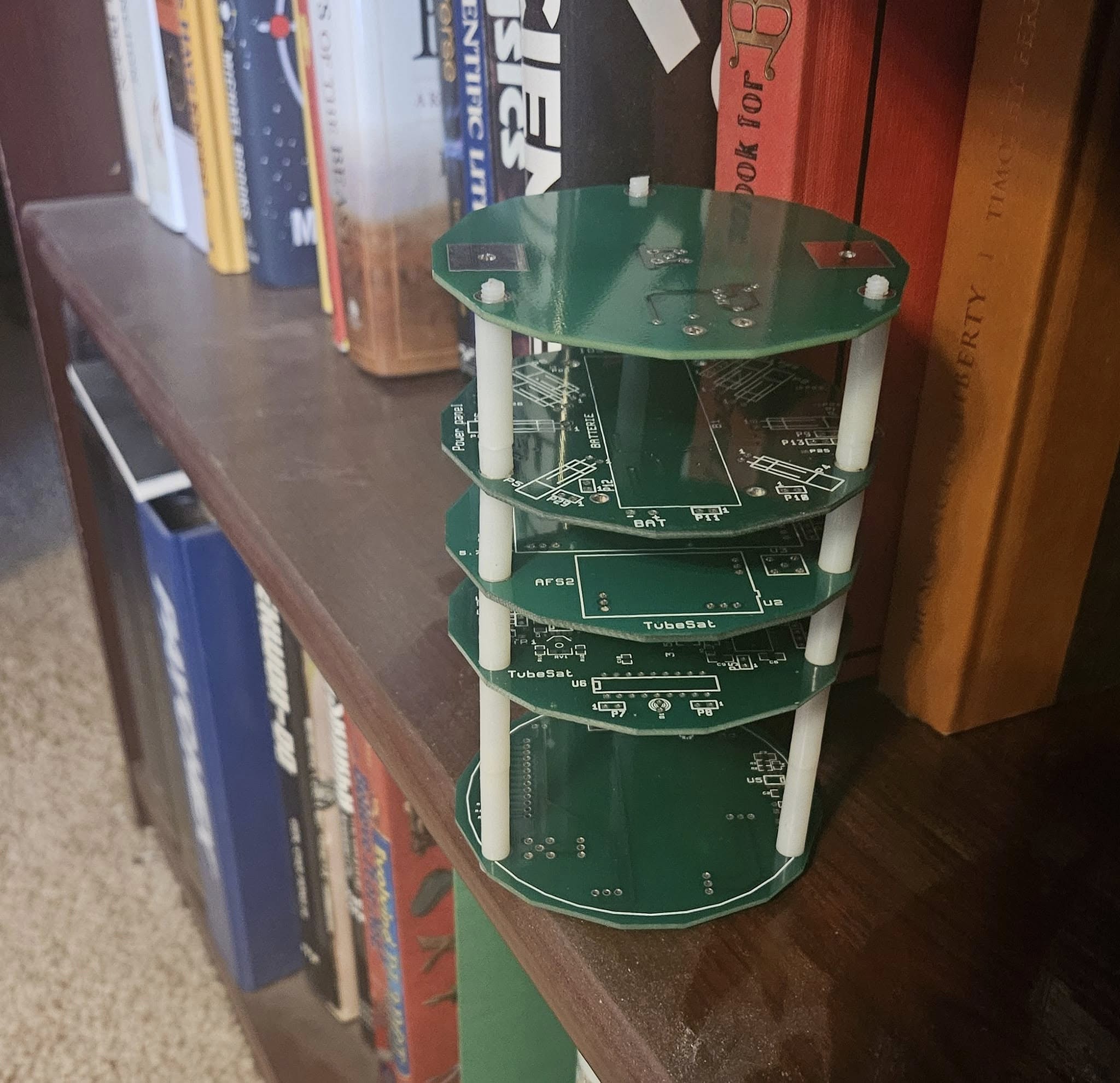
During the Golden Age of Space Exploration, NASA sent things at the moon to get seismic readings but this and the China one are accidents. As the private sector continues to bring down the cost of space launches, more thought will need to go into trajectory after use. Maybe, if the cost gets low enough, the TubeSat we sponsored 15 years ago will stop being vaporware. I predict we'll have bases on the moon before that happens, though.
Thanks to Sandy Antunes, who did all of the actual work setting it up (ours was converting the ionosphere to MIDI files to literally allow people to make music from space) I have a sweet souvenir; the backup.
Citation: Benjamin Fernando, Jennifer Heldmann, Bill Grey, John Ortiz, Bryan Euser, Darryl Z. Seligman, Eunhyeuk Kim, Anthony Colaprete, Elisa Maria Alessi, Detlef Koschny, Anthony Cook, Joel Green, Patrick King, Stacy Teng, Dawn Graninger, Arnold Goldberg, William Cooke, Mike F. Skrutskie, Kevin Schlaufman, Nicholas Schmerr, Carly M. Donahue, Carl A. Schmidt, Nancy J. Chanover, 'Observational planning for the 2026 August 5 Falcon 9 Upper Stage lunar impact', arXiv:2607.14625 [astro-ph.EP]