A new paper links lung cancer to microplastics; the tiny particles you can't detect without an electron microscope. Before you rush to the paper to see the plausible biological mechanism they found, you might as well know they didn't.
It's epidemiology, not science. That is why it is in the EXPLORATORY pile unless science confirms it. Only the Biden administration made government regulations using words like 'correlated', 'suggests', and 'linked' as valid.
If you believe vaccines cause autism or Roundup causes cancer, though, you are the perfect juror to be in the San Francisco predatort trial claiming some helpless victim was exploited by Big Science.
This observational claim originates in Europe and if you want to know how France leads the developed world in vaccine denial it's that they rush to embrace this stuff. But Germany is not far behind, and Ireland believes in any conspiracy theory out there, but lung cancer? It's as silly as claiming small-micron particulate matter (PM2.5) can harm you. You truly have to deny science. Or outright hate it. Or be plagued with a mental illness and went into academia because they allow it.
Their observational claim - another term that tells you no science is involved - was fabricated using such a small number even the New York Times will see through it; a few people at a hospital in Greece who got a bronchoscopy - a camera in a thin tube inserted. into the lungs. Half of the participants got saline to collect cells while half also got a lung tissue sample taken. Half had lung cancer, half did not.
Because they were a solution in search of a problem - *microplastics* cause cancer, but they only suggest it way down at the bottom of the paper - they sounded the alarm that they were able to detect nanometer-sized plastic 1/1000th the size of a human hair. Then they correlate it to human cancer while conceding way down at the bottom that their work does not show anything of the kind.
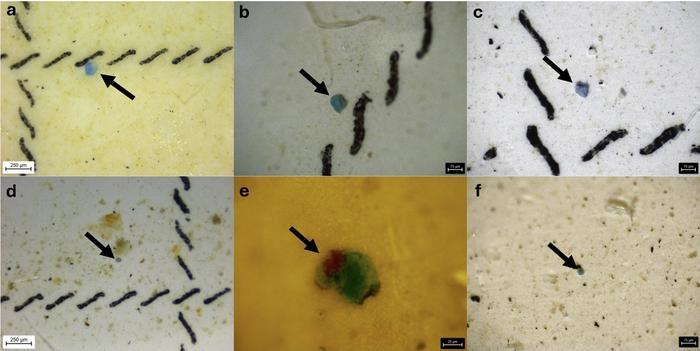
Credit: Ilias Dimeas / European Respiratory Society. License: CC BY-SA
The key problem isn't just that their methodology is the same as the one that showed ivermectin treated COVID-19. It is actually better than the methodology that set off the anti-vaccine craze among progressives in 1998; Andrew Wakefield's paper in The Lancet linking vaccines to autism.
And better than the shoddy paper that led to whole books claiming gluten is poison for non-celiacs (Wheat Belly, Grain Brain, et al.) which did for activists a decade ago what microplastics did then; link it to everything. Like epidemiologists claiming celiac disease was caused by frying pans.
Of the 100 patients in one hospital, 50 were subsequently diagnosed with lung cancer while 50 were not. Lung cancer patients also had more microplastics in their saline lung wash samples. Polypropylene and polyethylene were the most common microplastics and if you have read science for a while, a light bulb just went off in your head.
The smoking rate in Greece is 300 percent that of the United States. It is right up near Bulgaria in the highest smoking rate, even in Europe. Which is really saying something. Polypropylene and polyethylene have long been known to be in cigarette smoke, one of the very few legitimate carcinogens epidemiology has found. It was shown to be causing cancer back when International Agency for Research on Cancer was a legitimate U.N. health body, before they were infiltrated by activists signing expert witness contracts for lawyers before the group's findings were complete.
The authors have to concede that people with failing lungs also have lots of issues that healthy lungs cannot. Many things we inhale each day, including things we feel, are expressed out with no issue. Unless you are a cigarette smoker, you can't be 'inhaling' enough polypropylene and polyethylene to impact your lungs unless you live for 8,000 years.
Lung cancer remains the most common type of cancer because smoking is the most common risky lifestyle, followed by alcohol consumption. Activist epidemiologists instead "suggesting" it's microplastics rather than cigarettes threatens to hold back progress in ending the top cancer-causing agent in the world.
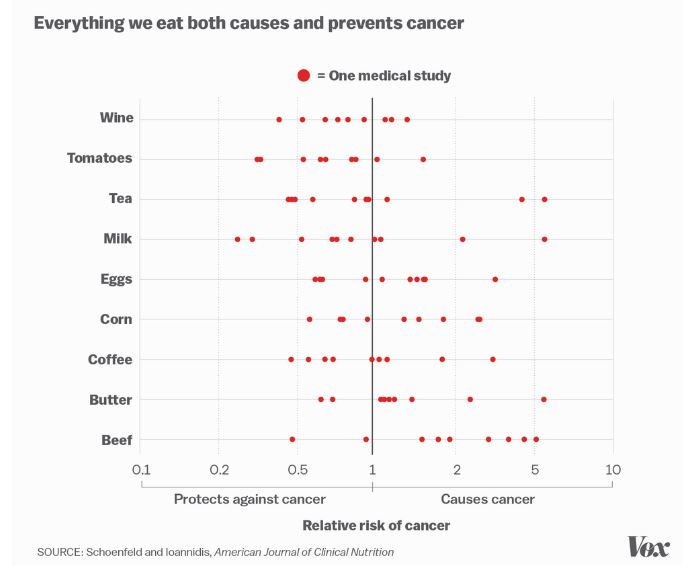
Because when the public reads that everything causes cancer, they think it means nothing does.
Link: “High respiratory microplastic burden across paired airway and tissue samples in patients with lung cancer”, by Ilias E. Dimeas et al; Presented in session “Pollution, mechanisms and respiratory health effects” at 12:30-14:00 CEST on Sunday 6 September 2026.