In the real world, currency and production are not a zero-sum game that someone needs to control and in social currency, it is much the same, according to social psychologists. Investing in the interests of other people and being generous with your time does not take anything away from anyone.
Yes, up to 10 percent of happiness is due to circumstance but 40 percent is based on what you choose to do.
The social psychologists who seek to understand happiness acknowledge it is multi-factorial (more real currency sure doesn't hurt) but say that even among impoverished people, the secret to happiness is relationships with others.
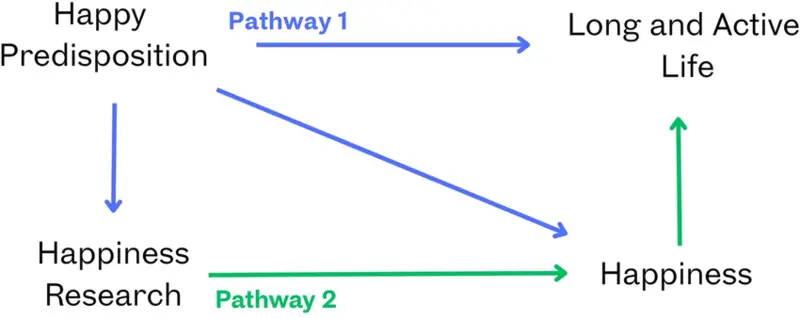
Potential patterns that might explain why a number of happiness Pioneers might be living long and active lives. Pathway 1 (blue) suggests a happy predisposition led Pioneers to choose happiness research, experience happiness in their lives, and live a long and active life. Pathway 2 suggests that insights from happiness research could have contributed to the happiness of the Pioneers and subsequently had an impact on their longevity.
The short version:
Relationships matter most - hug a friend. Even if you don't agree with something. It takes a left wing and a right wing for an airplane to fly while having only one leaves you in Los Angeles or Portland.
Money won't make you happy - though it will make you less unhappy if you have your basic needs met. If you want to work a minimum wage job and demand that be enough to buy you a two-bedroom house, you'll never be happy.
Yes, work can make you happier - you don't see a lot of happy hermits.
Your doomscrolling won't bring happiness but some habits will - Enjoy experiences whether they cost money or not, spend time on relationships you value, be a better listener, and you will be happier and people will be happier around you.
Stuff happens - people who always play the victim taught themselves that. If you learn to adapt and not demand the world shape itself to meet you where you chose to be today, you will be happier.
Life is a journey - you won't have chronic happiness because you check off something on a vision bard, high points and lows are both waypoints in a trip.
Citation: Stenlund, S., O’Connor, K.J. & Aknin, L. Reflections on the Past, Present, and Future of Well-Being Science from Several of Its Pioneers. J Happiness Stud 27, 111 (2026). DOI:10.1007/s10902-026-01092-6