The Chatter Box

Patrick Lockerby

Patrick Lockerby

Retired engineer, 73 years young. Computer builder and programmer. Linguist specialising in language acquisition and computational linguistics. Interested in every human endeavour except the scrooge theory of accountancy.
RSS Feed
All At Sea With The Vikings

All At Sea With The Vikings

All At Sea With The VikingsThe Vikings had an expression - hafvilla - which indicates a state of being at sea and having no sense of direction.  There are two modern English phrases that cover this situation: 'all at sea', and 'without a clue'.In order to more fully understand the Viking sagas we must learn, not what the Old Norse words mean as translated multiple times down the ages, but what the original words meant to a Viking.North and South

George Best - An Elizabethan Climate Scientist

George Best - An Elizabethan Climate Scientist

George Best - An Elizabethan Climate Scientistwhosoeuer could finde out in what proportion the Angle of the Sunne beames heateth, and what encrease the Sunnes continuance doeth adde thereunto, it might expresly be set downe, what force of heat and cold is in all regions.George Best, written between 1578 and 1584.Image courtesy NASA: http://researchpark.arc.nasa.gov/...

A Waymark Called Hvitsark

A Waymark Called Hvitsark

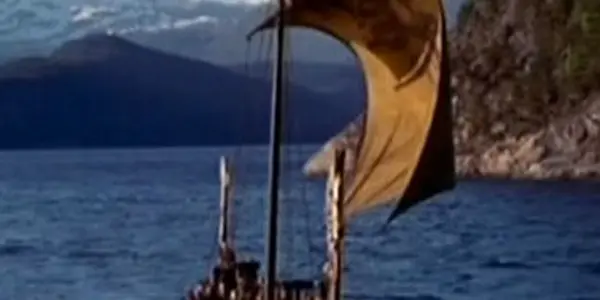
A Waymark Called HvitsarkThe Vikings did not use charts and instruments to navigate the open seas.  Having developed skills in coastal navigation they extended those skills to pelagic navigation, or 'island-hopping'.  Using the sun as a reference to determine where south lies, the Vikings could sail a reasonably accurate course.  If the wind was steady, the wind itself could be used as an aid to direction if the sun was hidden by heavy cloud.  It was only when wind and sun both failed the navigator that he was likely to miss his mark.A Viking ship sailing on a beam reach.Screenshot from The Vikings, 1958.

A Linguistic Paradox

A Linguistic Paradox

A Linguistic ParadoxIn science and law, we try to use words in a very precise fashion.  Accordingly, we define our terms as precisely as possible.  This gives rise to a paradox: each new definition of a word is added to the list of its existing definitions.  Our efforts to reduce the ambiguity of a word serve only to increase its ambiguity.

At The Hazard Of His Ears

At The Hazard Of His Ears

At The Hazard Of His EarsWhat has the hazard of a person's ears to do with science history?The history of Arctic science, exploration and discovery is sprinkled with many as yet unsolved mysteries, many concerning the meanings of words in old documents.  In this, the first article in a short series, I present my thoughts on some of these mysteries for discussion.  By clarifying an obscure passage in an old document we may add to its credibility as a source of historical or scientific data.  Thus the solving of these mysteries will - I suggest - add to our knowledge of Arctic history, and hence of Arctic science.

Arctic Ice November 2010

Arctic Ice November 2010

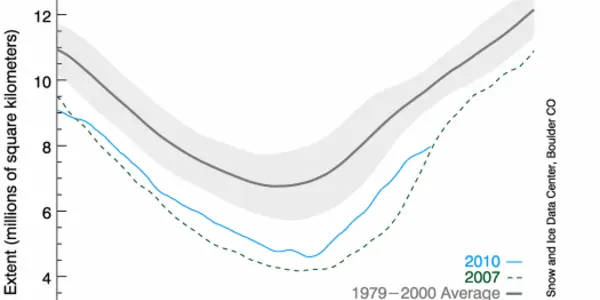
Arctic Ice November 2010Return to previous Arctic conditions is unlikelyRecord temperatures across Canadian Arctic and Greenland, a reduced summer sea ice cover, record snow cover decreases and links to some Northern Hemisphere weather support this conclusionArctic Report Card 2010http://www.arctic.noaa.gov/reportcard/

A Fake Smithsonian Exhibit

A Fake Smithsonian Exhibit

A Fake Smithsonian ExhibitThe integrity of the Smithsonian Institution hinges on disseminating knowledge in an objective, thorough and fair manner. Like the freedoms that our forefathers included in the First Amendment, the freedom to present information must be a top priority of the Smithsonian. The intrusion of bias or censorship would compromise the ability of the Institution to fulfill its Congressional mandate, and would jeopardize the outstanding reputation the Institution has developed in its 157-year history.Senator Joe Lieberman, May 20 2003

Arctic Ice October 2010

Arctic Ice October 2010

Arctic Ice October 2010... the land being very high and full of mightie mountaines all covered with snowe, no viewe of wood, grasse or earth to be seene, and the shore two leages of into the sea so full of yce as that no shipping cold by any meanes come neere the same. The lothsome viewe of the shore, and irksome noyse of the yce was such as that it bred strange conceipts among us, so that we supposed the place to be wast and voyd of any sencible or vegitable creatures, whereupon I called the same Desolation.John_Davis, 1587

Petermann's Progress

Petermann's Progress

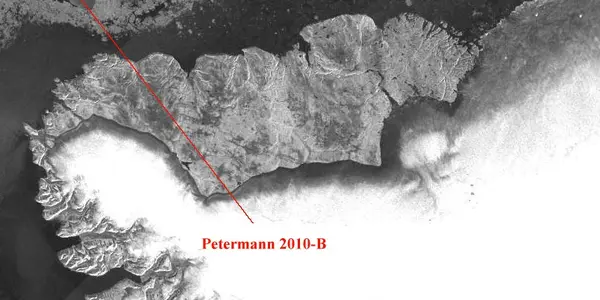
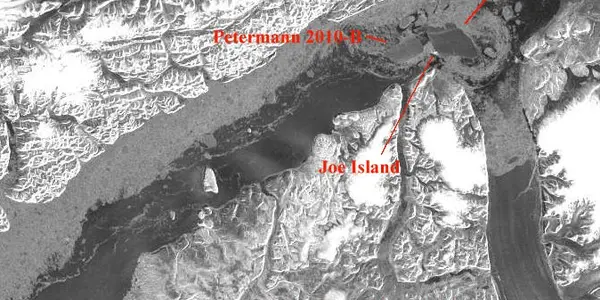
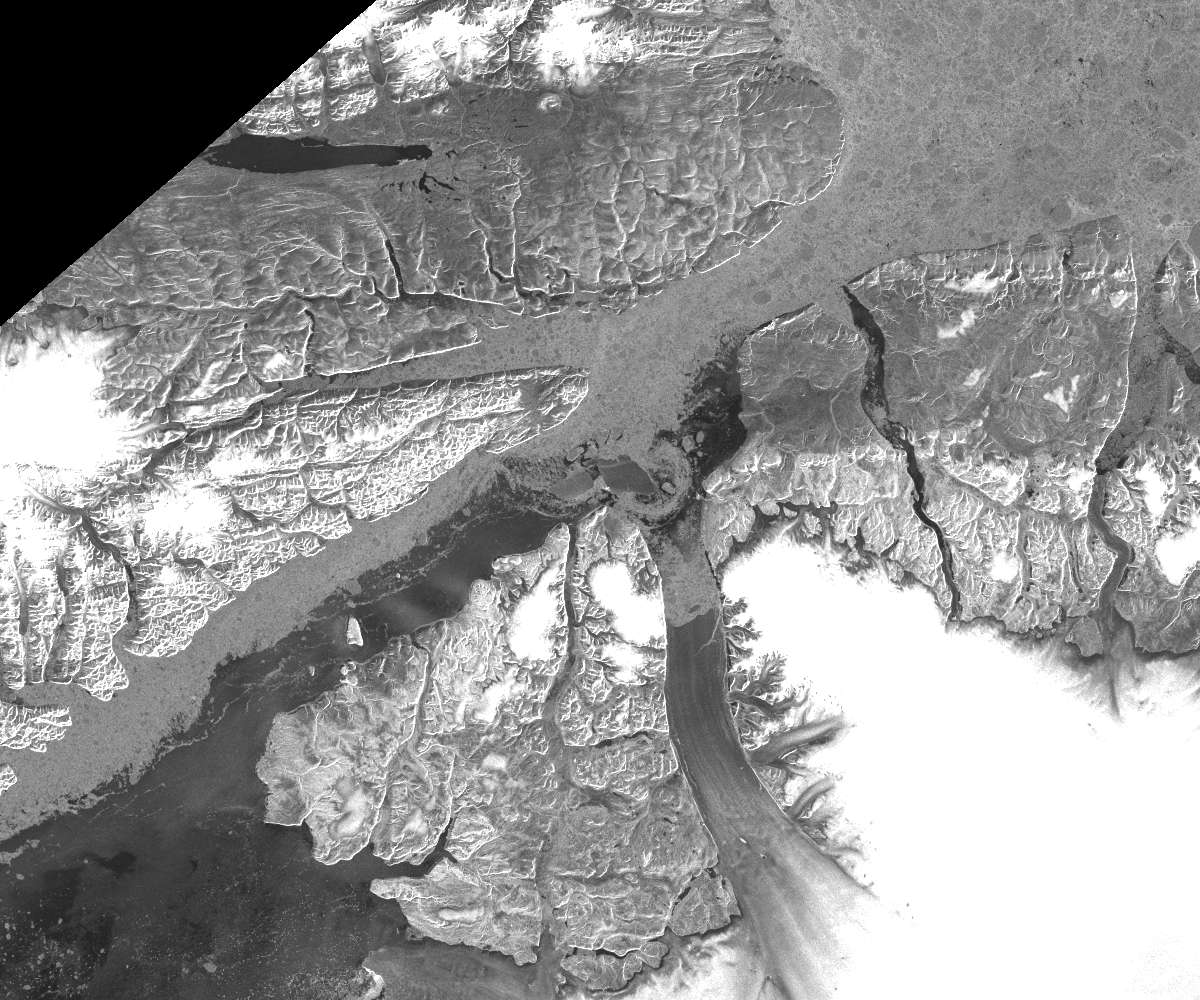
Petermann's ProgressThe huge ice island which calved from Petermann Glacier on August 4th was stuck in the mouth of Petermann Fjord for quite some time.  As I had suggested, it did not get into Nares Strait as a single ice island.  It broke into two main parts: Petermann 2010-A and Petermann 2010-BPetermann Ice Island 2010-B

Petermann Ice Island - Now There Are Two

Petermann Ice Island - Now There Are Two

Petermann Ice Island - Now There Are twoPetermann Ice Island (2010) has now broken into two parts.   The smaller island is about 80 km2.  It is the thinner of the two and is likely to melt away first.  Based on the labels already in use in comments1, I shall designate the larger island as Petermann 2010-A and the smaller one as Petermann 2010-B.Petermann Ice Islands A and Bimage source: http://ocean.dmi.dk/arctic/images/MODIS/Kennedy/201009091609.ASAR.jpg