The Chatter Box

Patrick Lockerby

Patrick Lockerby

Retired engineer, 73 years young. Computer builder and programmer. Linguist specialising in language acquisition and computational linguistics. Interested in every human endeavour except the scrooge theory of accountancy.
RSS Feed
Japan Earthquake Increases Flood Risk In Fukushima

Japan Earthquake Increases Flood Risk In Fukushima

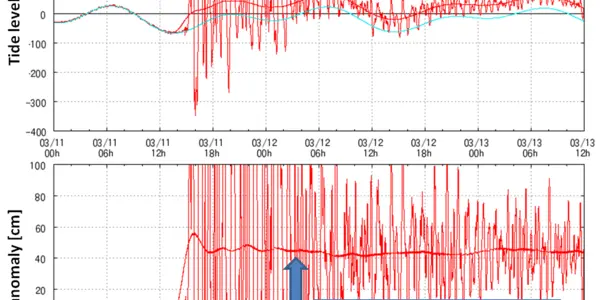
Japan Earthquake Increases Flood Risk In FukushimaDuring the 2011 Tohoku Earthquake in Japan, the ground level sank along the coast near Onahama Port,  Fukushima Prefecture. This has caused recent average tide levels to rise by about 40cm.A tide level recording from Onahama Port shows the tide level fluctuations at the time of the quake and the subsquent increase in tide levels. Tide level at Onahama, Fukushima Prefecture.image source: JMA

Royally Screwed

Royally Screwed

Royally ScrewedGetting screwed - in the sense of being at the receiving end of a whole bunch of badness - has its origins in carpentry.  It's nothing to do with thumbscrews.  It has everything to do with keeping a thing under pressure - or releasing it.  Things can get literally screwed up or screwed down.If you are trying to clamp something with screws you are screwing something down.  If you have a screw loose then your efforts will result in a screw-up.  A screw-up in a steam locomotive shop may result in a most public screw-up somewhere along the line.

What Is A BLEVE?

What Is A BLEVE?

What is a BLEVE?A BLEVE is a Boiling-Liquid Expanding-Vapor Explosion.It is fairly common knowledge that removing the radiator cap of a vehicle with a hot engine will cause the ejection of boiling water.

Japan's Nuclear Emergency - The Straight Goods - Update

Japan's Nuclear Emergency - The Straight Goods - Update

Japan's Nuclear Emergency - The Straight Goods - UpdateThe latest reports coming from Japan indicate that the current nuclear emergency is not as great as some people had feared it might be.Despite some media reports: there have been no reactor explosions.  Period.Radiation levels are falling, according to the most recent news release by the Japanese government.

Why We Should Ban Food

Why We Should Ban Food

Why We Should Ban FoodBan food?Which food?All of it, probably.Why we should ban foodOh yes, and medicines.They're just too darn dangerous to produce, that's why.  Quite apart from the risks of various kinds of toxins getting in your food and killing you, think of all the dangers associated with the production and distribution of food.  Tractors, fertilizer, diesel fuel, - I'd ban those just for starters.I hope to show by a perfectly logical chain of argument that if we ban the industries most likely to trigger disasters then we must stop eating.

Japan's Nuclear Emergency - The Straight Goods

Japan's Nuclear Emergency - The Straight Goods

Update: For the latest bulletins, please see my new article:Japan's Nuclear Emergency - The Straight Goods - Updateoriginal post begins here:Japan's Nuclear Emergency - The Straight GoodsThere is much speculative and inaccurate reporting in the world's media regarding the problems caused to nuclear power facilities in Japan by the recent earthquake.The Tokyo Electric Power Company - TEPCO - is releasing frequent updates on the emergency situation which followed the earthquake.

Infinite Growth And The Crisis Cocktail - A Guest Article

Infinite Growth And The Crisis Cocktail - A Guest Article

Infinite Growth And The Crisis Cocktail - a guest articleInfinite growth is not possible in any real-world context, yet many otherwise rational people behave - economically speaking - as if they believe that it is possible.Some time ago I invited Neven- who keeps the Arctic Sea Ice blog and pops up as a commenter on many web sites - to write an article on this topic.  I had read his many comments about it and had been very impressed with his insights.

Arctic Ice March 2011 - Update #1

Arctic Ice March 2011 - Update #1

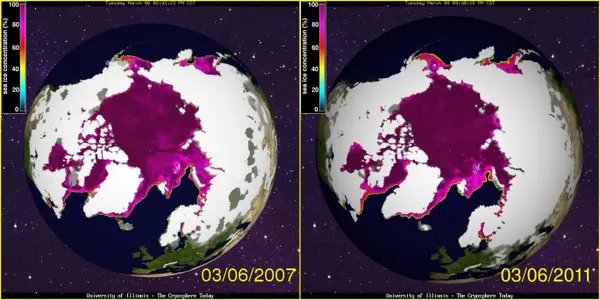
Arctic Ice March 2011 - Update #1Edited March 11 2011 - content added below ice prediction chart to address points raised in readers' comments.The Arctic sea ice extent has grown a little recently.  Ice extent as of  March 10 2011 is  13749688 km2 (as reported by IJIS).  Ice extent commonly grows until the end of March.  But any ice which forms now will still be very young, thin, salty ice when the temperatures begin to rise - not forgetting that temperatures are already anomalously high over much of the Arctic.

How Humans Can Affect Nature

How Humans Can Affect Nature

Some people accept that the world's climate systems are changing, but try to argue that humans are too puny to be any part of the cause.The reason for putting forward such an argument in the face of a wealth of historical and scientific data seems to be a matter of political agenda: if humans are too puny to cause climate change then they must surely be too puny to put matters right.  It follows that 'right thinking people' should oppose any attempt to 'do something' about climate change - especially at the taxpayers expense.

Arctic Ice March 2011

Arctic Ice March 2011

Arctic Ice March 2011In April 2010 a late upward blip in Arctic sea ice extent led some bloggers to write about 'recovery'.  The blip was anomalous, hence there is no reason to expect a repetition this year.  On the contrary, it is likely that ice extent will not increase by any significant amount before the 2011 melt season gets fully under way - if it is not under way already.

Arctic Ice 2011 - Sail, Steam And Satellites

Arctic Ice 2011 - Sail, Steam And Satellites

Arctic Ice 2011 - Sail, Steam and SatellitesThe NSIDC will shortly be publishing its report for March 2011.  I expect the report to conclude that Arctic sea ice extent for February 2011 was the 'lowest in the satellite record'.  That would mean the 'lowest ever recorded in human history', since we have abundant data on historic ice extent.There is a false argument doing the rounds of the blogs: words to the effect that we have no accurate knowledge of ice extent before the age of satellites.  This is, of course, nonsense on stilts in clown boots with a squirting flower - the latter being filled with complete and utter bilge with an admixture of absolute hogwash.

Ross Ice Shelf - Some Observations

Ross Ice Shelf - Some Observations

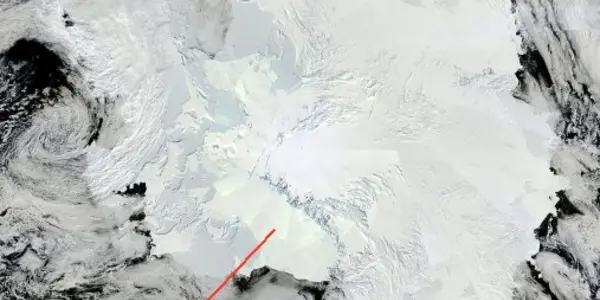
Ross Ice Shelf - Some ObservationsThe Ross Ice Shelf is the largest ice shelf in the world with an area of roughly 182,000 square miles - 472,000 square kilometers.  The shelf  was named after Captain James Clark Ross who discovered it  January 28th, 1841.  The coast to which the ice shelf is attached reaches nearer to the south geographic pole than any other part of Antarctica's coast.Image source: NASA/MODIS Antarctic mosaic.