Even With Unlimited Student Loans, College Is Unaffordable
In the 1980s, universities lobbied Congress to make student loans unlimited, so everyone could get a college education and have higher earnings. Now, college is more unaffordable than ever.
Ιf you asked a multilingual friend which language they find more emotional, the answer would usually be their mother tongue – the one they used while growing up and probably still use at home. This does not mean they are incapable of expressing emotion in another language, but there is a clear link between first languages and stronger emotional expression.This has a lot to do with where and how we learn a language. Our first language, which linguists call L1, is usually acquired in the emotionally charged settings of childhood and family. Second languages, known as L2, are often learned in more neutral contexts, such as schools and institutions, making them less emotionally intense.
Why did people think cannibalism was good for their health? The answer offers a glimpse into the zaniest crannies of European history, at a time when Europeans were obsessed with Egyptian mummies.Driven first by the belief that ground-up and tinctured human remains could cure anything from bubonic plague to a headache, and then by the macabre ideas Victorian people had about after-dinner entertainment, the bandaged corpses of ancient Egyptians were the subject of fascination from the Middle Ages to the 19th century.Mummy maniaFaith that mummies could cure illness drove people for centuries to ingest something that tasted awful.
You have probably heard the phrase “follow your gut” – often used to mean trusting your instinct and intuition. But in the context of the gut-brain axis, the phrase takes on a more literal meaning. Scientific research increasingly shows that the brain and gut are in constant, two-way communication. Once overlooked, this connection is now at the forefront of growing interest in neuroscience, nutrition and mental health.
US health secretary Robert F. Kennedy Jr has announced he is cancelling US$500 million (£374 million) of research into mRNA vaccines, citing unproven concerns about their safety and long-term effects.Kennedy has claimed that mRNA vaccines “encourage new mutations and can actually prolong pandemics” – a misleading statement that contradicts the scientific consensus on viral evolution and effects of vaccination. Joshua Sukoff/ShutterstockBut scientific research shows that mRNA vaccines have saved millions of lives.
Tumors can destroy the blood vessels of muscles even when the muscles are nowhere close to the tumor. That is the key finding of a new study that my colleagues and I recently published in the journal Nature Cancer.Muscle loss in cancer patients is a major health problem, but the exact causes of how precisely tumors affect muscles remain an active area of research.
Imagine walking into your doctor’s office feeling sick – and rather than flipping through pages of your medical history or running tests that take days, your doctor instantly pulls together data from your health records, genetic profile and wearable devices to help decipher what’s wrong.This kind of rapid diagnosis is one of the big promises of artificial intelligence for use in health care. Proponents of the technology say that over the coming decades, AI has the potential to save hundreds of thousands, even millions of lives. What’s more, a 2023 study found that if the health care industry significantly increased its use of AI, up to US$360 billion annually could be saved.
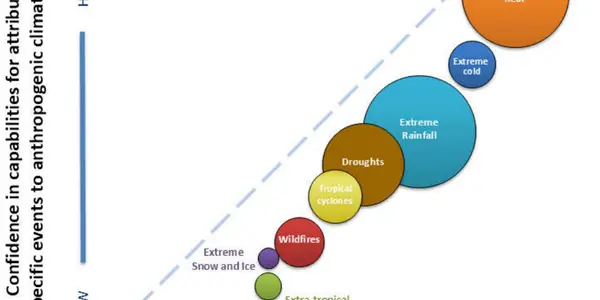
Flash floods like the one that swept down the Guadalupe River in Texas on July 4, 2025, can be highly unpredictable. While there are sophisticated flood prediction models and different types of warning systems in some places, effective flood protection requires extensive preparedness and awareness.
Colleges and universities are struggling to stay afloat.The reasons are numerous: declining numbers of college-age students in much of the country, rising tuition at public institutions as state funding shrinks, and a growing skepticism about the value of a college degree.
More than 60% of traffic collisions at intersections involve left turns. Some U.S. cities – including San Francisco, Salt Lake City and Birmingham, Alabama – are restricting left turns.Dr. Vikash Gayah, a professor of civil engineering at Penn State University and the interim director of the Larson Transportation Institute, discusses how left turns at intersections cause accidents, make traffic worse and use more gas.How dangerous are left turns at intersections?
People dedicated to the art of grilling often choose lump charcoal – actual pieces of wood that have been turned into charcoal – over briquettes, which are compressed charcoal dust with other ingredients to keep the dust together and help it burn better.The kinds of wood used to make lump charcoal affect how it burns and how the food tastes when grilled. Dedicated grillers are often willing to pay a premium for higher heat, no additives, particular flavors and the cleaner burn they get from particular wood species in lump charcoal.Buyers probably expect the label to accurately report how much charcoal they are getting, what kind of wood it is, and where the wood was grown.
The U.S. Department of Energy’s decision to claw back US$3.7 billion in grants from industrial demonstration projects may create an unexpected opening for American manufacturing.
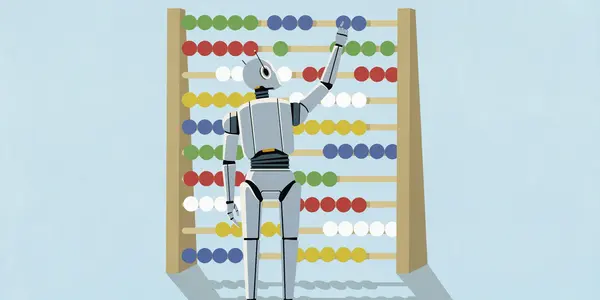
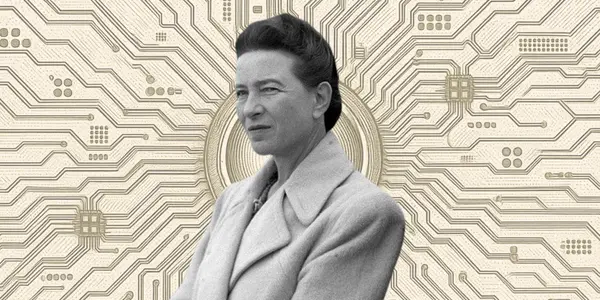
Today’s large language models (LLMs) process information across disciplines at unprecedented speed and are challenging higher education to rethink teaching, learning and disciplinary structures. As AI tools disrupt conventional subject boundaries, educators face a dilemma: some seek to ban these tools, while others are seeking ways to embrace them in the classroom. Both approaches risk missing a deeper transformation that was predicted 60 years ago by Canadian communication theorist Marshall McLuhan.