The Conversation

The Conversation

The Conversation

The Conversation is an independent source of news and views, funded by the academic and research community and delivered direct to the public. The Conversation launched in Australia in March 2011.
RSS Feed
I Earned It, You're Privileged - The Paradox In How We View Achievement

I Earned It, You're Privileged - The Paradox In How We View Achievement

The concept of “hard work v privilege”, and what either one says about someone’s social status, is an important one. Politicians regularly draw dividing lines between “hardworking families” and those receiving “handouts”. Others distinguish between those whose wealth increases while they sleep, and small business owners who work hard for their incomes.

Not Just The Holidays: The Hormonal Shift Of Perimenopause Could Be Causing Weight Gain

Not Just The Holidays: The Hormonal Shift Of Perimenopause Could Be Causing Weight Gain

You’re in your mid-40s, eating healthy and exercising regularly. It’s the same routine that has worked for years. Yet lately, the number on the scale is creeping up. Clothes fit differently. A bit of belly fat appears, seemingly overnight. You remember your mother’s frustration with the endless dieting, the extra cardio, the talk about “menopause weight.” But you’re still getting your periods. Menopause should be at least half a decade away. So what’s really going on?

Anxiety For Christmas: How To Cope

Anxiety For Christmas: How To Cope

Christmas can be hard. For some people, it increases loneliness, grief, hopelessness and family tension, and the festive season has a way of turning ordinary concerns into urgent ones. Not because something terrible is guaranteed to happen, but because more is often at stake: money, time, family dynamics, travel and expectations.A large study found a small but consistent dip in people’s wellbeing in the run-up to Christmas. One psychological process that often shows up under this pressure is worry.

The Enceladus Idea In The Search For Life Out There

The Enceladus Idea In The Search For Life Out There

A small, icy moon of Saturn called Enceladus is one of the prime targets in the search for life elsewhere in the solar system. A new study strengthens the case for Enceladus being a habitable world.The data for those new research findings comes from the Cassini spacecraft, which orbited Saturn from 2004-2017. In 2005, Cassini discovered geyser-like plumes of water vapor and ice grains erupting continuously out of cracks in Enceladus’ icy shell.

Deontological Decisions: Your Mother Tongue Never Leaves You

Deontological Decisions: Your Mother Tongue Never Leaves You

Ιf you asked a multilingual friend which language they find more emotional, the answer would usually be their mother tongue – the one they used while growing up and probably still use at home. This does not mean they are incapable of expressing emotion in another language, but there is a clear link between first languages and stronger emotional expression.This has a lot to do with where and how we learn a language. Our first language, which linguists call L1, is usually acquired in the emotionally charged settings of childhood and family. Second languages, known as L2, are often learned in more neutral contexts, such as schools and institutions, making them less emotionally intense.

Mummy Mia! Medicinal Cannibalism Was More Recent Than You Think

Mummy Mia! Medicinal Cannibalism Was More Recent Than You Think

Why did people think cannibalism was good for their health? The answer offers a glimpse into the zaniest crannies of European history, at a time when Europeans were obsessed with Egyptian mummies.Driven first by the belief that ground-up and tinctured human remains could cure anything from bubonic plague to a headache, and then by the macabre ideas Victorian people had about after-dinner entertainment, the bandaged corpses of ancient Egyptians were the subject of fascination from the Middle Ages to the 19th century.Mummy maniaFaith that mummies could cure illness drove people for centuries to ingest something that tasted awful.

Inflammatory Bowel Disease May Accelerate Dementia

Inflammatory Bowel Disease May Accelerate Dementia

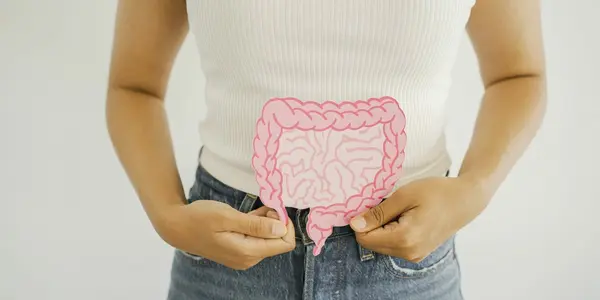
You have probably heard the phrase “follow your gut” – often used to mean trusting your instinct and intuition. But in the context of the gut-brain axis, the phrase takes on a more literal meaning. Scientific research increasingly shows that the brain and gut are in constant, two-way communication. Once overlooked, this connection is now at the forefront of growing interest in neuroscience, nutrition and mental health.

RFK Jr Is Wrong About MRNA Vaccines - They Make COVID-19 Less Deadly

RFK Jr Is Wrong About MRNA Vaccines - They Make COVID-19 Less Deadly

US health secretary Robert F. Kennedy Jr has announced he is cancelling US$500 million (£374 million) of research into mRNA vaccines, citing unproven concerns about their safety and long-term effects.Kennedy has claimed that mRNA vaccines “encourage new mutations and can actually prolong pandemics” – a misleading statement that contradicts the scientific consensus on viral evolution and effects of vaccination. Joshua Sukoff/ShutterstockBut scientific research shows that mRNA vaccines have saved millions of lives.

Activin-A: Muscle Weakness In Cancer Survivors May Be Treatable

Activin-A: Muscle Weakness In Cancer Survivors May Be Treatable

Tumors can destroy the blood vessels of muscles even when the muscles are nowhere close to the tumor. That is the key finding of a new study that my colleagues and I recently published in the journal Nature Cancer.Muscle loss in cancer patients is a major health problem, but the exact causes of how precisely tumors affect muscles remain an active area of research.

More AI In Health Care Could Save Lives

More AI In Health Care Could Save Lives

Imagine walking into your doctor’s office feeling sick – and rather than flipping through pages of your medical history or running tests that take days, your doctor instantly pulls together data from your health records, genetic profile and wearable devices to help decipher what’s wrong.This kind of rapid diagnosis is one of the big promises of artificial intelligence for use in health care. Proponents of the technology say that over the coming decades, AI has the potential to save hundreds of thousands, even millions of lives. What’s more, a 2023 study found that if the health care industry significantly increased its use of AI, up to US$360 billion annually could be saved.