The Conversation

The Conversation

The Conversation

The Conversation is an independent source of news and views, funded by the academic and research community and delivered direct to the public. The Conversation launched in Australia in March 2011.
RSS Feed
Why Replacing Teachers With Automated Education Lacks Imagination

Why Replacing Teachers With Automated Education Lacks Imagination

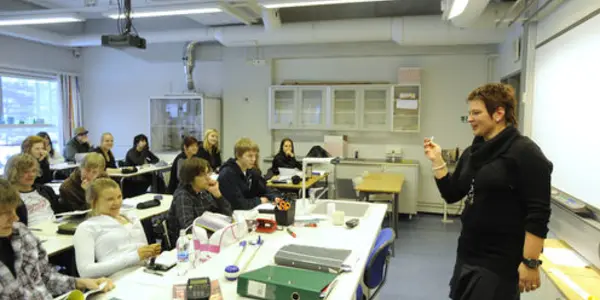
By George Veletsianos, Royal Roads UniversityThe belief that technology can automate education and replace teachers is pervasive. Framed in calls for greater efficiency, this belief is present in today’s educational innovations, reform endeavors, and technology products. We can do better than adopting this insipid perspective and aspire instead for a better future where innovations imagine creative new ways to organize education.

Old Dope, New Tricks: The New Science Of Medical Cannabis

Old Dope, New Tricks: The New Science Of Medical Cannabis

Somewhere in this much-incinerated plant lies valuable medicine: perhaps a treatment for cancer or an antidote to obesity.Prensa 420/Flickr, CC BY-NCBy David J. Allsop, University of Sydney and Iain S. McGregor, University of SydneyMedicinal cannabis is back in the news again after a planned trial to grow it in Norfolk Island was blocked by the federal government last week. The media is ablaze with political rumblings and tales of public woe, but what does science have to say on the subject?

How To Save Brazil’s Atlantic Forest On A Shoestring Budget

How To Save Brazil’s Atlantic Forest On A Shoestring Budget

The Brazilian Atlantic forest is home to animals, birds, plants, and tourist trains. Credit: EPABy Cristina Banks-Leite, Imperial College LondonBrazil’s Atlantic forest – Mata Atlântica – is one of the world’s great biodiversity hotspots, rivalling even the Amazon. Running on and off for several thousand kilometres along the coast, the forest is home to 10,000 plant species that don’t exist anywhere else, more bird species than the whole of Europe, and more than half of the country’s threatened animal species.

Ignore The IQ Test: Your Level Of Intelligence Is Not Fixed For Life

Ignore The IQ Test: Your Level Of Intelligence Is Not Fixed For Life

By Bryan Roche, National University of Ireland MaynoothWe’re getting more stupid. That’s one point made in a recent article in the New Scientist, reporting on a gradual decline in IQs in developed countries such as the UK, Australia and the Netherlands. Such research feeds into a long-held fascination with testing human intelligence. Yet such debates are too focused on IQ as a life-long trait that can’t be changed. Other research is beginning to show the opposite.

It’s About Time: Young Galaxies Were Dense, Intense Star-Makers

It’s About Time: Young Galaxies Were Dense, Intense Star-Makers

There are some massive galaxies out there, and we now know a little about their early life.Credit: Lauro Roger McAllister/Flickr, CC BYBy Edward Taylor, University of MelbourneA piece of the galaxy formation puzzle may have fallen into place, thanks to a team of European and American astronomers peering into the depths of our early universe.

Global 'Roadmap' Shows Where To Put Roads Without Costing The Earth

Global 'Roadmap' Shows Where To Put Roads Without Costing The Earth

Deforestation along roads in Rondonia, Brazil. Source: Google EarthBy Bill Laurance, James Cook University“The best thing you could do for the Amazon is to blow up all the roads.” These might sound like the words of an eco-terrorist, but it’s actually a direct quote from Professor Eneas Salati, a forest climatologist and one of Brazil’s most respected scientists.

Changes To Bugs In The Gut Could Prevent Food Allergies

Changes To Bugs In The Gut Could Prevent Food Allergies

Allergic reactions to food have dramatically increased over the past 10 to 20 years. Dan Peled/AAP, CC BYBy Alexandra Miller, The Conversation and Reema Rattan, The ConversationChanging the bacteria in the gut could treat and prevent life-threatening allergies, according to research published in the Proceedings of the National Academy of Sciences (PNAS) journal today.