Adaptive Complexity

Michael White

Michael White

Welcome to Adaptive Complexity, where I write about genomics, systems biology, evolution, and the connection between science and literature, government, and society. I'm a biochemist and a postdoctoral fellow in the Department of Genetics and the Ce…
RSS Feed
The $60,000 Man

The $60,000 Man

This is what your next doctor's visit will sound like after you get your genome sequenced:

60 Years Of End Of The World Sci-Fi: 1952

60 Years Of End Of The World Sci-Fi: 1952

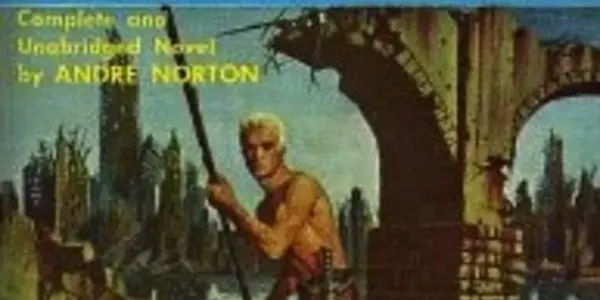
Wilson Tucker’s 1952 The Long Loud Silence is The Road of the 1950’s. It’s a pure survival story, one about the complete deterioration of society into a vicious, gritty state of no-holds-barred struggle after a nuclear and biological holocaust. Unlike many other post-apocalyptic novelists, Tucker doesn’t envision much society left at all after total destruction: there is no reversion to a pseudo-Native American tribal state, to early rural 19th century agrarianism, to feudalism, to a theocratic dystopia. A total Hobbesian (or Darwinian) state of nature prevails for decades after the catastrophe. Society does not rebuild.

60 Years Of End Of The World Sci-Fi: 1951

60 Years Of End Of The World Sci-Fi: 1951

For our 1951 pick, we have the work of one of the great British writers of sci-fi’s Golden Age. In The Day of the Triffids, John Wyndham presents a horror story of giant, ambulatory, flesh-eating plants that topple humans from their dominance of a world they thought they had tamed. The theme is common to other post-apocalyptic stories of the 1950’s: we may tame nature with our technological wizardry, but our undoing is our inability to tame ourselves. We take our dominance of the planet for granted - and it wouldn’t take much to find ourselves in a relentlessly hostile world where we have compete as a species with a new top dog.

60 Years Of End Of The World Sci-Fi: 1950

60 Years Of End Of The World Sci-Fi: 1950

Our 1950 pick is L. Sprague de Camp and P. Schuyler Miller's Genus Homo, a pulp adventure that takes place a million years in the future after after the genus Homo has destroyed itself, leaving the field wide open for other ape species to evolve higher intelligence, science, and technological war. Although Genus Homo was first published in book form in 1950, it was written for the pulp magazine Super Science Stories in 1941, and thus it really counts as a pre-Hiroshima novel. Nevertheless the book makes a clear reference to the possibility of humanity’s destruction by nuclear bombs, putting it firmly in the post-apocalyptic genre.

60 Years Of End Of The World Sci-Fi: 1949

60 Years Of End Of The World Sci-Fi: 1949

With 1949, we arrive at one of the big classics in the post-apocalyptic genre. George Stewart’s Earth Abides is epic in both scope and ambition, a bittersweet story that captures the immense scale on which nature operates, and which portrays the scientific achievements of human civilization as a minor ripple in nature’s broad course. It is a book focused on big themes: the reversibility of human history, the connection between technology and civilization, the impermanence of human achievements.

Citizen Science Isn't Enough Science For Citizens

Citizen Science Isn't Enough Science For Citizens

Via GenomeWeb's Daily Scan, some comments on the prospects for citizen science in The Chronicle of Higher Education.Only one of the three appears to be an actual research scientist, but they make good points about the role of citizen science in research. For example, Clifford A. Lynch, Director, Coalition for Networked information:I'm not wild about the term "crowdsourcing" and I think it's actually important to disentangle the developments.

60 Years Of End Of The World Sci-Fi: 1948

60 Years Of End Of The World Sci-Fi: 1948

Written two years after the catastrophic destruction of World War II ended with the initiation of the nuclear age, Aldous Huxley's Ape and Essence is a graphically violent, sexually explicit, and surrealistic expression of Huxley’s bitter disappointment in humanity.

60 Years Of End Of The World Sci-Fi: 1947

60 Years Of End Of The World Sci-Fi: 1947

The End of the World as FarceOur road to The Road begins in 1947, with Ward Moore's Greener Than You Think, an apocalyptic comic satire that just cries out for a movie adaptation by Trey Parker and Matt Stone.The End of the World as Farce

60 Years Of Post-Apocalyptic Fiction: A Chronological Curriculum Of The Ultimate Catastrophe

60 Years Of Post-Apocalyptic Fiction: A Chronological Curriculum Of The Ultimate Catastrophe

What does the Neanderthal genome have to with post-apocalyptic science fiction? It may seem like odd inspiration, but Neanderthals have aroused my interest in one of the most venerable genres of science fiction. Last summer I was awaiting the release of The Road movie, reading a piece of classic post-nuclear sci-fi (John Wyndham's 1955 The Chrysalids), and thinking about some recent news stories on the (then) forthcoming Neanderthal genome sequence.I was struck by the thought that the last Neanderthals lived in what could be thought of as a post-apocalyptic world. They were going extinct. Did they notice? What kind of world did the last survivors live in?

Prospects For Understanding Complexity: A Final Rant

Prospects For Understanding Complexity: A Final Rant

In the final chapter of the book Complexity: A Guided Tour, Mitchell gets to the heart of the real issues that I've been griping about in this blog. She begins by citing a harsh, 1995 piece by John Horgan, “Is Complexity A Sham?”The article contained two main criticisms. First, in Horgan’s view, it was unlikely that the field of complex systems would uncover any useful general principles, and second, he believed that the predominance of computer modeling made complexity a “fact-free science.”

Cell Phones, Cancer, Einstein

Cell Phones, Cancer, Einstein

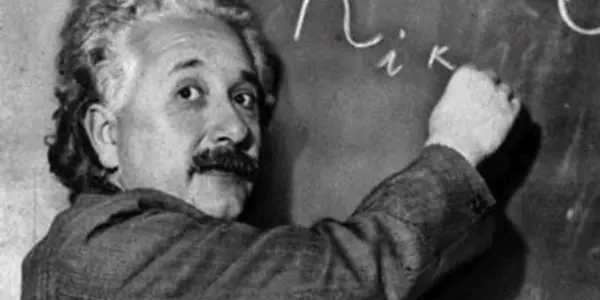
I'm a big fan of arch-skeptic Bob Park, but his position on cell phones and cancer is just too simplistic: