Adaptive Complexity

Michael White

Michael White

Welcome to Adaptive Complexity, where I write about genomics, systems biology, evolution, and the connection between science and literature, government, and society. I'm a biochemist and a postdoctoral fellow in the Department of Genetics and the Ce…
RSS Feed
Friction And Epistasis: You Can't Ignore 'em

Friction And Epistasis: You Can't Ignore 'em

Personalized genetics is hot in the news right now, but in fact we're generally terrible at using genotypes to predict who is going to get a disease. One villain here is the phenomenon known as epistasis, which essentially means that the physiological effect of one genetic variant depends on what other genetic variants (in other genes) are hanging around in the same genome.

Eat Less, Abuse Science

Eat Less, Abuse Science

Eternity Soup, by Greg CritserHarmony Books, 2010Scientific Blogging's own Greg Critser has tackled the science and business of eternal youth in his latest book. It's an engaging and excellent read. Critser is a fine storyteller, mixing his discussion of science with the lively personalities of the people involved. The book covers the latest science behind aging, the people who have shaped their lifestyles around that science, and the businesses that are trying to capitalize prematurely on the science.

Gene Patents Gone

Gene Patents Gone

The big news in biotech this week is the court ruling against Myriad Genetics and gene patents. As Genomics Law Report discusses, this was an overwhelming win for the plaintiffs (which included the ACLU and various research and patients' organizations). The judge issued a summary judgement, which means 1) that both sides of the case agreed on the basic facts, and 2) the law was judged to be overwhelmingly on the plaintiff's side:

Blogging As Personal RAM

Blogging As Personal RAM

I forget how I ran across this link, but this blogger reflects on how six years of blogging has helped his work as a political analyst:

My 10 Books

My 10 Books

Over at Marginal Revolution economist Tyler Cowan has started one of those blog trends, and many other bloggers have followed like a pack of lemmings.

The Trouble With Biology

The Trouble With Biology

I've heard a senior colleague say that there is nothing fundamental left to be discovered in biology. It's a nagging worry some people have, including myself. What's left, according to some (including one of molecular biology's founders Sydney Brenner), is to work out the details of particular systems, implied by already established paradigms - kind like chemistry.

The Cost Of Biological Entropy Management

The Cost Of Biological Entropy Management

Information processing and entropy management - that's what organisms are about, right? Information and entropy are terms that get people excited, and yet it's extremely difficult to integrate formal ideas about information, free energy, entropy, etc. (much of this from modern statistical mechanics) into a meaningful biological framework. People (including myself) love to toss around terms like entropy and information, but in most cases I have encountered, efforts to apply these concepts to molecular/cellular biology are hopelessly vague and unhelpful. Once you get beyond the level of individual proteins in biology, it's difficult to apply some of the traditional concepts of physical chemistry.

Free Energy and the Purpose of Life

Free Energy and the Purpose of Life

Sean Carroll at Cosmic Variance on Entropy and the Meaning of Life:We know that entropy increases as the universe evolves. But why, on the road from the simple and low-entropy early universe to the simple and high-entropy late universe, do we pass through our present era of marvelous complexity and organization, culminating in the intricate chemical reactions we know as life?...

Hot Topics And Mental Intertia

Hot Topics And Mental Intertia

Bad habits of ineffective science: Trends in Biochemical Sciences has a piece on Mental inertia in the biological sciences. I'm not quite sure what to make of it, but the piece does contain some interesting thoughts on hot topics vs. important topics:Almost any scientist wants to work on solving an important problem, but at any given moment, it can be difficult to distinguish the topics that are ‘important’ from those that are ‘hot’. Often the scientific community does not immediately recognize the true significance of the work, and it can remain obscure for many years...

Oryx And Crake

Oryx And Crake

End of the World Sci-FiOryx and Crake (2003)The Year of the Flood (2009)by Margaret AtwoodIn Atwood's world of Oryx and Crake, biotechnology has ruined the world, in more ways than one. As the result of a near-omnipotent ability to manipulate biology, society has become structured around biotech consumer products and services, with a major division between the consumers and the powerful biotech companies. The consumers (the "pleebs") live in a polluted, crime-ridden world outside of the highly secure, isolated, wealthy compounds where the employees of the biotech corporations live.

Pseudoscience And Sex-Segregated Education

Pseudoscience And Sex-Segregated Education

Do boys and girls learn differently? Differently enough to justify sex-segregated classes and schools?The ACLU says no and is involved in a case in Louisiana:

Using Slime Mold To Build Rail Networks

Using Slime Mold To Build Rail Networks

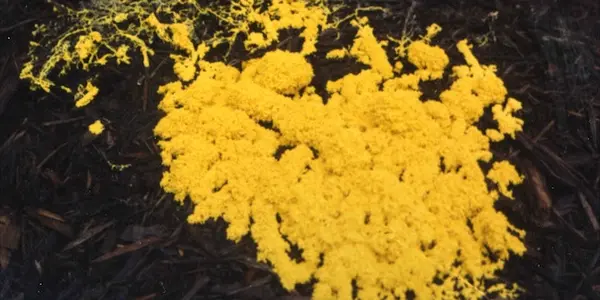
I seem to have developed a reputation for hating networks, but really, it's just tough love. Complex, adaptive, self-organizing networks are fascinating (and inspired the title of this blog), and they deserve a rigorous scientific treatment. Decentralized control mechanisms are incredible, and, although they're all around us, they go completely against our instincts for good, hierarchical design for control systems. How does a cell adapt to environmental signals, in the absence of a brain or CPU? And how do we make our own, human-built networks as self-adaptive and robust as biological ones? In other words (for those of you who've endured lengthy lectures on the subject in physiology class), how do you effectively engineer homeostasis?