Chemistry Wide Open

jcbradley

jcbradley

Jean-Claude Bradley is an Associate Professor of Chemistry and the E-Learning Coordinator for the College of Arts and Sciences at Drexel University in Philadelphia, PA. He teaches organic chemistry and runs UsefulChem, an open source science project …
RSS Feed
Easy 3D Realistic Molecules in Second Life

Easy 3D Realistic Molecules in Second Life

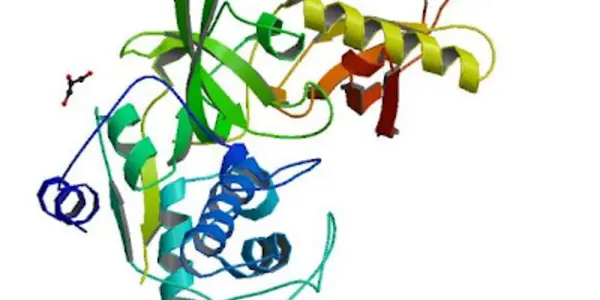
Hiro Sheridan has just significantly upgraded the capabilities of his molecule rezzer in Second Life. It is available on the Chemistry Corner on Drexel Island.

Open Notebook Science Case Studies Session in Second Life

Open Notebook Science Case Studies Session in Second Life

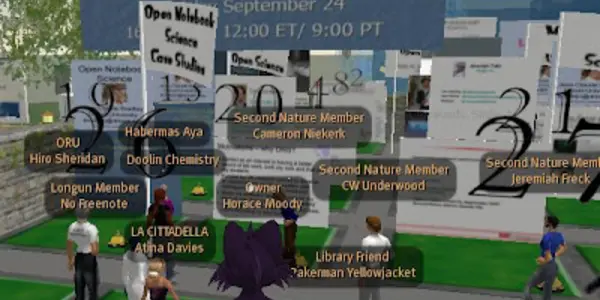
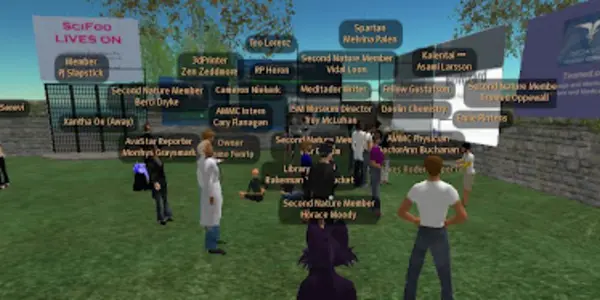
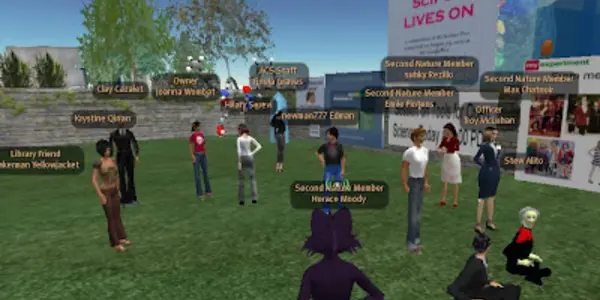
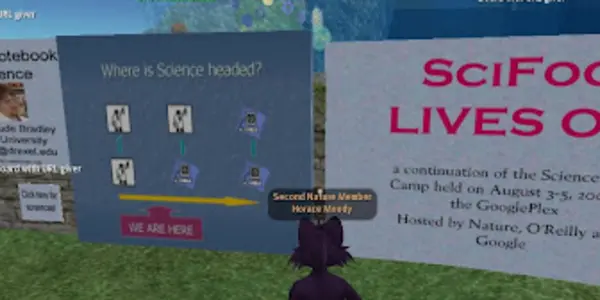
We had about a dozen participants at the Open Notebook Science Case Studies SciFoo Lives On session yesterday.

I talked about using a free and hosted blog (Blogger), wiki (Wikispaces), referral tracker (Sitemeter), mailing list (Google Groups), molecule database (

Chemistry and Biology Poster Area in Second Life

Chemistry and Biology Poster Area in Second Life

Ding dong - one of my bells emailed me today.

Someone was at the gate of the BioChemFoo area on Nature Island in Second Life and wanted assistance with setting up a poster.

When I logged on I found Lali Ewry (a researcher) and Bronwen Pizzicato (from Nature Protocols) still waiting there.

Conferences Don't Have to End

Conferences Don't Have to End

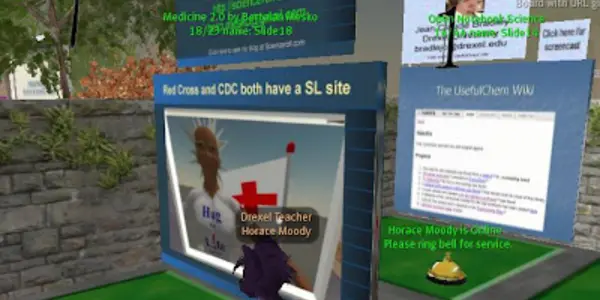
If you wander around the SciFoo Lives On area, you will notice that some of the poster booths have bells.

If the text above them is green, it indicates that the presenter is somewhere in Second Life. The visitor can then just click on the bell to summon the presenter with a quick message.

If the text is red, the presenter is not in world. However, a message can still be sent and it will show up the next time they log in.

Now this can be problematic for users who created a Second Life account exclusively for the purpose of presenting or attending a SciFoo Lives On session since they are unlikely to login again and retrieve IM messages.

A New Look for SciFoo Lives On

A New Look for SciFoo Lives On

There have been a few additions to the SciFoo Lives On area on Nature Island in Second Life.

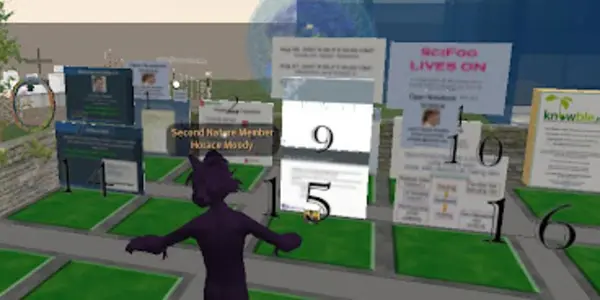
The area has been divided into 36 numbered plots and most posters from the first two sessions have been moved to fill the first 10 spots. Posters for future sessions will be added sequentially as they are created. (Thanks to Eloise and Beth for help with this!)

This makes the area much more appealing and permits regular poster sessions where people can meet at any time to present and discuss. I have been a huge fan of the effectiveness of poster sessions in Second Life after my first experience.

Medicine 2.0 SciFoo Lives On Session

Medicine 2.0 SciFoo Lives On Session

Our second session of SciFoo Lives On took place today on Nature Island in Second Life (SLURL).

The topic was Medicine and Web 2.0, as suggested by Bertalan Mesko (Berci) at the last session.
We had a very good turnout, with about 30 people. Many returned from last week's session but there were many new faces also.

Berci ran the session with me and helped out all week with getting our presenters set up with posters and general navigation.

Medicine 2.0 Session on Second Life Aug 27

Medicine 2.0 Session on Second Life Aug 27

Here's a reminder for our second SciFoo Lives On session in Second Life tomorrow Monday August 27, 2007 16:00 GMT/12:00 ET. Berci and I will be the moderators.

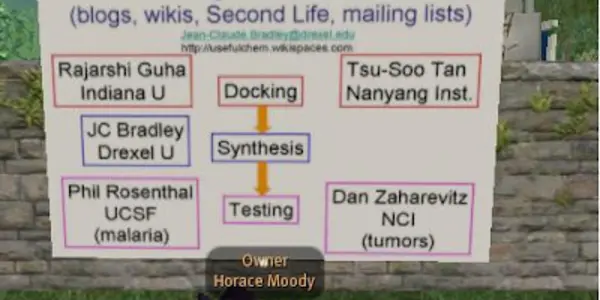
I've put up a one page poster to briefly discuss our drug development efforts with our collaborators using Web 2.0 tools.

Everyone is welcome to attend.

First SciFoo Lives On Session

First SciFoo Lives On Session

We had our first SciFoo Lives On session today on Nature Island (Second Nature) in Second Life. We had about a dozen people participate.

The topic was "Tools for Open Science". I wanted to explore more fully the actual technology that people are starting to use towards doing more open science. I started off by showing screenshots of UsefulChem wiki and blogs from my poster.

Falcipain Collaboration to Fight Malaria

Falcipain Collaboration to Fight Malaria

Thanks to Barry Bunin of Collaborative Drug Discovery, we now have a collaborator who will run assays on the compounds from our CombiUgi project. We'll be using our account on CDD to manage the activity results.

Phil Rosenthal from UCSF has agreed to run assays on the inhibition of falcipain-2, an enzyme used by the malaria parasite to digest hemoglobin.

SciFoo Lives On Second Life

SciFoo Lives On Second Life

After complaining that there was not enough time to cover everything at the Science Foo Camp, and after getting some very positive feedback from our chemical reaction mechanism representation in Second Life, it occurred to me that it would make sense to attempt to continue the conversation in a virtual medium.

I have previously presented a poster in Second Life and I was thoroughly impressed with how well it worked.

Report from SciFoo

Report from SciFoo

The past few days have been quite stimulating.

The SciFoo conference started right after I got off the plane in San Francisco on Friday evening around 18:00 and lasted till midnight. With the jetlag from the east coast I was exhausted but the energy of the meeting definitely kept my interest.

Friday night was the only part of the conference deliberately set up with the traditional format of speakers. The most impressive talk was on the big picture of planetary energy input and consumption. It was refreshing because the speakers seemed genuinely concerned with reporting on the actual state of things, instead of building up evidence to support their pet eco-solution.

Animations Of Chemical Reactions On Second Life

Animations Of Chemical Reactions On Second Life

I have previously commented on how organic chemistry can be incorporated into Second Life.

Andrew Lang has created a script to generate 3D structures of molecules and shown how to represent the docking of a molecule in the receptor site of a protein (this is important for demonstrating how drugs can interfere with infectious agents like the parasite that causes malaria).

I have also described how these molecules can be indexed by common search engines, like Google, so that people can discover locations in Second Lif