Chemistry Wide Open

jcbradley

jcbradley

Jean-Claude Bradley is an Associate Professor of Chemistry and the E-Learning Coordinator for the College of Arts and Sciences at Drexel University in Philadelphia, PA. He teaches organic chemistry and runs UsefulChem, an open source science project …
RSS Feed
Five Blogs That Make Me Think

Five Blogs That Make Me Think

Hari Jayaram just listed my blog as one that makes him think. Keeping the meme going, I'll list 5 that have had an impact on me.

1. Beth's Second Life Beth Ritter-Guth has been a huge inspiration for me and she is the main reason I pulled the trigger on getting involved with Second Life for my teaching and research. We have collaborated on many other projects involving social software and new approaches to education - Google her name for many more goodies.

2. Chem-bla-ics Egon Willighagen has been instrumental to the cheminformatics community.

Nature Island Review

Nature Island Review

Joanna Scott just wrote a nice little review of what is going on at Nature Island (slurl) on Nature's Nascent blog since her return from the American Chemical Society meeting in Chicago.

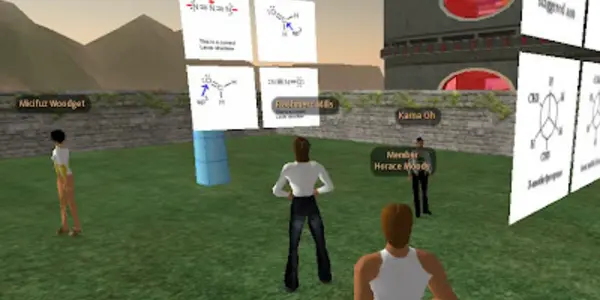
The Blue Obelisk Cemetery, where I give my students quiz races on Fridays was featured (only possible through help from Beth and Eloise - thanks again!).

Assignment Zero

Assignment Zero

Fans of Open Source Science (or just the open source concept in general) should take a look at Assignment Zero. Jay Rosen writes on the About page:
Inspired by the open-source movement, this is an attempt to bring journalists together with people in the public who can help cover a story. It's a collaboration among NewAssignment.Net, Wired, and those who choose to participate.

The investigation takes place in the open, not behind newsroom walls. Participation is voluntary; contributors are welcome from across the Web. The people getting, telling and vetting the story are a mix of professional journalists and members of the public -- also known as citizen journalists.

First Compound Submitted to DTP-NCI

First Compound Submitted to DTP-NCI

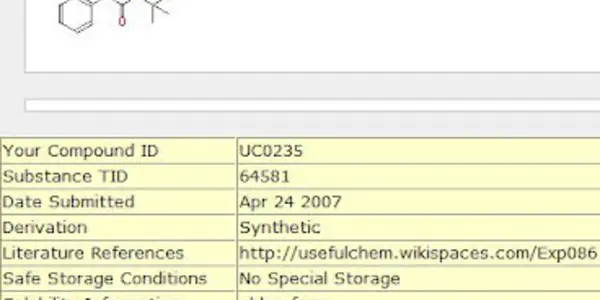
As I mentioned earlier, we were interested in getting our compounds screened by the Developmental Therapeutics Program (DTP) at the National Cancer Institute. The first entry is now done and from what I understand it will be 8-10 business days before we get a request for the compound after they check for uniqueness.

This is good timing because it really is time to gather up all of the isolated and characterized compounds in UsefulChem on one page, which is now linked on the left navigation bar on the wiki.

Social Software in Chemical Education Article

Social Software in Chemical Education Article

The April 23, 2007 Chemistry and Engineering News article on the Social Software in Education symposium at the American Chemical Society spring meeting in Chicago has come out. I gave a talk there on using blogs and wikis to teach organic chemistry.

The article is a pretty comprehensive report on the session and does a good job of summarizing the key technologies currently being tried without much hype. Podcasting, vodcasting, tagging and wikis were discussed from teachers and librarians using them in different ways.

NCI - UsefulChem Open Science Link

NCI - UsefulChem Open Science Link

Earlier this week, I was contacted by Daniel Zaharevitz, Chief of the Information Technology Branch of the Developmental Therapeutics Program at the National Cancer Institute. He is also involved with the NIH Roadmap Molecular Libraries Initiative. We had a very interesting talk about Open Science and what kind of further impact it could have in drug development. Lets just say that we are on the same page on this issue and I'm really impressed with what Dan is trying to achieve.

The first thing we are going to do is start shipping the compounds we make for an automatic screening of 60 cell lines for tumor inhibitory activity.

Edison Predicted Educational Podcasting?

Edison Predicted Educational Podcasting?

I often find that books on the history of science and technology are fun to read because they give me an opportunity to try to forget what I know about how things turned out and piece together an older worldview.

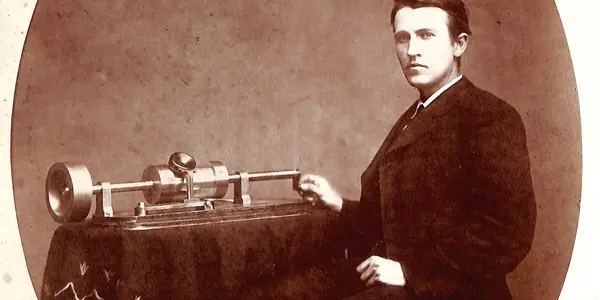
For example, I am currently reading the new book by Tom McNichol "AC/DC - The Savage Tale of the First Standards War". On p. 38 is reprinted part of Edison's article in North American Review, written in 1878, shortly after his invention of the phonograph:
Among the many uses to which the phonograph will be applied are the following:
...
2. Phonographic books, which will speak to blind people without effort on their part.
...
9.

Getting the Hang of Quizzes in Second Life

Getting the Hang of Quizzes in Second Life

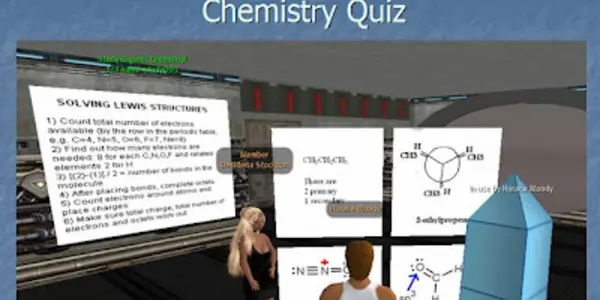
We just ran a quiz race in Second Life for the second time yesterday in my organic chemistry class. Two of the students were physically with me in the classroom and two were coming in remotely.
Initially, Beth was still the owner of the obelisks and we learned the hard way that all but one stop working when the owner is not on the island.

Scooped by a Blog

Scooped by a Blog

The Scientist printed an article on the blogging of scientific data, with a focus on Reed Cartwright's inclusion as a co-author on a paper because of ideas that he shared on his blog. This is an impressive example of how social software can serve as a primary information source in science (whether intentionally or not).

The part I enjoyed the most (referring to Bora):
Zivkovic concedes that he has had less luck in convincing people that he should post his dissertation on his blog before he publishes it.

Molecules on Second Life

Molecules on Second Life

Thanks to Joanna Scott, we've been taking advantage of our invitation to contribute to the Nature island on Second Life. Beth made a copy of the Open Notebook Science building and created a cemetery filled with blue obelisks so that multiple students can take organic chemistry quizzes at the same time.

Searching for Molecules with ChemSpider

Searching for Molecules with ChemSpider

There is a new kid on the cheminformatics block.

ChemSpider Beta went live on Saturday March 24, 2007 with over 10 million compounds. Anyone using other free online molecular databases (like eMolecules or Chemistry Search Lookup Service) should definitely give this one a spin.

At this time, it is possible to use the system not only to find molecules in databases but also to predict molecular properties (like density and boiling point), which can come very handy.

But the best reason for keeping an eye on this one is that it is led by Tony Williams.

Communicating Chemistry at the ACS meeting

Communicating Chemistry at the ACS meeting

Yesterday I presented my second talk, this time on the use of blogs and wikis to do laboratory research. This was under the Chemical Education symposium: Communicating Chemistry. Most of the talks were about teaching so it was perhaps not the best audience but that doesn't concern me as much since I started recording my talks at conferences.

And if I hadn't presented there I would have missed meeting Thomas Poon, whose high quality organic chemistry pre-lectures I have used in my classes as an extra resource for a while.