Fine Scientist

Hatice Cullingford

Hatice Cullingford

Welcome to my universe.. where there is Peace University. As Fine Scientist, PhD, I write about my interest in various fields, from energy to space, chemistry, mathematics, plants, paleontology, physics, psychology, astronomy, humor ... My column…
RSS Feed
To Err Is Cellular, To Respond Human (A Call For Action)

To Err Is Cellular, To Respond Human (A Call For Action)

This is an experiment to stir up reaction: a significant proportion of the literature is misleading or false, tainting up to 20% of publications. What are the consequences?
1. The wastage of funds on research that is flawed and often misleading. Millions of dollars are spent on research  every year worldwide.
2. This situation is unnecessary, unacceptable, and the antithesis of fundamental scientific principles.
3. Loss of public support for science. The longer the current situation continues, the more likely it is to damage the credibility of science and risk the loss of public funding.

Where The Bones Are: The Evidence Of Early Cannibals In Western Europe

Where The Bones Are: The Evidence Of Early Cannibals In Western Europe

December 8 SPIEGEL ONLINE has two articles posted on skulls. The former covers a stone age mystery in a town called Herxheim in Germany. We read a graphic description of cannibalism during the demise of a small settlement 7 millennia ago. Yet nearby Speyer celebrates this year its 2,000-year anniversary with a postage stamp. There were surely mass migrations long before the arrival of the Romans in the area 2,000 years ago as the neolithic map (below) marks them as well as two-way trips between Africa and Sicily not shown on the map. Many bones and skulls were located in two shallow ditches that surround ten buildings.

To Know CO2

To Know CO2

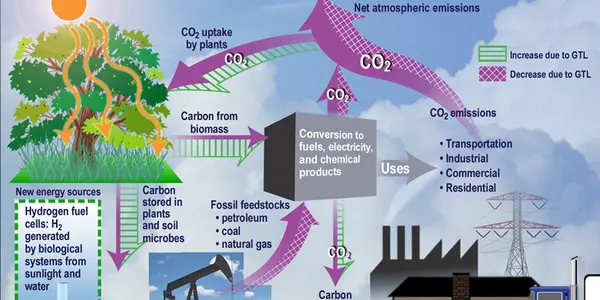
You have to know your CO2! When I wrote Your CO2 Is Bad For You In Your Space Suit I was not talking about the EPA. Here I will not talk about the life's CO2 exchange cycle either unless I have to. My focus is on some new thoughts related to carbon dioxide. Have you observed the birth of a CO2 molecule for instance?
 

Mice And Men Miles Apart In Fertility, Mickey

Mice And Men Miles Apart In Fertility, Mickey

Dear Mickey - How is life? Life is tough, says my friend. Do you agree? I wanted to write to you for a number of reasons. Believe it or not, people still remember that you turned 80 last year: Happy Eighties to you, M-I-C-K-E-Y!
 

What's Up With Climate Change And The Ozone Hole?

What's Up With Climate Change And The Ozone Hole?

Yes, what's up! Here we go. Climate change and ozone depletion affect one another in complicated ways. In simple terms, "the ozone hole" pertains to the Southern Hemisphere. However, reductions in ozone content in the stratosphere above the Arctic have been recorded during the northern winter untill early spring (January through March) in recent  years. These reductions, about 20-25%, are much smaller than those measured in each southern spring (September through December) over the Antarctic ozone hole, the big one.

Picture - Bacteria Talking - In Color

Picture - Bacteria Talking - In Color

Bacteria are abundant in soil, water, and air as well as in the depths of the Earth's crust, organic matter, and live animals or plants. They are also abundantly social -- among themselves and with others. Not only do they interact with each other but also with their host. Bacillus subtilis and Streptomyces coelicolor are two examples from daily life. The former would be involved with the ropiness of spoiled bread. But the well-known Streptomyces produce the soil's earthy aroma and flavor and the majority of today's antibiotics.

Mapping The Large And Small

Mapping The Large And Small

We are aware of the large and small. We can, for example, taste and smell the earthy but invisible Streptomyces coelicolor. This soil-dwelling bacterium might have been in the first rock on Earth. Some estimates mention a time that was almost 3.8 billion years ago. 
 
Here is the Streptomyces coelicolor chromosome as it was mapped by S. D. Bentley et al. in 2002. 

"Adam's Ancestors" - A  Mary Leakey Interview That Almost Didn't Happen!

"Adam's Ancestors" - A Mary Leakey Interview That Almost Didn't Happen!

SB: Richard Leakey, your son, was scheduled to speak at Yale in 2003 on "Wildlife Wars." The announcement mentioned that he and his team, The Hominid Gang, had found more than 200 fossils since Richard took part in his first expedition in 1967. I must apologize for my first name basis here. There are several Leakey names that I would like to bring up.
Leakey: You are a darling! First, my interview occurs on Halloween. Second, you start with Richard, my pride and joy. He is a good boy. He found the "Turkana Boy" in 1984 near Kenya's Lake Turkana -- a complete skeleton. One of the rare finds, you know.