You Feel Colder As You Age: The Science Reason Why
Older people report feeling colder, enough that it is clearly happening, but why has been a mystery. Until now.
Older people report feeling colder, enough that it is clearly happening, but why has been a mystery. Until now.

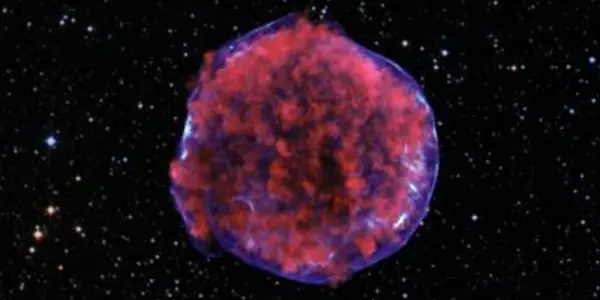
When a star goes supernova, it shines brightly for a few weeks or months before fading away. Yet the material blasted outward from the explosion glows hundreds or thousands of years later, leaving a picturesque supernova remnant. But how?
Tycho's supernova was witnessed by astronomer Tycho Brahe in 1572. The appearance of this "new star" stunned those who thought the heavens were constant and unchanging. At its brightest, the supernova rivaled Venus before fading from sight a year later. Modern astronomers know that the event Tycho and others observed was a Type Ia supernova, caused by the explosion of a white dwarf star. The explosion spewed elements like silicon and iron into space at speeds of more than 11 million miles per hour (5,000 km/s).
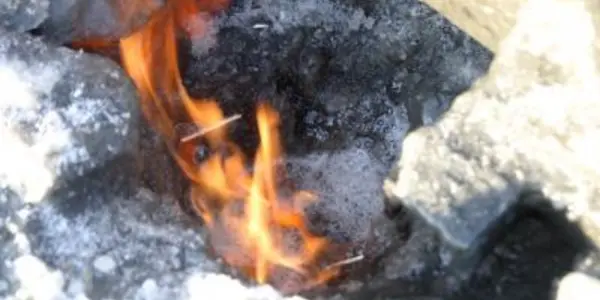
Methane has 30 times the warming effect of carbon dioxide but lacks the press awareness of its greenhouse gas cousin.
And a new study in
Nature Geoscience has found that the seafloor off the coast of Northern Siberia is releasing more than twice the amount of methane as previously estimated - the East Siberian Arctic Shelf is venting at least 17 million tons
(teragrams) of methane into the atmosphere each year.

Can you artificially strengthen a marital bond?
Scientists at the Bonn University Medical Center found that if oxytocin is administered to men and if they are shown pictures of their partner, the bonding hormone stimulates the reward center in the brain, increass the attractiveness of the partner, and strengthens monogamy.
Using chest pain characteristics (CPCs) specific to women in the early diagnosis of acute myocardial infarction (AMI, heart attack) in the emergency department does not seem to be supported by the findings of a new study.
While about 90 percent of patients with AMI present with chest pain or discomfort, some patients present without typical chest pain. Sex-specific differences in symptom presentation among women have received increasing attention. But it remains unclear whether identifying sex-specific CPCs is possible to help physicians differentiate women with AMI from women with other causes of chest pain, the authors write in the study background.
Retroviruses are important pathogens capable of crossing species barriers to infect new hosts, but knowledge of their evolutionary history is limited. By mapping endogenous retroviruses (ERVs), retroviruses whose genes have become part of the host organism's genome, researchers at Uppsala University, Sweden, can now provide unique insights into the evolutionary relationships of retroviruses and their host species.

Archaeologists working in Nepal have uncovered evidence of a structure at the birthplace of the Buddha dating to the sixth century B.C., the first archaeological material linking the life of the Buddha and the movement he founded to a specific century.
The Maya Devi Temple at Lumbini, Nepal, has long been considered the birthplace of the Buddha and now excavations have uncovered the remains of a previously unknown sixth-century B.C. timber structure under a series of brick temples. Laid out on the same design as those above it, the timber structure contains an open space in the center that links to the nativity story of the Buddha himself.
Playing violent video games not only increases aggression, it also leads to less self-control and more cheating, according to a paper in Social Psychological and Personality Science.
The psychologists found that teens who played violent video games ate more chocolate and were more likely to steal raffle tickets in a lab experiment than were teens who played nonviolent games. The effects were strongest in those who scored high on a measure of moral disengagement – the ability to convince yourself that ethical standards don't apply to you in a particular situation.

Global warming was set in motion around 1600 AD, it seems.
Because carbon dioxide emissions persist for a long time, even a sudden halt today means the carbon dioxide already in Earth's atmosphere could continue to warm our planet for hundreds of years, according to a numerical model which suggests that it might take a lot less carbon than previously thought to reach the global temperature scientists deem unsafe.
Awe-inspiring moments, like the sight of the Grand Canyon or the Aurora Borealis, might increase our tendency to believe in God and the supernatural, according to a new paper in Psychological Science which suggests that awe-inspiring sights increase our motivation to make sense of the world around us. Learning geology may be too hard to it's easier to default to aliens or religion.

Zombies are really popular - "...and zombies" attached to the end of well-established works of fiction have become a common trope and once they began to swarm over the literary canon, it was only a matter of time before English Lit academics began to overthink the phenomenon.
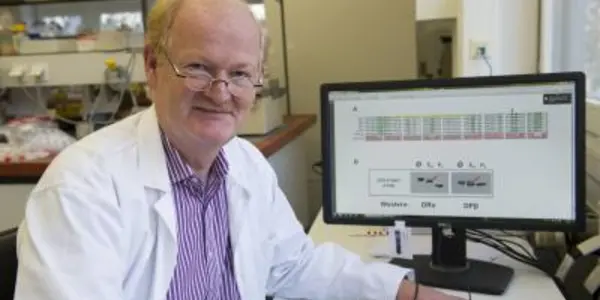
An international collaboration has discovered a novel receptor, which allows the immune system of modern humans to recognize dangerous invaders, and subsequently elicits an immune response. The blueprint for this advantageous structure was also identified in the genome of Neanderthals, hinting at its origin.
The receptor provided these early humans with immunity against local diseases. The presence of this receptor in Europeans but its absence in early men suggests that it was inherited from Neanderthals.

The government enjoyed tremendous success steering the goals of science in World War II and that continued during the NASA era. Since that time, government has exercised greater control of science through larger and larger pools of funding that have gradually supplanted corporate basic research.
But government control of funding has its downside; fashions in research funding (solar power now, before that), reward structures in universities that focus on government grants and streamlining of scientific agendas undermine traditional scientific norms and may even result in science bubbles.