You Feel Colder As You Age: The Science Reason Why
Older people report feeling colder, enough that it is clearly happening, but why has been a mystery. Until now.
Older people report feeling colder, enough that it is clearly happening, but why has been a mystery. Until now.

Sunshine is out. If you aren't slathering yourself in SPF 150 chemicals to keep it off of you, you're going to get skin cancer and no one will feel bad.
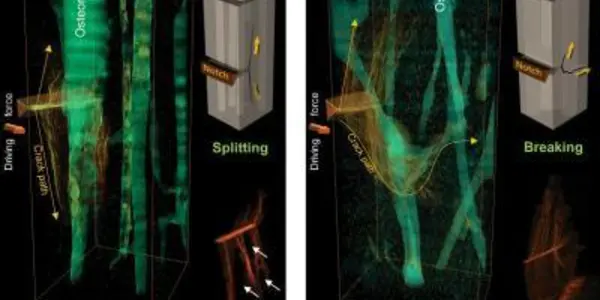
It's not that simple. As we grow older our bones become more fragile and a team of researchers have shown that this bone-aging process can be significantly accelerated through deficiency of vitamin D - which we naturally get from sunshine.
Vitamin D deficiency is a widespread medical condition that has been linked to the health and fracture risk of human bone on the basis of low calcium intake and reduced bone density. Working at Berkeley Lab's Advanced Light ALS , the international team demonstrated that vitamin D deficiency also reduces bone quality.

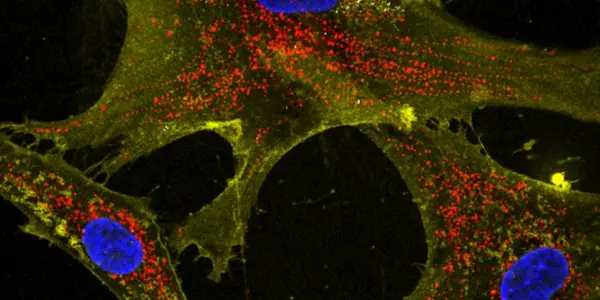
Every cell in an organism's body has the same copy of DNA, though different cells do different things so some function as brain cells, while others form muscle tissue. How can the same DNA make different things happen? Science is a step closer to answers and maybe even to putting in a piece of the autism puzzle.
Scientists know that much of what a gene does and produces is regulated after it is turned on. A gene first produces an RNA molecule, to which tiny RNA binding proteins (RBPs) bind and control its fate. For example, some of these proteins cut out parts of the RNA molecule so that it makes a particular protein, while other RBPs help destroy the RNA before it even produces a protein.
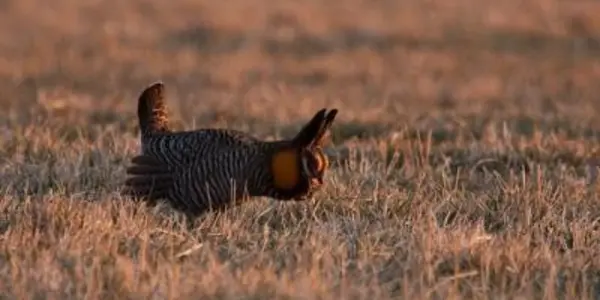
Wind power may be hard on endangered eagles but greater prairie chicken populations are still okay, say ecologists.
The work, led by Kansas State University professor of biology Brett Sandercock concluded that wind turbines have little effect on greater prairie chickens - and that female survival rates increased after wind turbines were installed. Yes, wind power led to great life expectancy for females, a combination which should make this study worthy of the New York Times.

In the 2012 presidential election, seven out of 10 Latino immigrants voted for President Obama. News pundits declared the Latino vote as unattainable for the Republican Party.
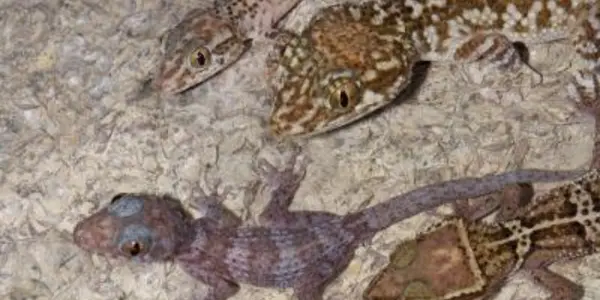
Madagascar represents only one percent of the earth's area but is home to about three percent of all animal and plant species on the planet - it has long been known as a hotspot of biodiversity.
New research in Proceedings of the Royal Society B suggests the island's heyday of species development may be all but over.
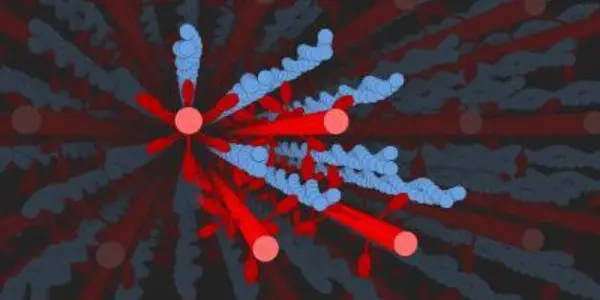
The basics of how a muscle generates power are this: Filaments of myosin tugging on filaments of actin shorten, or contract, the muscle. Since the 1950s physiologists have had a formula – the length-tension curve – that accurately describes the force a muscle exerts at all points from fully outstretched, when every weight lifter knows there is little strength, to the middle points that display the greatest force, to the completely shortened muscle when, again, strength is minimized.
The assumption for 50 years has been that the power comes primarily from what's happening straight up and down the length of the muscle.
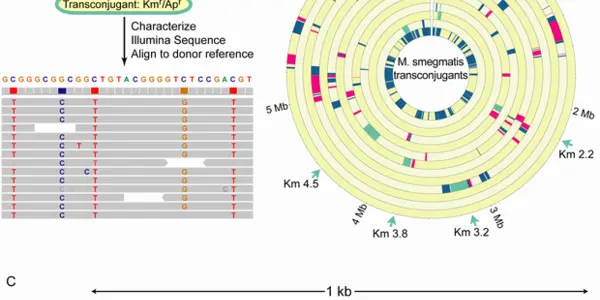
Sexual reproduction is costly.
For starters, only half of the population can bear offspring so the other half has to work hard to make sure they're included in the future gene pool.
Yet there is a payoff beyond the sex jokes sure to follow that statement. Sexual reproduction allows the mixing of parental genomes to generate potentially beneficial new combinations of gene variants that had not previously coexisted on the same strand of DNA, or to separate beneficial mutations from detrimental ones.
There was a period of time when hunters were the greatest conservationists. Think President Teddy Roosevelt, who evangelized national parks and setting aside wilderness for the public.Later, environmentalism became an occupation for urbanites and they distanced themselves from sportsmen and people who enjoyed nature - they even listed them as enemies, in the case of hunting and fishing.
It was once believed that crazy ladies acquired a lot of cats. Then it was discovered that a lot of cats instead created crazy ladies; cat poop is laden with an infectious parasite known as Toxoplasma gondii, a protozoan that has recently caused toxoplasmosis epidemics in people. At first it was just schizophrenia in older women, but then broadened out to pregnant women and all people with immune deficiencies.
Once any link is established some will connect it to obsessive-compulsive disorder and kids' trouble in school, so maybe things have gone overboard in blaming, but Toxoplasma gondii can still be a real concern. Each year in the United States, cats deposit about 1.2 million metric tons of feces into the environment.
Next-generation hydrogels can form synthetic scaffolds to support the formation of replacement tissues and organs in the emerging area of regenerative medicine.
Embedding peptides into the hydrogels stimulates the growth of essential microvascular networks to ensure a good blood supply. A new paper describes the technology in which hydrogels functionalized with laminin-derived peptides were transplanted in a mouse cornea and were shown to support cell growth and blood vessel formation.
Tropical climates that allow for year-round farming have a tremendous economic advantage, even in the developing world but corn and soybean farmers in Mato Grosso, Brazil have a developed world problem;a 10 percent post-harvest loss, partially due to a lack of storage.
A research project used Geographic Information System (GIS) software to map the coordinates of commercial, cooperative and private grain storage facilities in Mato Grosso. They focused on capacity greater than 50,000 metric tons, mapping the state's 2,143 registered warehouses.
Our prehistoric close cousins, the Neandertals, were more similar than science used to think in a variety of ways.
And according to a new paper, they had something resembling modern speech and language, which can be traced back to the last common ancestor we shared with the Neandertals roughly half a million years ago.
Neanderthals have fascinated the academic world and the general public ever since their discovery almost 200 years ago. Initially thought to be sub-human brutes incapable of anything but the most primitive of grunts, they were later found to be a successful form of humanity inhabiting vast swathes of western Eurasia for several hundreds of thousands of years, during harsh ages and milder interglacial periods.