You Feel Colder As You Age: The Science Reason Why
Older people report feeling colder, enough that it is clearly happening, but why has been a mystery. Until now.
Older people report feeling colder, enough that it is clearly happening, but why has been a mystery. Until now.


The current administration may be worried that the high profile of its domestic tracking and spying and punitive efforts will make it harder for them to monitor the public.
MIT's Computer Science and Artificial Intelligence Laboratory may be able to help. They may be able to help us be a little more like Superman, really. Technology to build a device capable of seeing people through walls has involved the use of expensive and bulky radar technology that uses a part of the electromagnetic spectrum only available to the military - and anyone in the government who says monitoring citizens is a national security issue.

To our forefathers, distinguishing the living from the dead centered on calidum innatum - vital heat. Aristotle showed that when the heart turns cold, compared to other organs, a person dies and postulated that the vital heat produced in the heart caused blood vessels to react like water bubbles in boiling water - heat which our lungs cooled with air, to keep the cycle going. Modern microbiology knows body heat is not what the ancients envisioned and is more complex than an organ; biological processes should produce thermal signatures no matter how small, even within single cells, it was just that nobody knew how to measure them.
Everyone has seen dinosaur skeletons in museums. You're not supposed to touch them, even on the outside.
Dr. Qi Zhao of the Institute for Vertebrate Paleontology in Beijing got to not only touch some, he got to section two arm and two leg bones from 16 individual dinosaurs, ranging in age from less than one year to 10 years old (fully-grown). He did the sectioning work in a special palaeohistology laboratory in Bonn.
Myotonic dystrophy is an inherited disorder, the most common form of a group of conditions called muscular dystrophies that involve progressive muscle wasting and weakness.
Myotonic dystrophy type 1 is caused a type of RNA defect known as a "triplet repeat," a series of three nucleotides repeated more times than normal in an individual's genetic code. In this case, a cytosine-uracil-guanine (CUG) triplet repeat binds to the protein MBNL1, rendering it inactive and resulting in RNA splicing abnormalities.

Spiral galaxies like our own Milky Way appear to be much larger and more massive than previously believed, according to new observations made with Hubble's Cosmic Origins Spectrograph.
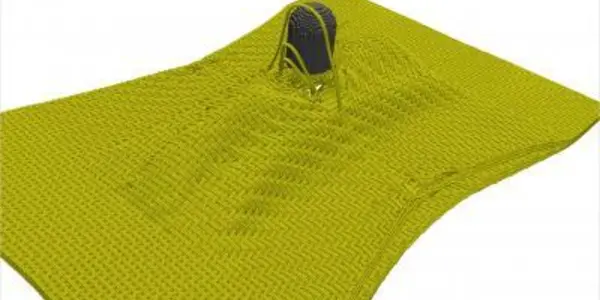
We all think about space exploration, but we also need to think about dodging 50 years of debris from space exploration - aluminum, steel, nylon, even liquid sodium from Russian satellites. Sierra Club hasn't started fundraising over this issue yet but they might after reading this article.
According to NASA, there are more than 21,000 pieces of 'space junk' roughly the size of a baseball in orbit, and about 500,000 pieces that are golf ball-sized. Sure, space is big, but when a piece of space junk strikes a spacecraft, the collision occurs at a velocity of 5 to 15 kilometers per second, roughly ten times faster than a speeding bullet.

Michael Graner, PhD, a CU Cancer Center investigator and associate professor of neurosurgery at the CU School of Medicine, experimented on his dog.
Before anyone yells "Tesla!" and PETA gets up in arms, he did it for the best of reasons. At age 12, his great dane Star collapsed during a coughing fit and Graner discovered the cause: lung cancer, specifically advanced bronchoalveolar adenocarcinoma with metastasis to the lymph nodes. The prognosis was grim, with a median survival from diagnosis of only about 6-27 days. And Star was well past the age when she could've tolerated chemotherapy or radiation.
The minds of murderers who kill impulsively - crimes of passion, as they are commonly called - and those who carefully carry out premeditated crimes differ markedly both psychologically and intellectually, according to a new paper.
Sr35 has been identified as a gene that enables resistance to a new race, or strain, of stem rust, a disease that is producing large wheat yield losses throughout Africa and Asia and threatening global food security.

Adults may not understand what an infant is feeling but it's child's play to another baby.
A paper in Infancy contends that infants can recognize each other's emotions by five months of age.
"Newborns can't verbalize to their mom or dad that they are hungry or tired, so the first way they communicate is through affect or emotion," says psychology professor Ross Flom of
Brigham Young University
. "Thus it is not surprising that in early development, infants learn to discriminate changes in affect."
Rat poison used for marijuana fields is killing fishers in the southern Sierra Nevada, according to a new paper.
Oxygen is necessary for survival on Earth but the planet's atmosphere did not always contain this life-sustaining substance. One of science's greatest mysteries is how and when oxygenic photosynthesis—the process responsible for producing oxygen on Earth through the splitting of water molecules—first began.
Geobiologists writing in PNAS say they have found evidence of a precursor photosystem involving manganese that predates cyanobacteria, the first group of organisms to release oxygen into the environment via photosynthesis.