Kids Helping Kids Is Universal - But Cultures Help Differently
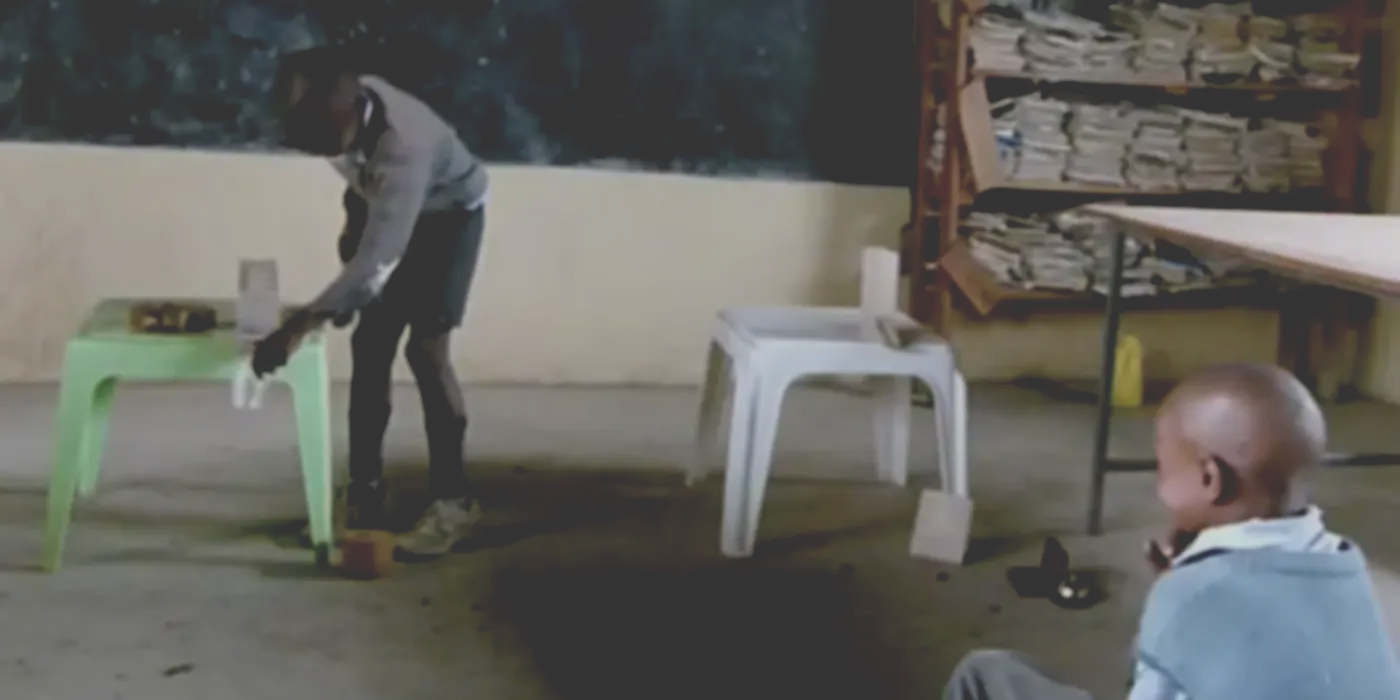
A simple game reveals a universal instinct in kids
A simple game reveals a universal instinct in kids


During the last American presidential election, the Obama team highlighted that support for their victory was across the board - 8 of the 10 wealthiest counties in America had gone their way, which was meant to show that rich people believed in his vision also.
That means 8 of 10 counties feel something must be done about climate change, but if an analysis of Swiss homes is similar to America, they mean someone else must do the changing.
Writing in Environmental Science&Technology, Dominik Saner and colleagues found that energy conservation in a small number of households could go a long way to reducing greenhouse gas emissions.
We constantly grow new skin and shed the old but no one is sure exactly how it works. New research says they may provide the answer.
Engineers and biologists at the University of Sheffield say a recent hypothesis - that skin has 'sleeping' stem cells which can be woken up when required - best explains how our skin constantly regrows. The research, conducted by The Procter&Gamble Company (P&G), makers of Olay, and the University of Sheffield and published in Nature Scientific Reports, may have implications for combating the effects of aging.
When it comes to disparities in gender among various, there are no limits to the hypotheses laid out to explain differences, usually in sync with the cultural agenda of the proponent. Engineering, for example, pays women more equally than any field in America but has far fewer women than environmentalist groups, which pay women about $.70 compared to men - yet engineering is criticized for having fewer women. Medical doctors have equal representation while the social sciences have fewer men and the hard sciences have fewer women.
Trisomy 21, commonly called Down syndrome, is a genetic condition in which a person has 47 chromosomes instead of the usual 46 - three of the #21 chromosomes, rather than the usual two.(1)
Down syndrome is one of the most common genetic birth defects, affecting approximately one in 800 to 1,000 babies, and includes a combination of mental retardation, characteristic facial features and, often, heart defects, visual and hearing impairment, and other health problems.
It is very often accompanied by pathologies found in the general population: Alzheimer's disease, leukemia, or cardiac deficiency.
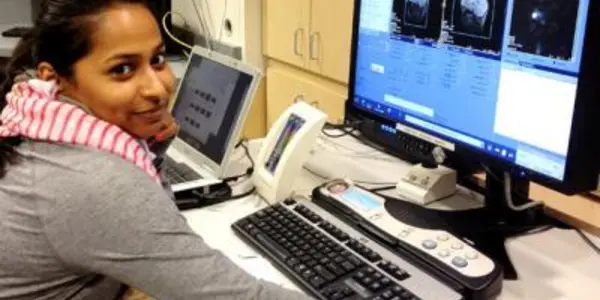
A group of investigators from San Diego State University's Brain Development Imaging Laboratory say they can see the effects of autism on the brain. They conclude that connectivity between the thalamus, a deep brain structure crucial for sensory and motor functions, and the cerebral cortex, the brain's outer layer, is impaired in children with autism spectrum disorders (ASD).
The largest investigation to-date has found a dramatic increase in the number of hospitalizations for children with inflammatory bowel disease (IBD) during the past decade in the United States. But does that mean there are actually more cases?
A National Renewable Energy Lab researcher at the IEEE Photovoltaic Specialists Conference in Tampa announced a 31.1% conversion efficiency for a two-junction solar cell under one sun of illumination.
A new paper published in
Psychonomic Bulletin and Review and based on a small experiment found that people who are blindfolded employ the same strategy to intercept a running ball carrier as people who can see, which suggests that multiple areas of the brain cooperate to accomplish the task. Or they do what they learned when they could see.
Either way, chasing down a moving object is not only a matter of sight or of sound, but of mind.
Attention, activist groups: Open-minded people don't change their view when you control what they learn and they only get one side of the issue, according to a new paper, so framing can only take you so far.
The results of a new paper in the Journal of Communication suggest that climate change deniers may be less effective in swaying public opinion than many scientists and advocates fear, and may even hurt their own cause among those who are most open-minded, according to the authors.
Dopamine, the neurotransmitter celebrity chemical du jour in brain stories, gets invoked a lot because it can make a lot of correlations possible - and that means fun for journalists who either want to highlight the ridiculous or scare you.
Like guns? Dopamine. Are you a Democrat? Dopamine. But aside from its 'pleasure chemical' designation, dopamine has lots of roles in the brain. So if a man takes antipsychotic medication, he may lactate as a side effect, because those medications focus on dopamine. And if there is an addiction story, dopamine is invoked.
A promising anti-cancer therapy - suppression of the protein mammalian target Of Rapamycin (mTOR) - has failed to achieve hoped-for success in killing tumor cells.
mTOR plays an important role in regulating how cells process molecular signals from their environment, and it is observed as strongly activated in many solid cancers. Drug-induced suppression of mTOR has until now shown success in causing the death of cancer cells in the outer layers of cancerous tumors, but has been disappointing in clinical trials in dealing with the core of those tumors.

Interacting with a therapeutic robot companion made people with mid- to late-stage dementia less anxious and also had a positive influence on their quality of life, according to a pilot studyPARO, a robotic harp seal, was used to investigate the effect of interacting with an artificial companion compared with participation in a reading group. PARO is fitted with artificial intelligence software and tactile sensors that allow it to respond to touch and sound. It can show emotions such as surprise, happiness and anger, can learn its own name and learns to respond to words that its owner uses frequently.