You Feel Colder As You Age: The Science Reason Why
Older people report feeling colder, enough that it is clearly happening, but why has been a mystery. Until now.
Older people report feeling colder, enough that it is clearly happening, but why has been a mystery. Until now.


A study of twin veterans has linked antidepressant use to thicker arteries and therefore possibly increased risk of heart disease and stroke, according to data presented last week at the American College of Cardiology meeting in New Orleans.The study included 513 middle-aged male twins who both served in the U.S. military during the Vietnam War. Twins are genetically the same but may be different when it comes to other risk factors such as diet, smoking and exercise, so studying them is a good way to distill out the effects of genetics.
Ants and termites have a significant positive impact on crop yields in dryland agriculture, according to a paper published in Nature Communications. The authors say it is the first study to show a crop yield increase due to soil fauna in the field.Ants and termites perform the same ecosystem service functions in dryland agriculture that earthworms perform in cooler and wetter areas, but the potential for ants and termites to provide these benefits has received little attention until now, they state.Their studies on ants and termites in soil showed an average 36 per cent higher wheat crop yield under low tillage but otherwise conventional agricultural management.
A paper published in the Proceedings of the National Academy of Sciences says the mosquito branched off the same evolutionary tree as the house fly around 220 million years ago. Though only a few species of flies gain public attention - pests like house flies, March flies and mosquitoes – there are 152,000 named species of flies, representing around 10 per cent of all species on Earth. The March fly branched off some 175 million years ago, while the common house fly branched off about 50 million years ago.Flies originated in wet environments and as they evolved they adapted to feed in almost any nutrient-rich substrate in almost any environment on earth.
A combination of forest byproducts and crustacean shells may be the key to removing radioactive materials from drinking water, researchers from North Carolina State University have found.The new material is a combination of hemicellulose, a byproduct of forest materials, and chitosan, which are crustacean shells that have been crushed into a powder. It not only absorbs water, but can actually extract contaminates, such as radioactive iodide, from the water itself. The material forms a solid foam and has potential applications beyond radioactive materials. The researchers found that it has the ability to remove heavy metals, such as arsenic, from water or salt from sea water to make clean drinking water.

Entanglement, the quantum mechanical phenomenon, was coined as a term by Erwin Schrödinger in 1935 but is still not understood completely. From an applied perspective, while entangled particles cannot be defined as single particles with defined states but are instead a whole system, that means by entangling single quantum bits, a quantum computer should solve problems considerably faster than conventional computers. But understanding entanglement when there are two particles is tough enough. When there are many, it's even trickier, but a new experiment in the research group led by Rainer Blatt at the Institute for Experimental Physics at the University of Innsbruck may provide some insight.
Generally, coffee can be good for you just like in moderation fast food can be less bad for you. Together, they are worse, according to a new University of Guelph study.Researcher Marie-Soleil Beaudoin says a healthy person's blood sugar levels spike after eating a high-fat meal, but also that the spike doubles after having both a fatty meal and caffeinated coffee – jumping to levels similar to those of people at risk for diabetes. The study in the Journal of Nutrition examined the effects of saturated fat and caffeinated coffee on blood sugar levels using a fat cocktail which contains only lipids. This specially designed beverage allows researchers to accurately mimic what happens to the body when we ingest fat.
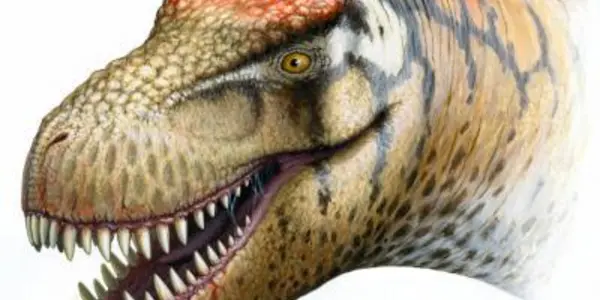
A gigantic theropod dinosaur has been discovered in China.According to findings published in Cretaceous Research, the newly named dinosaur species Zhuchengtyrannus magnus probably measured about 11 meters long, stood about 4 meters tall, and weighed close to 6 tons. The identification was done from fossil skull and jaw bones
Deaths due to cancer for both men and women in the United States continued to decline between 2003 and 2007, according to the latest Annual Report to the Nation on the Status of Cancer. Overall rates of new cancer diagnoses for men and women combined decreased an average of slightly less than 1 percent per year for the same period.

Gravity does funny things. While the Earth looks rather round in pictures from space, the distortions that would have to occur in order to have uniform gravity everywhere would make it look more like...a potato, or a squashed basketball.ESA's GOCE satellite has gathered enough data to map Earth's gravity with unrivaled precision, and so we get the most accurate model of the 'geoid' ever produced. The geoid is the surface of an ideal global ocean in the absence of tides and currents, shaped only by gravity. It is a crucial reference for measuring ocean circulation, sea-level change and ice dynamics.
Open access, where scientists pay a fee to publish so that the public and other scientists can read the study for free, is a negligible issue to most scientists, according to a new research report in The FASEB Journal.
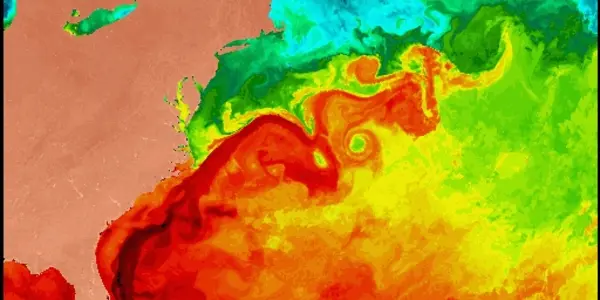
The eastern continental boundaries of America and Asia are colder than the same latitudes on their western boundaries - no one thinks of Barcelona or London as colder than New York City but they are both north of the Big Apple. I think any of us would trade a NYC winter for a Barcelona one. Mountain ranges and warm ocean currents are the likely culprits, according to recent hypotheses.
While the current radiation concerns in Japan are not on a par with atomic bombs, the survivors of Hiroshima and Nagasaki can provide some insight into what effects, if any, radiation might have on residents of Japan today.
A review article in the latest issue of Disaster Medicine and Public Health Preparedness (free to read - http://www.dmphp.org) looks at risk estimates and summarizes what has been learned from following the survivors for 63 years.