You Feel Colder As You Age: The Science Reason Why
Older people report feeling colder, enough that it is clearly happening, but why has been a mystery. Until now.
Older people report feeling colder, enough that it is clearly happening, but why has been a mystery. Until now.


Depression erodes intimate relationships not just by making one person withdrawn, needy, or hostile, but also because it impairs a depressed person's ability to perceive the others' thoughts and feelings. It impairs what psychologists call "empathic accuracy" and that can exacerbate alienation, depression in a vicious cycle.

A clay tablet discovered Greece changes what is known about the origins of literacy in the western world, obviously a good thing, and, unfortunately, also about the origins of bureaucracy. Measuring 2 inches by 3 inches, the tablet fragment is the earliest known written record in Europe, dating back to between 1450 and 1350 B.C., 100-150 years before the tablets from the Petsas House at Mycenae.
Across the world, fewer people are buying the "I have a glandular disorder" excuse for obesity.As the average waistline increases but the numbers of obese people skew that result, society is getting less tolerant of heavier folk - even in cultures where being big is considered better, according to a cross-cultural study of attitudes toward obesity to be published in the April issue of Current Anthropology.The study didn't test what is driving the shift in attitude, but the researchers say that "newer forms of educational media, including global public health campaigns" may be playing a role.
Future firefighters may use electricity instead of water to control flames, according to results of a discovery that could underpin a new genre of fire-fighting devices, including 'sprinkler' systems that suppress fires not with water, but with zaps of electric current.
You may have heard of a new car with lots of problems referred to as a 'lemon' but not all fruits are bad when it comes to automobiles. Scientists in Brazil have developed a more effective way to use fibers from these and other plants in a new generation of automotive plastics that are stronger, lighter, and more eco-friendly than plastics now in use, according to their presentation at the National Meeting&Exposition of the American Chemical Society.
Ginseng and saffron are sexual performance boosters, according to a new scientific review of natural aphrodisiacs, but while the more obscure Spanish fly and Bufo toad are purported to be sexually enhancing, they produced the opposite result and can even be toxic. Wine and chocolate are okay, though it's all in your head, say the findings by Massimo Marcone, a professor in Guelph's Department of Food Science, and master's student John Melnyk in Food Research International.
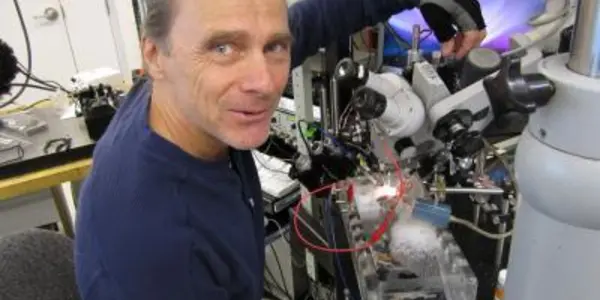
University of Utah scientists have used invisible infrared light to make rat heart cells contract. Sounds interesting but not revolutionary, right? But they also used infrared light to cause toadfish inner-ear cells to send signals to their brain - which might improve cochlear implants for deafness.
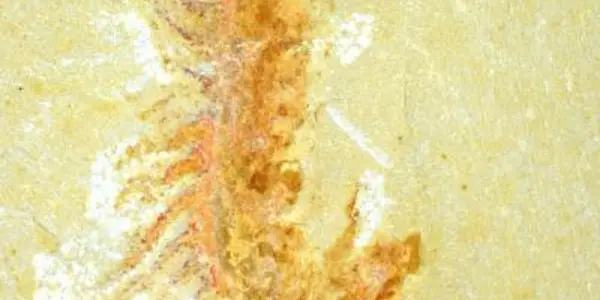
Researchers have discovered a 525-million-year-old fossil which belongs to a group of tentacle-bearing creatures which lived inside hard tubes. The creature belongs to a group called pterobranch hemichordates which are related to starfish and sea urchins but also show some characteristics that offer clues to the evolution of the earliest vertebrates. About 30 species of pterobranch are known to exist today although 380-490 million years ago a group of these animals called graptolites were common across the prehistoric oceans.
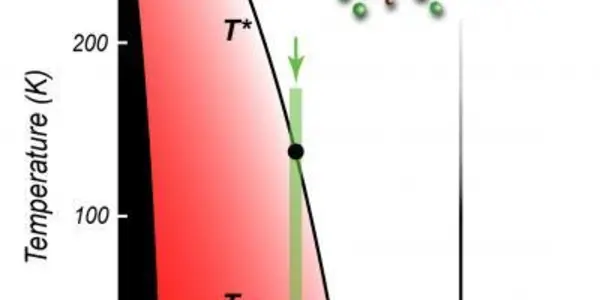
Scientists are launching a three-pronged attack on one of the most obstinate puzzles in materials sciences: what is the pseudogap?They used three complementary experimental approaches to investigate a single material, the high-temperature superconductor Pb-Bi2201 (lead bismuth strontium lanthanum copper-oxide). Their results are the strongest evidence yet that the pseudogap phase, a mysterious electronic state peculiar to high-temperature superconductors, is not a gradual transition to superconductivity in these materials, as some have long believed.Instead, it is a distinct phase of matter.The pseudogap mystery

The Clovis people, Paleo-Indians whose tools were known for their distinctive 'fluted' points, were once thought to be the original settlers of North America about 13,000 years ago. The name originates not from the 5th century Frankish king but rather the town in New Mexico where the stone projectile points created by their distinctive percussion and pressure flaking techniques were first discovered.
Losing virginity can improve your self-image, according to Penn State researchers - if you are a college-age male. On average, college-age males become more satisfied with their appearance after first intercourse while college-age females become less satisfied.Overall the researchers found that women became happier with their physical appearance from first to fourth year in college, and men became less satisfied with their appearance over the same time period. However, the researchers found the opposite directly after students had sex for the first time; males were more satisfied with their appearance and females were less satisfied.
In Australia, babies born since 1971 have had drops of blood taken, which are then tested for a variety of genetic conditions such as cystic fibrosis. It has been an effective health check, according to Dr. Diana Bowman from the Melbourne School of Population Health, but because there are no laws which define the ownership, storage and use of those blood drops, it could threaten public trust in newborn screening (NBS) programs in Australia. The tests and what is done with the blood afterwards raises many legal questions.