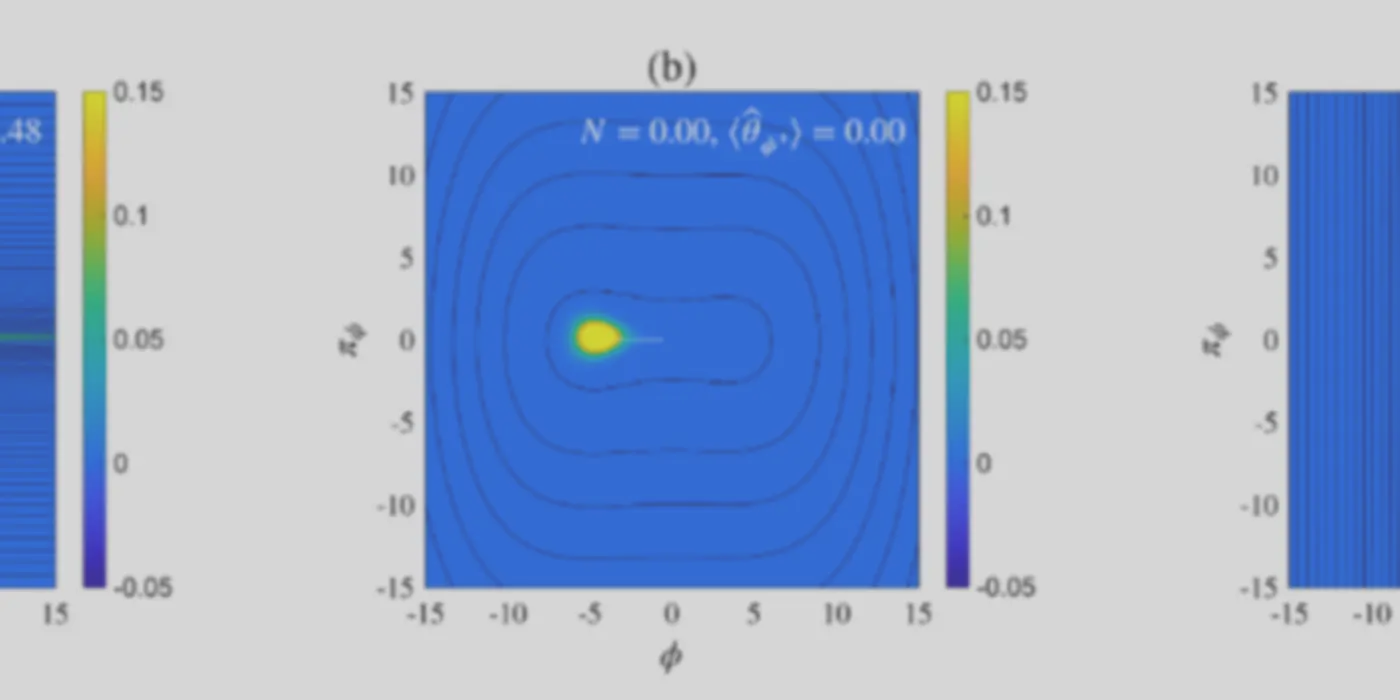
Sorry Higgs, There May Be A New Contender For Low Energy States
If we're trapped in a false vacuum, there's still hope to break free of cosmic lockdown
If we're trapped in a false vacuum, there's still hope to break free of cosmic lockdown


From pacemakers constructed of materials that so closely mimic human tissues that a patient's body can't discern the difference to devices that bypass injured spinal cords to restore movement to paralyzed limbs, the possibilities presented by organic electronics read like something from a science fiction novel.
Those who worship a higher power often do so in different ways. Whether they are active in their religious community, or prefer to simply pray or meditate, new research out of Temple University suggests that a person's religiousness – also called religiosity – can offer insight into their risk for depression. Lead researcher Joanna Maselko, Sc.D., characterized the religiosity of 918 study participants in terms of three domains of religiosity: religious service attendance, which refers to being involved with a church; religious well-being, which refers to the quality of a person's relationship with a higher power; and existential well-being, which refers to a person's sense of meaning and their purpose in life.
According to trials, a new obesity drug, Tesofensine can produce weight loss twice that of currently approved obesity drugs.
Approximately 180,000 new cases of lung cancer are diagnosed each year in the United States and about 40 percent of those diagnosed will undergo surgery as part of their treatment. Every patient assumes it will go well but patients operated on by surgeons who do not routinely remove cancer from the lungs may be at a higher risk for complications, according to a study conducted by researchers at Duke University Medical Center."Our study found that hospitals that do higher volumes of these types of surgeries have correspondingly lower mortality rates than those who do fewer of the procedures," said Andrew Shaw, M.D., an anesthesiologist at Duke and lead investigator on the study.
Anyone with a nose knows the rotten-egg odor of hydrogen sulfide - the polite term is 'gas' when it is generated by bacteria living in the human colon. An international team of scientists has discovered that cells inside the blood vessels of mice naturally make the gassy stuff, and that it controls blood pressure.

The Amazon rainforest is a puzzle of ecology. Despite concerns about climate change, rainforests are thriving, even in the face of drought. In a new Science study conducted in the Yasuni forest dynamics plot of the Pontificia Universidad Católica del Ecuador, the most diverse tropical forest site associated with the Center for Tropical Forest Science/Smithsonian Institution Global Earth Observatory network (CTFS/SIGEO), there are 600 species of birds and 170 of mammals and 1,100 species of trees in the 25 hectare plot―more than in all of the U.S. and Canada, combined.

Phones can do almost anything these days - photos, music, television - but safely protecting biometric data is something new. Ileana Buhan, a PhD student at the University of Twente, has been researching this new way of employing biometrics. She receives her doctorate from the Faculty of Electrical Engineering, Mathematics and Computer Science on 23 October.
The leading cause of death in all cancer patients continues to be the resistance of tumor cells to chemotherapy, a form of treatment in which chemicals are used to kill cells. A study by UC Riverside biochemists that focuses on cancer cells reports that ingesting apigenin, a naturally occurring dietary agent found in vegetables and fruit , improves cancer cells' response to chemotherapy.Xuan Liu, a professor of biochemistry, and Xin Cai, a postdoctoral researcher working in her lab, found that apigenin localizes tumor suppressor p53, a protein, in the cell nucleus – a necessary step for killing the cell that results in some tumor cells responding to chemotherapy.

An enigma unique to flowering plants has been solved, say researchers from the University of Leicester (UK) and POSTECH, South Korea. Scientists already knew that flowering plants, unlike animals, require not one but two sperm cells for successful fertilization. Double fertilization is essential for fertility and seed production in flowering plants so increased understanding of the process is important.But the mystery of this ‘double fertilization’ process was how each single pollen grain could produce ‘twin’ sperm cells. One to join with the egg cell to produce the embryo, and the other to join with a second cell in the ovary to produce the endosperm, a nutrient-rich tissue, inside the seed.
The Bill Melinda Gates Foundation today announced 104 grants to explore bold and largely unproven ways to improve global health. The grants of US$100,000 each will be made to scientists from 22 countries and five continents. They mark the first round of funding from Grand Challenges Explorations, an initiative to help lower the barriers for testing innovative ideas in global health.
The initial set of grants will inject fresh perspective into research for preventing or curing infectious diseases such as HIV/AIDS and TB, and limiting the emergence of drug resistance.
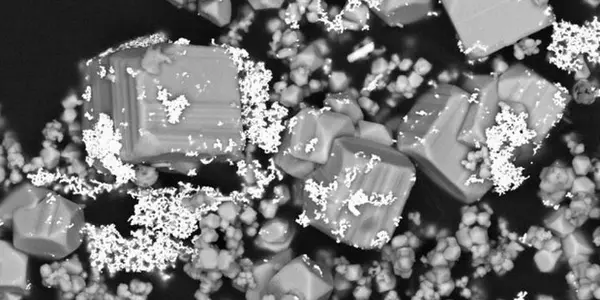
Researchers from McGill University, the California Institute of Technology, the Curie Institute in Paris, Princeton University and other institutions, have unearthed crystalline magnetic fossils of a previously unknown species of microorganism that lived at the boundary of the Paleocene and Eocene epochs, some 55 million years ago.
The research might help scientists understand more thoroughly the potential effects of significant changes in the Earth's climate.
Though they are only some four microns long, these newly discovered, spear-shaped magnetite crystals (magnetofossils) – unearthed at a dig in New Jersey – are up to eight times larger than previously known magnetofossils.
A drug which was developed in Cambridge and initially designed to treat a form of leukaemia has also proven effective against combating the debilitating neurological disease multiple sclerosis (MS).The study, led by researchers from the University of Cambridge, has found that alemtuzumab not only stops MS from advancing in patients with early stage active relapsing-remitting multiple sclerosis (RRMS) but may also restore lost function caused by the disease. The findings were published today in the New England Journal of Medicine.