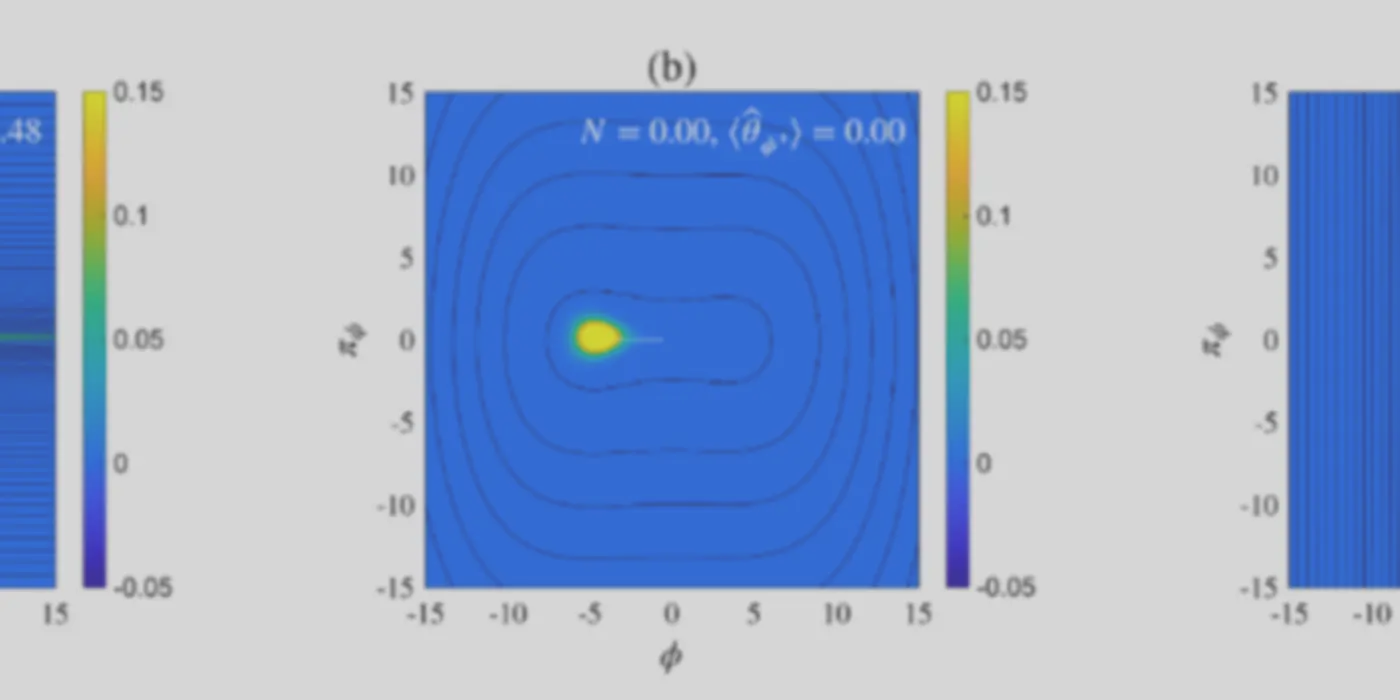
Sorry Higgs, There May Be A New Contender For Low Energy States
If we're trapped in a false vacuum, there's still hope to break free of cosmic lockdown
If we're trapped in a false vacuum, there's still hope to break free of cosmic lockdown


Scientists in Spain are reporting an advance toward a new method for determining the purity of heroin that could save lives by allowing investigators to quickly identify impure and more toxic forms of the drug being sold on the street. Unlike conventional tests, it does not destroy the original drug sample, according to their report.
In the new study, Salvador Garrigues and colleagues point out that the purity of heroin can vary widely, since pushers often mix it with chalk, flour, or other "cutting agents." Because heroin users do not know the exact purity of the drug, they are more at risk for overdose and even death. Conventional tests for determining the purity of street heroin involve destructive and time-consuming sample preparation, the scientists say.

Acupuncture is as effective and longer-lasting in managing the common debilitating side effects of hot flashes, night sweats, and excessive sweating (vasomotor symptoms) associated with breast cancer treatment and has no treatment side effects compared to conventional drug therapy, according to a study presented September 24, 2008, at the American Society for Therapeutic Radiology and Oncology's 50th Annual Meeting in Boston.
Findings also show there were additional benefits to acupuncture treatment for breast cancer patients, such as an increased sense of well being, more energy, and in some cases, a higher sex drive, that were not experienced in those patients who underwent drug treatment for their hot flashes.

A study has given new insights into why Oval BA, a giant anticyclone on Jupiter also known as Red Spot Junior, suddenly turned from white to red in a period of just a few months.
The Oval BA is an enormous anticyclone (high-pressure system) that may be compared to a colossal hurricane in the Earth’s atmosphere. Oval BA is half the size of the Great Red Spot and is large enough to contain the Earth inside it.
Oval BA was formed in 2000 by the merger of smaller vortices called the White Ovals in a chain of collisions that started back in 1998. The apparent reddening was first reported by amateur astronomers in early 2006, but it was not until April that professional astronomers were able to image the impressive alteration of the second largest storm in the Solar System after the Great Red Spot (GRS).
There are more bacteria in our bodies than there ever have been people on the Earth. In fact, there are more bacteria in the colon than there are human cells in our bodies. Most of the bacteria in our guts are harmless and many are beneficial to our health. However, for several decades scientists have thought that some microbes living in the gut may play a role in the formation of sporadic colorectal cancer.
Research published in the October issue of the Journal of Medical Microbiology says they have discovered that a molecule produced by a common gut bacterium activates signalling pathways that are associated with cancer cells.
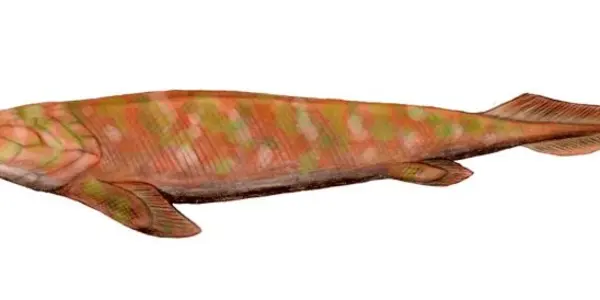
Tetrapods, the first four-legged land animals, have also been considered the first organisms that had fingers and toes but researchers at Uppsala University say that is not the case.
Using medical x-rays, they found rudiments of fingers in the fins in fossil Panderichthys, the “transitional animal,” which indicates that rudimentary fingers developed considerably earlier than was previously thought.
Our fish ancestors evolved into the first four-legged animals, tetrapods, 380 million years ago. They are the forerunners of all birds, mammals, crustaceans, and batrachians (Editor - and reptiles! We have the most eagle-eyed readers anywhere.) Since limbs and their fingers are so important to evolution, researchers have long wondered whether they appeared for the first time in tetrapods or whether they had evolved from elements that already existed in their fish ancestors.

Scientists have decoded the genome of the Pristionchus pacificus nematode and gained valuable insight into the evolution of parasitism.
In their work, the scientists have shown that the genome of the nematode consists of a surprisingly large number of genes, some of which have unexpected functions. These include a number of genes that are helpful in breaking down harmful substances and for survival in a strange habitat: the Pristionchus uses beetles as a hideout and as means of transport, and feeds on the fungi and bacteria that spread out on their carcasses once they have died. It thus provides the clue to understanding the complex interactions between host and parasite.

Chemical clues from a comet’s halo are challenging common views about the history and evolution of the solar system and showing it may be more mixed-up than previously thought. A new analysis of dust from the comet Wild 2, collected in 2004 by NASA’s Stardust mission, has revealed an oxygen isotope signature that suggests an unexpected mingling of rocky material between the center and edges of the solar system. Despite the comet’s birth in the icy reaches of outer space beyond Pluto, tiny crystals collected from its halo appear to have been forged in the hotter interior, much closer to the sun.
The result counters the idea that the material that formed the solar system billions of years ago has remained trapped in orbits around the sun. Instead, the new study in Science suggests that cosmic material from asteroid belts between Mars and Jupiter can migrate outward in the solar system and mix with the more primitive materials found at the fringes.

Naphthalene molecules, in combination with water, ammonia and ultraviolet radiation, produce many of the amino acids fundamental to the development of life.
A team of scientists led by researchers from the Instituto Astrofísica de Canarias (IAC) has succeeded in identifying naphthalene in a star formation region in the constellation Perseus, in the direction of the star Cernis 52.
This means a large number of the key components in prebiotic terrestrial chemistry could have been present in the interstellar matter from which the Solar System was formed.
Using various telescopes in La Palma and Texas, IAC researchers have detected the pr
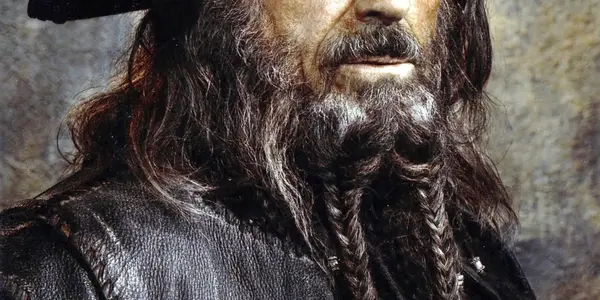
Piracy was a capital crime so the risks were commensurate with the rewards, but what is surprising about such a free market criminal enterprise is how socialist it was.
Identity thieves can learn a lot about you from your trash and so it goes that a cell's "trash" can yield treasures for biologists.
Using a new technique they developed, scientists at University of Delaware's Delaware Biotechnology Institute analyzed the cellular waste of one of the world's most-studied plants and discovered formerly hidden relationships between genes and the small molecules that can turn them off.
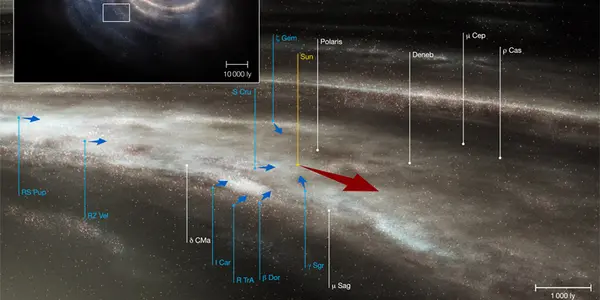
Precise measurements by the ESO instrument HARPS now show that the rotation of the Milky Way is simpler than previously thought - the much debated, apparent 'fall' of neighborhood Cepheid stars towards our Sun stems from an intrinsic property of the Cepheids themselves, say a group of astrophysicists led by Nicolas Nardetto in a Astronomy & Astrophysics article.
Since Henrietta Leavitt's discovery of their unique properties in 1912, the class of bright, pulsating stars known as Cepheids has been used as a distance indicator. Combined with velocity measurements, the properties of Cepheids are also an extremely valuable tool in investigations of how our galaxy, the Milky Way, rotates.
"The motion of Milky Way Cepheids is confusing and has led to disagreement among researchers," says Nardetto. "If the rotation of the Galaxy is taken into account, the Cepheids appear to 'fall' towards the Sun with a mean velocity of about 2 km/s."
New research from Stanford University scientists suggests that type 1 diabetes, an autoimmune disease that develops in children and young adults, may not be due to bad genes but rather to good genes behaving badly.
Because type 1 diabetes typically runs in families, scientists have looked for inborn genetic errors or gene variants passed on from generation to generation. Although this search has failed to find a single type 1 diabetes gene, many candidate type 1 diabetes susceptibility genes have been identified. These susceptibility genes, located in a region known as the major histocompatibility complex (MHC), help the body distinguish its own cells and tissues from those that are foreign.