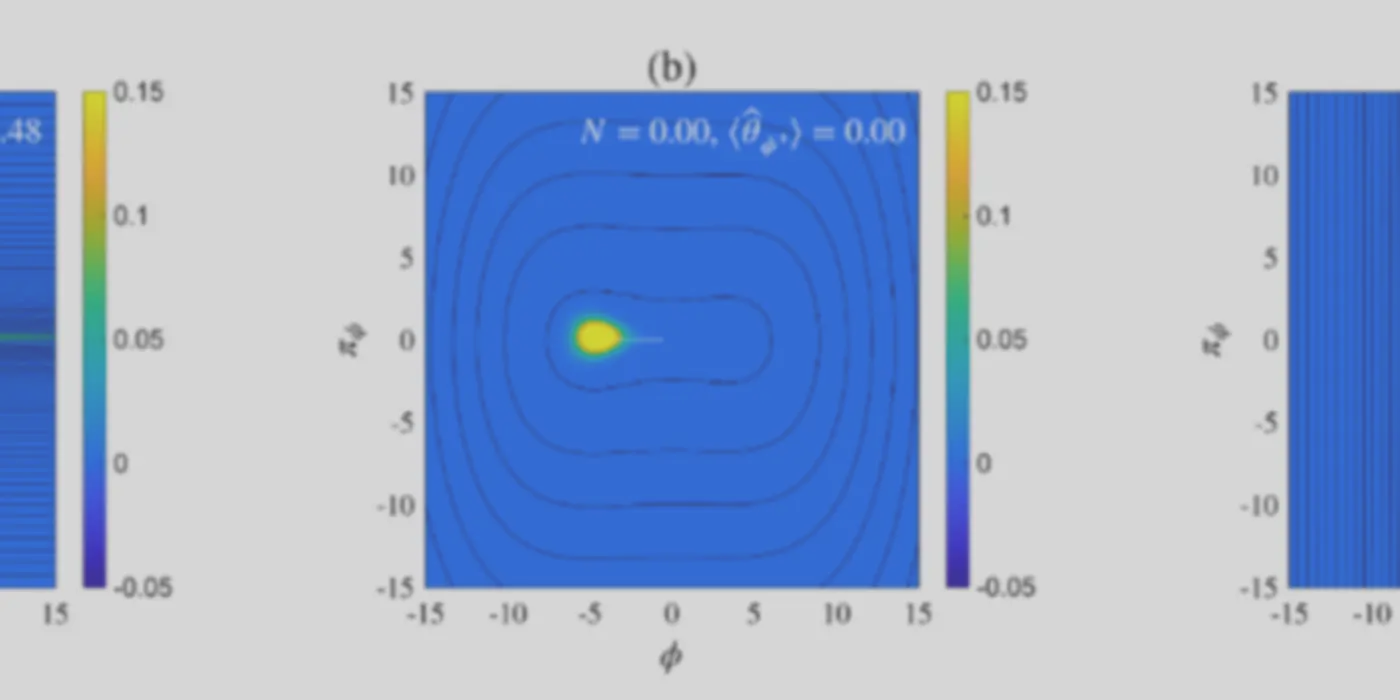
Sorry Higgs, There May Be A New Contender For Low Energy States
If we're trapped in a false vacuum, there's still hope to break free of cosmic lockdown
If we're trapped in a false vacuum, there's still hope to break free of cosmic lockdown


Infantile spasms are a severe and potentially devastating epilepsy condition affecting children aged typically 4-8 months. Sometimes called West syndrome because it was first described by Dr. William James West in the 1840s, they consist of a sudden jerk followed by stiffening. Each individual seizure usually lasts no more than a second but they occur close together and are most common just after waking up.
In a new study appearing in Epilepsia, researchers have found that the ketogenic diet, a high fat, low carbohydrate diet more traditionally used for intractable childhood epilepsy, is an effective treatment for this condition before using drugs.
The study is the first description of the ketogenic diet as a first-line therapy for infantile spasms.
Pollution is bad for the lungs but it's also bad for the heart, says a recent study of 48 Boston-area patients, all of whom had coronary artery disease. 24-hour Holter monitors were used to examine electrocardiograms for the conductivity change, called an ST-segment depression, which may indicate inadequate blood flow to the heart or inflamed heart muscle.
The average 24-hour levels for all pollutants included in the analysis were below accepted or proposed National Air Quality Standard thresholds, meaning patients were breathing air considered healthy.
Previous studies have documented that exposure to road traffic can trigger heart attacks, and that particulate air pollution increases the risk for cardiac death or heart attack.

If you've grown concerned that young people chuckling ironically at news clips of real events may actually not be getting a real grasp of what those fake news shows are ridiculing, you can rest assured there is no truthiness to it. A new study suggests that those entertainment news shows, such as The Daily Show or The Colbert Report, may not be as influential in teaching voters about political issues and candidates as was previously thought.
Previous studies have reported up to 48 percent of all adults and 60 percent of young voters used fake news shows as a source of campaign news in the 2004 presidential election. But researchers from Ohio State University have found reasons to discount how effective these shows are in informing the general public.
Patients visiting an ophthalmologist report that prayer is important to their well-being and that God plays a positive role in illness, according to a report in the September issue of Archives of Ophthalmology.
"Ethical medical practice includes physician behavior, beyond technical competence, that promotes healing and optimizes the patient's welfare," the authors write as background information in the article. "The physician who respects the patient as a person with dignity must acknowledge the patient's value system to establish a relationship that permits conversations that nourish trust for joint therapeutic decision making. For many patients, religion and spirituality is important to their value system and may represent a unique source of motivation and coping with life events, including the experience of personal illness (illness refers to the response of a patient to a disease)."
In an article in Nature, The Cancer Genome Atlas (TCGA) has reported results from its first comprehensive study which focused on the deadly brain cancer glioblastoma.
The TCGA team, comprised of more than 100 investigators from seven cancer centers and research institutions throughout the country, analyzed 601 genes in tumor samples from 91 glioblastoma multiforme (GBM) patients.
Investigators at the Johns Hopkins Kimmel Cancer Center and University of Southern California, members of the TCGA team, studied 2000 genes.
The probability of someone cheating during the course of a relationship varies between 40 and 76 percent. "It's very high," says Geneviève Beaulieu-Pelletier, PhD student at the Université de Montréal's Department of Psychology.
According to psychologists, people with avoidant attachment styles are individuals uncomfortable with intimacy and are therefore more likely to multiply sexual encounters and cheat. But this has never been proved scientifically, which is what Beaulieu-Pelletier attempted to do in a series of four studies.
The student wanted to know if the type of commitment a person has with his or her loved ones is correlated to the desire of having extra-marital affairs. "The emotional attachment we have with others is modeled on the type of parenting received during childhood," she says.
Virginia Tech chemistry Professor Harry Dorn has developed a new area of fullerene chemistry that may be the backbone for development of molecular semiconductors and quantum computing applications.
Dorn plays with the hollow carbon molecules known as fullerenes as if they are tinker toys. First, in 1999, he figured out how to put atoms inside the 80-atom molecule, then how to do it reliably, how to change the number of atoms forming the carbon cage, and how to change the number and kinds of atoms inside the cage, resulting in a new, more sensitive MRI material and a vehicle to deliver radioactive atoms for applications in nuclear medicine.

Astronomers have been able to study planet-forming discs around young Sun-like stars in unsurpassed detail, clearly revealing the motion and distribution of the gas in the inner parts of the disc. This result, which possibly implies the presence of giant planets, was made possible by the combination of a very clever method enabled by ESO's Very Large Telescope.
Planets could be home to other forms of life, so the study of exoplanets ranks very high in contemporary astronomy. More than 300 planets are already known to orbit stars other than the Sun, and these new worlds show an amazing diversity in their characteristics. But astronomers don't just look at systems where planets have already formed - they can also get great insights by studying the discs around young stars where planets may currently be forming. "This is like going 4.6 billion years back in time to watch how the planets of our own Solar System formed," says Klaus Pontoppidan from Caltech, who led the research.
Apparently, you can tell a lot about people from the way they move - gender, age, and even mood.
Researchers say they have found that observers perceive masculine motion as coming toward them, while a characteristically feminine walk looks like it's headed the other way.
Such studies are done by illuminating only the joints of model walkers and asking observers to identify various characteristics about the largely ambiguous figures.

Space is extremely cold, near absolute zero, and it is a vacuum, so no oxygen, plus there is the threat of lethal radiation from stars. It is considered the most hostile of environments, where unprotected humans would last for a fraction of a second.
But research by Ingemar Jönsson and colleagues in Current Biology shows that some animals — the tardigrades, or 'water-bears' — can do away with space suits and can survive exposure to open-space vacuum, cold and radiation just fine.
The protein IKKalpha (IKKα) regulates the cell cycle of keratinocytes and plays a key role in keeping these specialized skin cells from becoming malignant, researchers at The University of Texas M. D. Anderson Cancer Center report in Cancer Cell.
Keratinocytes originate in the basal layer of the epidermis to replace skin cells at the surface that have been shed. As keratinocytes gradually move up through the skin layers, they differentiate and eventually form the top layer of the skin, which is composed of squamous cells. The cycle ends through terminal differentiation, in which cells lose their ability to reproduce by dividing in two. They eventually die.
An athlete's ability to sweat may do more than keep the body cool. It also may prevent the development of exercise-induced asthma (EIA), a common respiratory condition among trained athletes. New research appearing in the September issue of CHEST, the peer-reviewed journal of the American College of Chest Physicians (ACCP), shows that athletes with EIA produce less sweat, tears, and saliva than those who do not have breathing problems.
Warren Lockette, MD, lead study author and advisor to the University of Michigan's NCAA Division I women's swimming team, has worked with many Olympians and future professional athletes with EIA. "It is unclear why so many elite athletes have exercise-induced asthma," he said. "It is possible that they manifest symptoms of exercise-induced asthma simply because their levels of exertion and breathing rate are so high compared with the average, competitive sportsman."