You Feel Colder As You Age: The Science Reason Why
Older people report feeling colder, enough that it is clearly happening, but why has been a mystery. Until now.
Older people report feeling colder, enough that it is clearly happening, but why has been a mystery. Until now.


It may seem like an odd marketing campaign but "Come visit Spain, the European point of entry for cocaine" remains apt.
A study of randomly selected Spanish euro notes carried out by chemists at the University of Valencia (UV) has shown that they contained traces of cocaine at an average concentration of 155 micrograms, which is the highest rate in Europe, according to an article published in the latest issue of Trends in Analytical Chemistry. The researchers also carried out a comparative study of the methods currently used in detecting the presence of cocaine on bank notes worldwide.
The most recent report from the United Nations Office on Drugs and Crime warns that Spain is still the major point of entry of cocaine into Europe. In 2006, 41% of all hauls of the drug made on the continent were made on Spanish soil, where 50 metric tonnes were seized, followed by Portugal, with 35 metric tonnes. The UN also says the rate of cocaine use doubled in Spain between 1999 and 2005, increasing from 1.6% to 3% of those aged between 15 and 64, which is more than twice the rate for western Europe as a whole (1.2%).

Geoscientists have long presumed that the tropics remained warm throughout Earth's last major glaciation 300 million years ago but new evidence indicates that cold temperatures episodically gripped even equatorial latitudes at that time.
Geologist Gerilyn Soreghan of Oklahoma University found evidence for this conclusion in the preservation of an ancient glacial landscape in the Rocky Mountains of western Colorado. Three hundred million years ago, the region was part of the tropics. The continents then were assembled into the supercontinent Pangaea.
Climate model simulations are unable to replicate such cold tropical conditions for this time period, said Soreghan. "We are left with the prospect that what has been termed our 'best-known' analogue to Earth's modern glaciation is in fact poorly known."

We have long been fascinated by the concept of absolute zero, the temperature at which everything comes to a complete stop, but physics tells us absolute zero cannot be reached but only approached - and the closer you get, the more interesting phenomena you find.
Three scientists from ESF's EUROCORES Programme EuroQUAM gave insight into this 'cool' matter at the event "The Amazing Quantum World of Ultra Cold Matter", held at this year's ESOF (Euroscience Open Forum) in Barcelona. It was co-organized by the European Science Foundation (ESF) and The Institute of Photonic Sciences (ICFO) within the collaborative research programme "Cold Quantum Matter" (EuroQUAM).
Maciej Lewenstein leads the quantum optics theory group at ICFO and is a Humboldt Research Prize Awardee.

A new study published today in Proceedings of the Royal Society B investigates the genetic and geographical relationships between different forms of crimson rosellas and the possible ways that these forms may have arisen.
Dr Gaynor Dolman of CSIRO's Australian National Wildlife Collection says there are three main color 'forms' of the crimson rosella – crimson, yellow and orange – which originated from the same ancestral population and are now distributed throughout south eastern Australia.
"Many evolutionary biologists have argued that the different forms of crimson rosellas arose, or speciated, through 'ring speciation'," she says.

Titan, which is one-and-a-half times the size of Earth's moon and bigger than either Mercury or Pluto, is one of the most fascinating bodies in the solar system when it comes to exploring environments that may give rise to life.
Scientists have confirmed that it has just gotten more interesting - it has a surface liquid lake in the south polar region. Titan is truly wet. The lake is about 235 kilometers, or 150 miles, long, according to the visual and infrared mapping spectrometer, or VIMS, on NASA's Cassini orbiter, which identifies the chemical composition of objects by the way matter reflects light.
An insect that can dive as deep as 30 meters? Or Neoplea striola, a New England insect that can hibernate underwater all winter long?
Indeed, hundreds of insect species spend much of their time underwater, where food may be more plentiful, but until now scientists were unsure how they breathed.
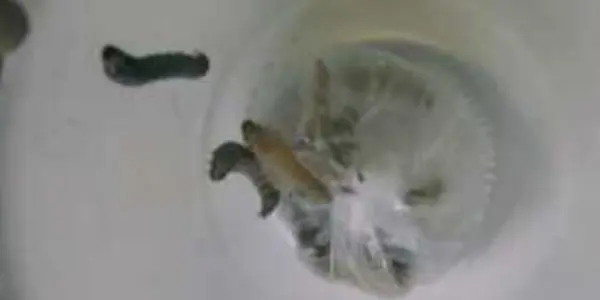
It's by using a 'bubble' of air they create with their water-repellent skin as an external lung, according to John Bush, associate professor of applied mathematics at MIT, and Morris Flynn, assistant professor of mechanical engineering at the University of Alberta. When submerged these insects trap a thin layer of air on their bodies. These bubbles not only serve as a finite oxygen store, but also allow the insects to absorb oxygen from the surrounding water.
Lovastatin, a drug used to lower cholesterol and help prevent cardiovascular disease, has been shown to improve bone healing in an animal model of neurofibromatosis type 1 (NF1). The research, reported today in BMC Medicine, will be of great interest to NF1 patients and their physicians.
Many NF1 patients suffer from bowing, spontaneous fractures and pseudarthrosis (incomplete healing) of the tibias (shinbones). Mateusz Kolanczyk from Stefan Mundlos' laboratory in the Max Planck Institute for Molecular Genetics, Berlin, led a team that investigated lovastatin's ability to prevent pseudarthrosis in a new animal model of human NF1 disease.
Researchers have discovered new genes linked to schizophrenia, it has been revealed.
In two papers published in Nature today (July 30), scientists identify four mutated gene regions that may hold the key to producing new tailor-made drugs to treat the devastating mental illness.
It is hoped the finds, which are likely to galvanize the field of psychiatric genetics, could also lead to earlier diagnosis of the disorder, which affects around one in every 100 people.
Researchers at Yale School of Medicine have found the brain's appetite center uses fat for fuel by involving oxygen free radicals—molecules associated with aging and neurodegeneration. The findings suggest that antioxidants could play a role in weight control.
The study's lead authors were Sabrina Diano and Tamas Horvath, who are an associate professor and professor, respectively, in the Departments of Obstetrics, Gynecology & Reproductive Sciences and Neurobiology. Horvath is also chair of the Section of Comparative Medicine.
"In contrast to the accepted view, the brain does use fat as fuel," said Horvath. "Our study shows that the minute-by-minute control of appetite is regulated by free radicals, implying that if you interfere with free radicals, you may affect eating and satiety."

It is well-known that Vincent van Gogh often painted over his older works. Experts estimate that about one third of his early paintings conceal other compositions under them.
Using a new technique based on synchrotron radiation induced X-ray fluorescence spectroscopy, an international research team, including members from Delft University of Technology (The Netherlands) and the University of Antwerp (Belgium), has successfully applied this technique for the first time to the painting entitled Patch of Grass by Vincent van Gogh. Behind this painting is a portrait of a woman.
A strain of mice with the natural ability to repair damaged cartilage may one day lead to significant improvements in treatment of human knee, shoulder and hip injuries.
Researchers at Oregon Health & Science University have discovered males from a strain of mice called MRL/MpJ have the innate ability to repair their own knee cartilage. "We think there is something special about these mice," said Jamie Fitzgerald, Ph.D., assistant professor of orthopedics and rehabilitation in the OHSU School of Medicine. "They have the ability to regenerate cartilage."
From nursery rhymes to Shakespearian sonnets, alliteration has always been an important aspect of poetry whether as an interesting aesthetic touch or just as something fun to read. But a recent study suggests that this literary technique is useful not only for poetry but also for memory.
In several experiments, researchers R. Brooke Lea of Macalester College, David N. Rapp of Northwestern University, Andrew Elfenbein and Russell Swinburne Romine of University of Minnesota and Aaron D. Mitchel of the Pennsylvania State University had participants read works of poetry and prose with alliterative sentences to show the importance of repetitive consonants on memory.