Beauty Is In The Pupil Of The Beholder - Glossiness Too
Pupils don't just respond to what we look at, they respond based on how we evaluate
Pupils don't just respond to what we look at, they respond based on how we evaluate


Tabebuia impetiginosa, commonly known as Pink Ipê, is a deciduous tree, native to Central and South America, and is related to magnolias.
With obesity levels rising (and people apparently unwilling to eat moderately) scientists have been searching for ways to mitigate obesity and the related conditions it brings, such as diabetes and heart disease.
Scientists from Germany have recently discovered that extracts of Tabebuia impetiginosa, a traditional herbal remedy, can act to delay the absorption of dietary fat in animal models. They believe that the extract could be incorporated into a food supplement which may not only reduce obesity, but also lessen the risk of development of type 2 diabetes and coronary heart disease.
The numbers of cycles of preimplantation genetic diagnosis or screening are rising steadily in Europe with over 2,700 reported in 2004 (the most recent year for which data are available). Fertility centres are able to screen for a growing number of genetically related conditions, but what should doctors do if no embryos without the targeted condition are available for transfer and the parents request that affected embryos should be transferred instead?
Ethicist Dr Wybo Dondorp told the 24th annual meeting of the European Society of Human Reproduction and Embryology in Barcelona today (Monday): "Parental requests for transferring affected embryos should not be dismissed beforehand as a sign of irresponsible capriciousness. As the couple's primary wish may be for a child, they may reason that if a non-affected, healthy child is not what they can get, they will also be happy with, and good parents for, a child with a condition they at first intended to avoid. Respect for autonomy at least requires taking such requests seriously, even if, in view of all other considerations, doctors decide not agree to the requests."
In a recent paper, geophysicist Mioara Mandea from the GFZ German Research Centre for Geosciences, Potsdam and her Danish colleague Nils OLSEN from the National Space Institute/DTU Copenhagen, have shown that motions in the fluid in the Earth’s core are changing surprisingly fast, and that this, in turn, effects the magnetic field of our planet.
The very precise measurements of the Earth’s magnetic field delivered by the geosatellite CHAMP combined with Ørsted satellite data and ground observations over the past nine years, have made it possible to reveal what is happening at 3,000 km under ground.
Nils Olsen and Mioara Mandea have computed a model for the flow at the top of the Earth’s core that fits with the recent rapid changes in the magnetic field, and is also in agreement with the changes in the Length-of-Day variation. This core flow is rather localized in space, and involves rapid variations, almost sudden, over only a few months – a remarkably short time interval compared with the respectable age of our Planet or even with the time of the last magnetic field reversal, some 780,000 years ago.
U.S. companies are helping spread fair hiring practices across the world as they set up shop in developing nations, according to a new study of gender and age discrimination co-written by a University of Illinois labor expert.
American-based firms tend to follow U.S. hiring laws, even when they do business in countries with no anti-discrimination standards on the books, based on findings that will appear in the Journal of International Business Studies.
"American companies are very much emulated these days by companies all over the world," said John Lawler, a professor in the U. of I. Institute of Labor and Industrial Relations. "So I think to the extent they do these sorts of things, they create a very positive model that's going to have an impact internationally."
The jury is still out on the actual benefits of recycling as far as environmental impact but new research suggests that a cellular version could be useful for battling cancer. Scientists at Stanford University have identified a molecule that uses this unexpected pathway to selectively kill cancer cells.
Renal cell carcinoma (RCC), the most common form of kidney cancer, is nearly always caused by mutation of the von Hippel-Lindau (VHL) tumor suppressor gene and often does not respond well to treatment.
The researchers discovered a compound, STF-62247, that was selectively toxic to RCCs deficient in VHL whereas cells with normal VHL were not affected. Treatment of RCC cells lacking functional VHL induced autophagy, a cellular recycling process that cells normally use to conserve resources during times of stress.
An aging population means that neurodegeneration, such as Alzheimer’s disease, is one of the major health problems in the developed world.
One of the causes of neurodegeneration is a modification to the protein ‘tau’, which helps to maintain the stability of neurones in the brain, causing them to form aggregates termed ‘tangles’.
These diseases, or ‘tauopathies’ are believed to be caused by a form of the protein tau which has been excessively modified with phosphate.
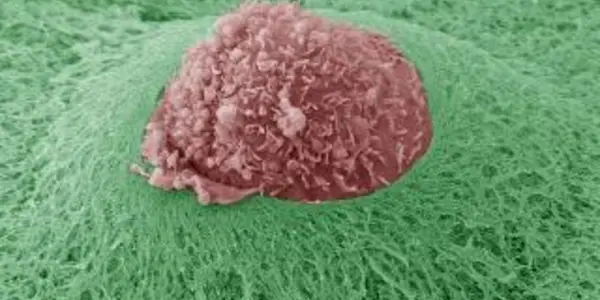
When tumor cells acquire the capacity to move around and invade other tissues, there is a risk of metastases and cancer treatment becomes more difficult.
At the Institut Curie, CNRS Director of Research Philippe Chavrier and his group have just discovered how breast cancer cells break the bonds that tether them to the tumor. The basement membrane around the mammary gland is a barrier to the spread of cancer cells. Three proteins in the tumor cells transport enzymes needed to perforate this barrier, and another protein puts these enzymes in the right place.
These discoveries, published in Cell Biology and Current Biology, shed light on the early mechanisms of the formation of metastases in certain breast cancers. These findings constitute an essential step in the quest for the early identification of highly invasive tumors, or even the blocking of formation of metastases.
When Sir Thomas More stood on the scaffold in 1535 he continued to make jokes. We don't often associate humor with executions by berserk kings over religious convictions but that is why humor has always fascinated us and it leads to questions about what is funny, how humor works at such moments, and when it is 'appropriate' to rely on a sense of humor.
Renaissance humor (1500-1700) comes under scrutiny at a conference at the University of Leicester on Friday 18th July, where experts in the literature of the period will gather for the first time to discuss Renaissance humor in some detail.
A flavor of humor of what the conference might have to offer can be found in Ben Jonson's Volpone (1607), in which Jonson's anti-hero, the miser and swindler Volpone, feels such contempt for the medical profession that he twists the English language into a glorious new direction, referring to a money-grabbing quack doctor as 'a turdy-facy, nasty-paty, lousy-fartical rogue.'
Dutch ecologist Marijke van Kuijk has studied the regeneration of the tropical forest in Vietnam. Abandoned agricultural land does regenerate to tropical forest, but only slowly. Two procedures are used to help nature along: pruning of foliage to free up space for trees and planting the desired tree species. Van Kuijk used the PHOLIAGE model to calculate the appropriate measures.
People in the tropics depend heavily on the products and services the forest supplies. However, the natural regeneration process from agricultural land to forest often stagnates at the scrub stage. Some plants and shrubs grow vigorously and become dominant as a result of which young trees do not receive enough light to grow.
European researchers have taken a major step towards the goal of developing printable electronics that can be used for creating radio frequency identification tags and flexible watch displays.
Researchers have long dreamed of being able to print electronic components directly onto organic materials such as paper, fabrics, or plastic.
In addition to being able to fabricate large numbers of everyday devices such as watch displays and other applications cheaply, they envision novel applications including electronic paper, eyeglasses with embedded displays, or even smart clothing.
A dynamic way to alter the shape and size of microscopic three-dimensional structures built out of proteins has been developed by biological chemist Jason Shear and his former graduate student Bryan Kaehr at The University of Texas at Austin.
Shear and Kaehr fabricated a variety of detailed three-dimensional microstructures, known as hydrogels, and have shown that they can expand and bend the hydrogels by altering the chemistry of the environment in which they were built.
Hydrogels have been in development over the last couple of decades and are being used as parts in biology-based microdevices and medical diagnostic technologies, for drug delivery, and in tissue engineering. But the future utility of these "smart materials" relies on finding better ways to control their conformation.
Extinction risks for natural populations of endangered species are likely being underestimated by as much as 100-fold because of a mathematical "misdiagnosis," according to a new study led by a University of Colorado at Boulder researcher.
Assistant Professor Brett Melbourne of CU-Boulder's ecology and evolutionary biology department said current mathematical models used to determine extinction threat, or "red-listed" status, of species worldwide overlook random differences between individuals in a given population.
Such differences, which include variations in male-to-female sex ratios as well as size or behavioral variations between individuals that can influence their survival rates and reproductive success, have an unexpectedly large effect on extinction risk calculations, according to the study.