Beauty Is In The Pupil Of The Beholder - Glossiness Too
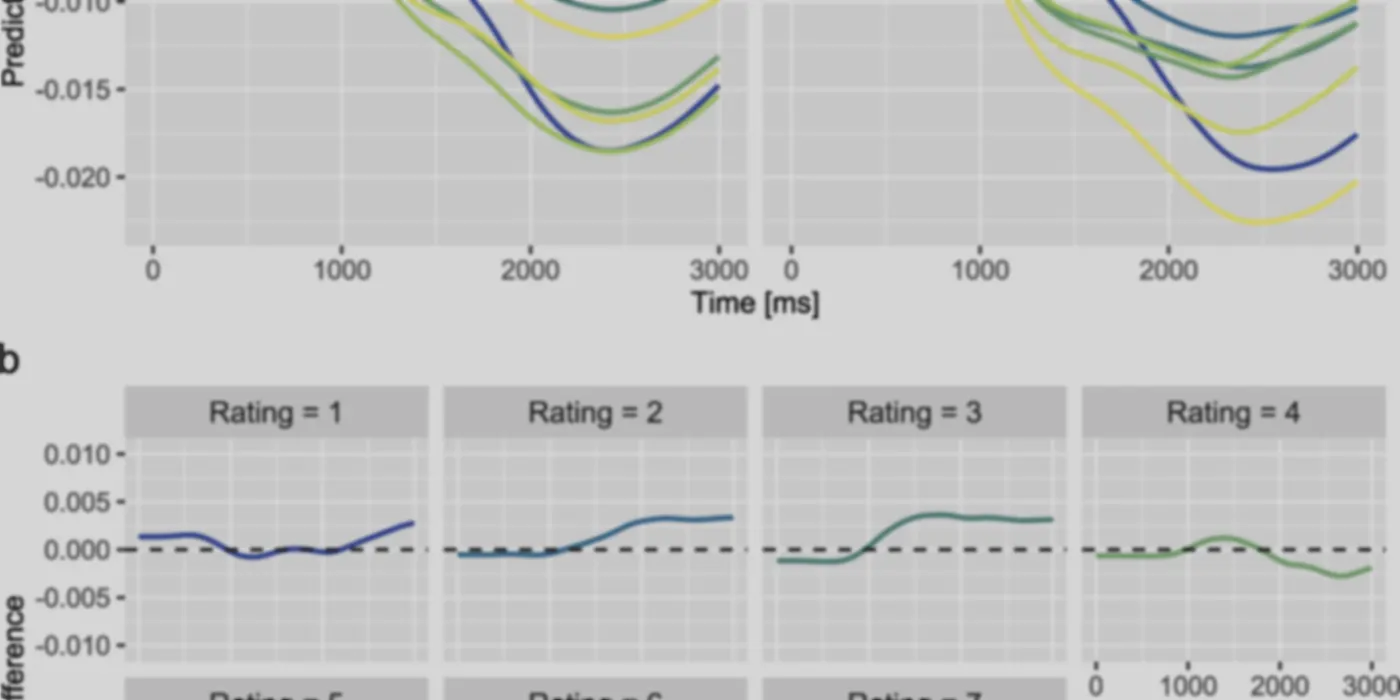
Pupils don't just respond to what we look at, they respond based on how we evaluate
Pupils don't just respond to what we look at, they respond based on how we evaluate


Using ultrasound to measure the height of a woman’s uterus is a good way to predict whether or not she is at risk of having babies born prematurely if she becomes pregnant with twins after IVF, according to new research presented at the 24th annual meeting of the European Society of Human Reproduction and Embryology in Barcelona today (Wednesday).
Dr Raphaël Hirt, a Fellow in the Division of Reproductive Medicine at the Hôpital Antoine Béclère, Clamart, Paris (France) headed by Professor Renato Fanchin, told the conference that the finding would help medical professionals and women make objective decisions about how many embryos should be transferred in one IVF attempt.
Certain songbirds can contract their vocal muscles 100 times faster than humans can blink an eye – placing the birds with a handful of animals that have evolved superfast muscles, University of Utah researchers found.
"We discovered that the European starling (found throughout Eurasia and North-America) and the zebrafinch (found in Australia and Indonesia) control their songs with the fastest-contracting muscle type yet described," says Coen Elemans, who conducted the study as a postdoctoral researcher in biology at the University of Utah.
"Superfast muscles were previously known only from the sound-producing organs of rattlesnakes, several fish and the ringdove," Elemans says. "We now have shown that songbirds also evolved this extreme performance muscle type, suggesting these muscles – once thought extraordinary – are more common than previously believed."

Millions of years of evolution have maximized the efficiency of how sea creatures move through water while humans have been trying to perfect streamlined designs for barely a century - but we're catching up.
Biologists and engineers from across the U.S. have been studying the flippers, fins and tails of whales and dolphins and discovered some features of their structure that contradict long-held engineering theories.
Dr. Frank Fish of West Chester University will talk about the impact these discoveries may have on traditional industrial designs on Tuesday 8th July at the Society for Experimental Biology's Annual Meeting in Marseille [Session A2].
A genome sequence is a long sequence written in a four letter code—3 billion letters in the case of a human genome. How genomic code is deciphered is traditionally left to professional annotators who use information from a number of sources (for instance, knowledge about similar genes in other organisms) to work out where a gene starts, stops and what it does. Even the "gold standard" of professional annotation is an exceptionally slow process.
However, new crowdsourcing technology hopes to provide a faster solution. Don't cringe, scientists, but it's Wikipedia.
Andrew Su, John Huss III and colleagues have established a 'Gene Wiki', an online repository of information on human genes, within Wikipedia. They envision a network of articles, created by a computer program and enhanced by user comments, which will describe the relationship and functions of all human genes.
A new study challenges the long-held belief that diversity of marine species has been increasing continuously since the origin of animals.
An international team carried out this decade-long study and concludes that most of the diversification occurred early on – relatively speaking.
"The general understanding for many decades has been that since the rise of the modern major groups of animals about 545 million years ago (i.e., since the beginning of the Phanerozoic Era), the diversity of animal life in the seas has undergone a roughly four-fold exponential increase," says Dr. Thomas D. Olszewski, a geology and geophysics professor at Texas A&M University. A steep increase in the diversity was believed to have occurred only between 145 million and 60 million years ago.
Researchers here now have a picture of a key molecule that lets microbes produce carbon dioxide and methane, the two greenhouse gases associated with global warming. The findings relate to organisms called methanogens and cap a 12-year effort into how industrial processes might be improved, explained Michael Chan, professor of biochemistry, and Joseph Krzycki, professor of microbiology, both of Ohio State University.
Methanogenesis is the process by which the gas methane is made, and it takes place everywhere across the globe, from swamps to landfills, releasing the gas that ultimately seeps into the atmosphere.
"This enzyme is the key to the whole process of methanogenesis from acetic acid," Krzycki said. "Without it, this form of methanogenesis wouldn't happen. Since it is so environmentally important worldwide, the impact of understanding this would be enormous."
Paying rural landowners in Oregon's Willamette Basin to protect at-risk animals won't necessarily mean that their newly conserved trees and plants will absorb more carbon from the atmosphere and vice versa, a new study has found.
The study, to be published this month in the Proceedings of the National Academy of Sciences, analyzed hypothetical payments that were given to landowners to voluntarily take their acreage out of production for conservation. Scenarios conserving different types of land were also developed.
Vaginal microbicides currently in clinical trials may be the only weapon that will protect women against infection from HIV but they may actually be of more benefit to men than women, according to a new UCLA AIDS Institute study.
Microbicides are compounds that can be applied inside the vagina to protect against HIV and other sexually transmitted diseases. Pharmaceutical companies are currently conducting trials of second-generation microbicides that are based on antiretroviral, or ARV, drugs.
The study, which used novel mathematical models to simulate clinical trials and population-level transmission of HIV, appears July 7 in the online issue of Proceedings of the National Academy of Sciences.
Violence between partners, friends and acquaintances appears prevalent both before and during college, according to results of a survey of students at three urban college campuses published in the July issue of Archives of Pediatrics & Adolescent Medicine.
The transition from living at home to attending college may increase adolescents' vulnerability to relationship violence, according to background information in the article. Factors associated with this risk include less parental monitoring and support, isolation in an unknown environment and a strong desire for peer acceptance that can change behaviors toward others.
Christine M.
Is baseball biased toward left-handed pitchers? Indeed it is, says David A. Peters, Ph.D., McDonnell Douglas Professor of Engineering at Washington University in St. Louis (and uber baseball fan) and he says he has the data to prove it.
There's no question left-handed pitchers, even less than great ones, can last a long time in baseball. But 90 percent of the world is right-handed yet only 75 percent of baseball players are. Is that because left-handed pitchers do better against right-handed hitters so teams develop more left-handed hitters toi counter that or is it part of a vast, left-hand conspiracy?
If you weren't living under a scientific rock for the last 20 years, you know that everyone from environmental groups to Senator and then Vice-President Al Gore believed biofuels were the renewable way to cut dependence on foreign oil and have a cleaner environment.
If you weren't living under a scientific rock for the last 20 years and know anything about how biofuels are made you always knew that was complete hoopie, but it wasn't until a Republican president and Congress agreed they were good that everyone knew they must be terribly wrong.
But biofuels are not as bad today as some make them out to be, just like they were not as good as many of those same people used to make them out to be. Renewable energy continues to be the goal and biofuels can be a part of that, though most have switched to wildly optimistic projections about solar energy as the magic cure-all of the future now.
Unless you are Scrooge McDuck or have a life-size poster of Dr. Eric R. Pianka on your wall, you probably like to see babies smile. It isn't just you. In a mother, her baby's smile also lights up the reward centers of her brain, just like free money, wrote Baylor College of Medicine researchers in Pediatrics today.
Not only could findings like this help scientists learn more about the magic of the mother-infant bond, it could also tell us how it sometimes goes wrong, said Dr. Lane Strathearn, assistant professor of pediatrics at BCM and Texas Children's Hospital and a research associate in BCM's Human Neuroimaging Laboratory.
To study this relationship, Strathearn and his colleagues asked 28 first-time mothers with infants aged 5 to 10 months to watch photos of their own babies and other infants while they were in a functional magnetic resonance imaging scanner. The machine measures blood flow in the brain. In the scans, areas of increased blood flow "light up," giving researchers a clue as to where brain activity takes place.