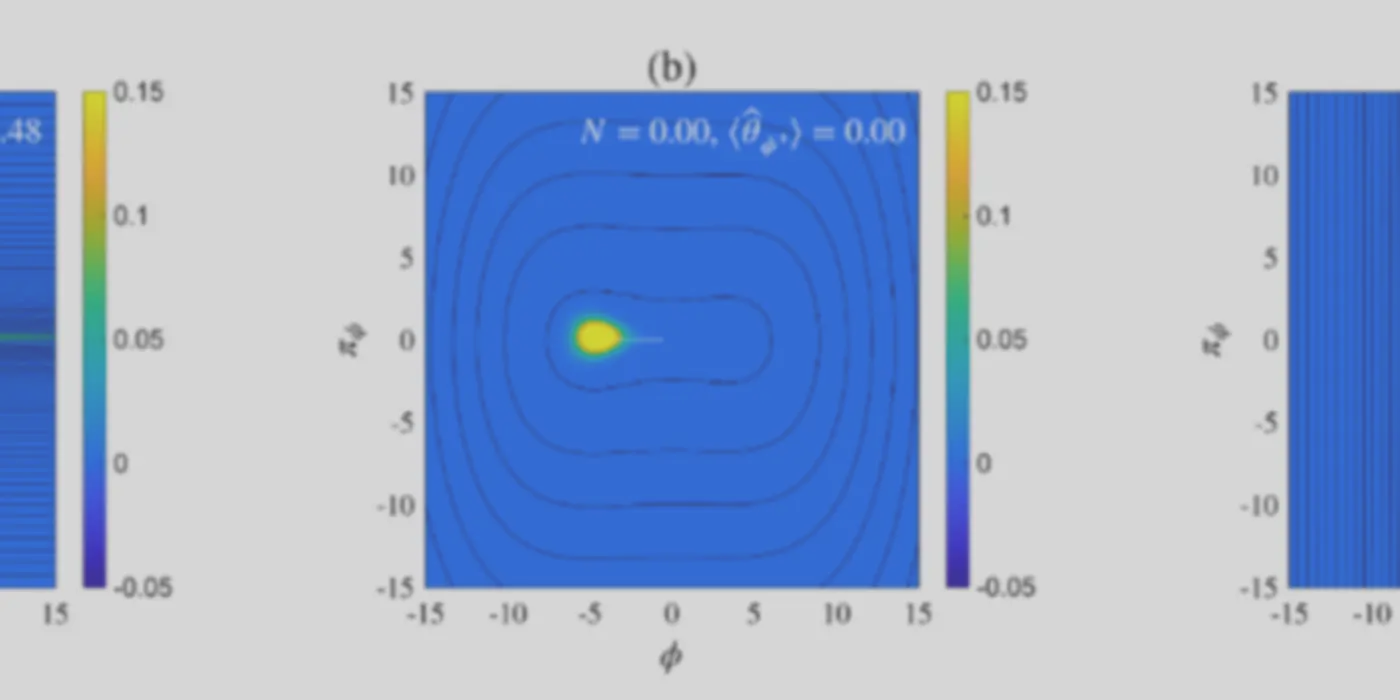
Sorry Higgs, There May Be A New Contender For Low Energy States
If we're trapped in a false vacuum, there's still hope to break free of cosmic lockdown
If we're trapped in a false vacuum, there's still hope to break free of cosmic lockdown


The report: Fuel for thought – The future of transport fuels: challenges and opportunities addresses two serious issues – the need to dramatically reduce the transport sector's greenhouse gas emissions and, how to deal with the economic risks associated with increasingly costly and scarce oil supplies.
The report is the result of a year's deliberations by the Future Fuels Forum (FFF) which was convened by CSIRO to engage leading community, industry and government bodies in discussions about a range of plausible scenarios for establishing a secure and sustainable transport fuel mix to 2050.
Director of CSIRO's Energy Transformed Flagship, Dr John Wright, said Australia's transport fuel mix will substantially change in response to issues such as climate change and oil prices.
Genetic recombination in germ cells leads to offspring with a new genetic make-up and influences the course of evolution.
In the current issue of Nature, researchers at the European Molecular Biology Laboratory (EMBL) in Heidelberg, Germany, and the EMBL-European Bioinformatics Institute (EMBL-EBI) in Hinxton, UK, have presented the most precise map of genetic recombination yet and they say it sheds light on fundamental questions about genetic shuffling and has implications for the tracking of disease genes and their inheritance.

Children between the ages of seven and 12 appear to be naturally inclined to feel empathy for others in pain, according to researchers at the University of Chicago, who used functional Magnetic Resonance Imaging (fMRI) scans to study responses in children.
The responses on the scans were similar to those found in studies of adults. Researchers found that children, like adults, show responses to pain in the same areas of their brains. The research also found additional aspects of the brain activated in children, when youngsters saw another person intentionally hurt by another individual.
"This study is the first to examine in young children both the neural response to pain in others and the impact of someone causing pain to someone else," said Jean Decety, Professor in the Departments of Psychology and Psychiatry at the University of Chicago, who reported the findings in the article, "Who Caused the Pain? An fMRI Investigation of Empathy and Intentionality in Children," published in the currrent issue of Neuropsychologia. Joining him as co-authors were University students Kalina Michalska and Yuko Aktsuki.
Millions of pounds of lead used in hunting, fishing and shooting sports wind up in the environment each year and can threaten or kill wildlife, according to a new scientific report.
Lead is a metal with no known beneficial role in biological systems, and its use in gasoline, paint, pesticides, and solder in food cans has nearly been eliminated. Although lead shot was banned for waterfowl hunting in 1991, its use in ammunition for upland hunting, shooting sports, and in fishing tackle remains common.
In some ways, your body's thoughts and actions are like a complex series of water faucets but the spigots open or close in response to signals. Each thought or action sends a million electrical signals pulsing through your body.
At the heart of the process of generating these electrical impulses is the ion channel.
Ion channels belong to a special class of proteins embedded in the oily membranes of the cell. They regulate the movement of charged particles, called ions, into and out of the cell. Much like water faucets that can be controlled by turning a knob, channels open or close in response to specific signals. For instance, ion channels that open in response to pressure on the skin regulate our sense of touch.

A newly developed nano-sized electronic device is an important step toward helping astronomers see invisible light dating from the creation of the universe. This invisible light makes up 98% of the light emitted since the "big bang," and may provide insights into the earliest stages of star and galaxy formation almost 14 billion years ago.
The tiny, new circuit, developed by physicsts at Rutgers University, NASA's Jet Propulsion Laboratory in Pasadena, Calif., and the State University of New York at Buffalo, is 100 times smaller than the thickness of a human hair. It is sensitive to faint traces of light in the far-infrared spectrum (longest of the infrared wavelengths), well beyond the colors humans see.
"In the expanding universe, the earliest stars move away from us at a speed approaching the speed of light," said Michael Gershenson, professor of physics at Rutgers and one of the lead investigators. "As a result, their light is strongly red-shifted when it reaches us, appearing infrared."
Researchers from the European Molecular Biology Laboratory (EMBL) discovered a new way to make use of drugs' unwanted side effects. They developed a computational method that compares how similar the side effects of different drugs are and predicts how likely the drugs act on the same target molecule. The study, published in Science this week, hints at new uses of marketed drugs.
Similar drugs often share target proteins, modes of action and unpleasant side effects. In reverse this means that drugs that evoke similar side effects likely act on the same molecular targets. A team of EMBL researchers now developed a computational tool that compares side effects to test if they can predict common targets of drugs.
Good pollen makes bees hot, say UC San Diego biologists, and wasps warm up after some protein-rich meat - and they don't even have to eat it to get that effect but the warmer flight muscles speed the insects' trips home, allowing them to quickly exploit a valuable resource before competitors arrive.
Because foragers of neither species eat the protein they collect, feeding it instead to their larvae, their warming must be a behavioral rather than a metabolic response to nutritious food, both research teams conclude.
Such similar responses found in two distantly related species – a bumble bee and a yellowjacket wasp whose ancestral lines diverged millions of years ago – suggest that the behavior is an ancestral trait.

Therapies, rehabilitation and specialty medical care are just a few of the extra costs that parents face when raising children with special needs. In a new study that will be published in current issue of Pediatrics, Paul T. Shattuck, Ph.D., professor of social work at Washington University in St. Louis, found that families with similar demographics and nature of their children's special needs have different out-of-pocket health expenditures depending on the state in which they live.
"This is one of the few studies that focuses on families' costs when caring for children with special needs, rather than the overall cost for society as a whole," he says.
The study's authors ranked all 50 states and the District of Columbia, using survey data from 2000 and 2001, in terms of the average percentage of special needs families that shoulder an additional financial burden, the yearly average extra costs of those families and the size of these costs relative to family income.
By injecting purified stem cells isolated from adult skeletal muscle, researchers have shown they can restore healthy muscle and improve muscle function in mice with a form of muscular dystrophy. Those muscle-building stem cells were derived from a larger pool of so-called satellite cells that normally associate with mature muscle fibers and play a role in muscle growth and repair.
In addition to their contributions to mature muscle, the injected cells also replenished the pool of regenerative cells normally found in muscle. Those stem cells allowed the treated muscle to undergo subsequent rounds of injury repair, they found.
"Our work shows proof-of-concept that purified muscle stem cells can be used in therapy," said Amy Wagers of Harvard University, noting that in some cases the stem cells replaced more than 90 percent of the muscle fibers. Such an advance would require isolation of stem cells equivalent to those in the mouse from human muscle, something Wagers said her team is now working on.
In one of those odd uses of statistics, higher gasoline prices have been associated with fewer deaths from car accidents, says a researcher at the University of Alabama at Birmingham (UAB).
An analysis of yearly vehicle deaths compared to gas prices found death rates drop significantly as people slow down and drive less. If gas remains at $4 a gallon or higher for a year or more, traffic deaths could drop by more than 1,000 per month nationwide, said Michael Morrisey, Ph.D., director of UAB's Lister Hill Center for Health Policy and a co-author on the new findings.
This means if we raise the price to $10 a gallon people might never die, right? Likewise if we drop the speed limit to 5 MPH or eliminate cars, there would be fewer deaths.
Imagine windows that not only provide a clear view and illuminate rooms, but also use sunlight to efficiently help power the building they are part of. MIT engineers report a new approach to harnessing the sun's energy that could allow just that.
The work involves the creation of a novel 'solar concentrator.' "Light is collected over a large area [like a window] and gathered, or concentrated, at the edges," explains Marc A. Baldo, leader of the work and the Esther and Harold E. Edgerton Career Development Associate Professor of Electrical Engineering.
As a result, rather than covering a roof with expensive solar cells (the semiconductor devices that transform sunlight into electricity), the cells only need to be around the edges of a flat glass panel. In addition, the focused light increases the electrical power obtained from each solar cell "by a factor of over 40," Baldo says.