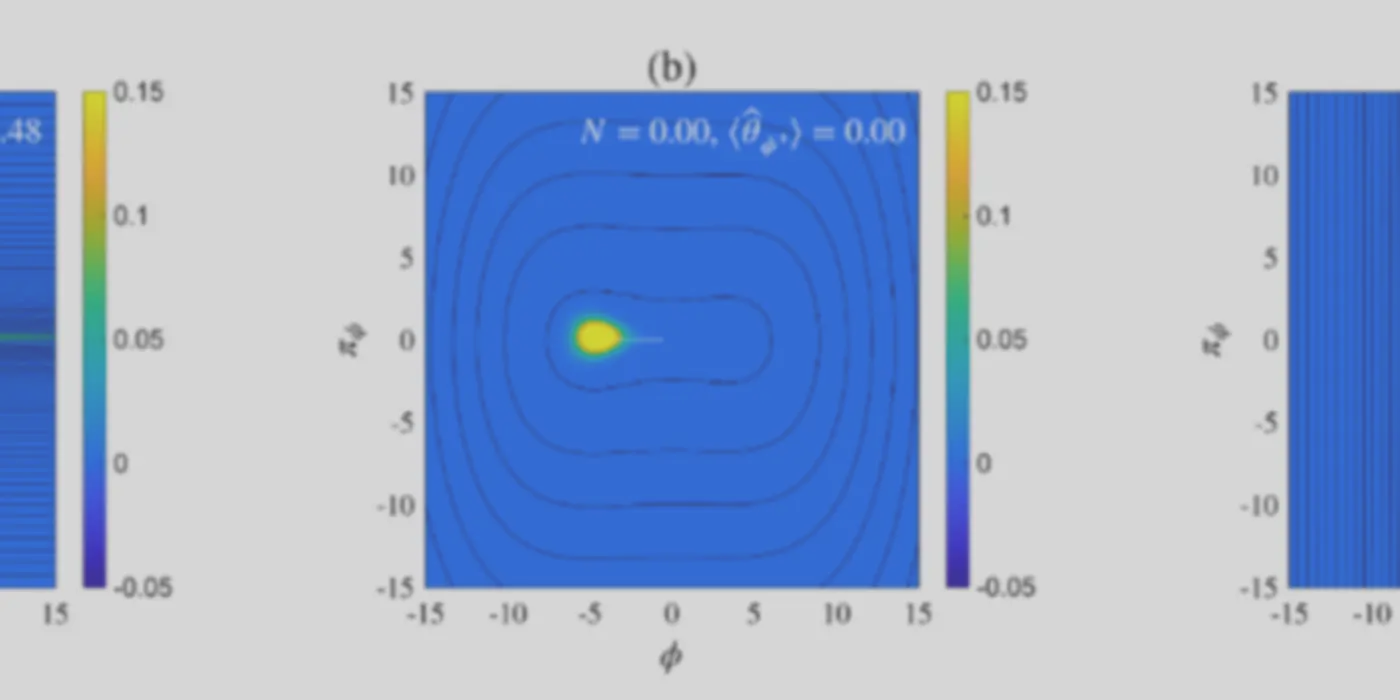
Sorry Higgs, There May Be A New Contender For Low Energy States
If we're trapped in a false vacuum, there's still hope to break free of cosmic lockdown
If we're trapped in a false vacuum, there's still hope to break free of cosmic lockdown


Nothing knows how to survive changes on Earth like bacteria. Microorganisms once reigned supreme on the Earth and they thrived by filling every nook and cranny of the environment billions of years before humans first arrived on the scene.
Their ability to grow from an almost infinite variety of food sources may help bail out society from its current energy crisis, according to the Arizona State University Biodesign Institute's Bruce Rittmann, Rosa Krajmalnik-Brown, and Rolf Halden.
Two distinct, but complementary approaches will be needed:
A team of London scientists have found clues for the potentially therapeutic benefits of nicotine on learning, memory and attention while minimising the risk of addiction. The research announced in Geneva today will assist the search for new drugs for dementia.
The pharmaceutical industry has striven to discover nicotine-like substances for conditions such as Alzheimer’s disease. Nicotine itself is difficult to administer by conventional means. The differences between doses that produce cognitive and toxic effects are small and, most significantly, there is also high risk of addiction. The balance, however, between costs and benefits is much more favourable for people with serious illnesses such as dementia.

Superconductors are materials that conduct electricity with no resistance. Electricity comes from electrons traveling through wire conductors. Those electrons bumping into each other generate an enormous amount of heat. With superconductors, however, there is no jostling, therefore no heat. But there's a catch: "High-temperature" superconductors (a very relative term) only behave this way when they are cooled to liquid nitrogen temperatures – between -346°F and -320.44°F.
Scientists have been unable to decipher just how copper-oxide HTS materials become superconductors. In its natural state, copper-oxide behaves like a permanent magnet. Scientists "dope" the material – which involves adding impurities to increase the number of electron carriers – and as a result of the doping and the cooling, the material turns into a superconductor, with the doped electrons pairing up to effortless carry electricity. But how, and where in the material, does this happen?
Meteorites are a major tool for knowing the history of the solar system because their composition is a record of past geologic processes that occurred while they were still incorporated in the parent asteroid.
Most of the meteorites that we collect on Earth come from the main belt of asteroids located between Mars and Jupiter [1]. They were ejected from their asteroidal "parent body" after a collision, were injected into a new orbit, and they finally felt onto the Earth.
One fundamental difficulty is that we do not know exactly where the majority of meteorite specimens come from within the asteroidal main belt. For many years, astronomers failed to discover the parent body of the most common meteorites, the ordinary chondrites that represent 75% of all the collected meteorites.
Researchers at the University of Pennsylvania School of Medicine discovered that the activity of a specific family of nanometer-sized molecular motors called myosin-I is regulated by force. The motor puts tension on cellular springs that allow vibrations to be detected within the body.
This finely tuned regulation has important implications for understanding a wide variety of basic cellular processes, including hearing and balance and glucose uptake in response to insulin.
Myosin-I is a biological motor that uses the chemical energy made by cells to ferry proteins within cells and to generate force, powering the movement of molecular cargos in nearly all cells.

Imagine having three clocks in your house, each chiming at a different time.
Astronomers have found the equivalent of three out-of-sync "clocks" in the ancient open star cluster NGC 6791. The dilemma may fundamentally challenge the way astronomers estimate cluster ages, researchers said.
Using NASA's Hubble Space Telescope to study the dimmest stars in the cluster, astronomers uncovered three different age groups. Two of the populations are burned-out stars called white dwarfs. One group of these low-wattage stellar remnants appears to be 6 billion years old, another appears to be 4 billion years old. The ages are out of sync with those of the cluster's normal stars, which are 8 billion years old.
Farm-raised tilapia, one of the most highly consumed fish in America, has very low levels of beneficial omega-3 fatty acids and, perhaps worse, very high levels of omega-6 fatty acids, according to new research published in the Journal of the American Dietetic Association.The researchers say the combination could be a potentially dangerous food source for some patients with heart disease, arthritis, asthma and other allergic and auto-immune diseases that are particularly vulnerable to an “exaggerated inflammatory response.” Inflammation is known to cause damage to blood vessels, the heart, lung and joint tissues, skin, and the digestive tract.
Common genetic variations affecting nicotine receptors in the nervous system can significantly increase the chance that European Americans who begin smoking by age 17 will struggle with lifelong nicotine addiction, according to researchers at the University of Utah and their colleagues at University of Wisconsin-Madison.
The study highlights the importance of public health efforts to reduce the number of youth who begin smoking.
These common gene variations - single nucleotide polymorphisms (SNPs) - are changes in a single unit of DNA. SNPs that are linked and inherited together are called a haplotype. The researchers found that one haplotype for the nicotine receptor put European American smokers at greater risk of heavy nicotine dependence as adults, but only if they began daily smoking before the age of 17. A second haplotype actually reduced the risk of adult heavy nicotine dependence for people who began smoking in their youth.
Indiana Jones isn't the only one who has great adventures, apparently proteins do also. Researchers have uncovered a a slippery tube that funnels proteins into a 'chamber of doom' where they are shredded and recycled into the building blocks of new proteins.
The tube is part of the 26S proteasome, an enzyme that acts as the cell’s protein garbage disposal. As described by researchers from the Technion-Israel Institute of Technology and the University of Texas Health Science Center at San Antonio, the tube is a concentric stack of rings wrapped in molecular motors that speed the proteins toward the proteasome’s slicing and dicing core.

Bats, outnumbered only by rodents in number of species and thus the second largest group of mammals, are a remarkable evolutionary success story. Now they have gotten even more interesting. Researchers of the Leibniz-Institute for Zoo and Wildlife Research in Berlin (Germany) and Boston University (U.S.A.) have discovered a place that harbors the highest number of bat species ever recorded.
In just a few hectares of rainforest in the Amazon basin of eastern Ecuador, they have found more than 100 species of bats.
Dr. Katja Rex and colleagues captured bats at several biodiversity hotspots in the New World tropics, in the lowland rainforest of Costa Rica, the slopes of the Andes and a site in the Amazon rainforest of Eastern Ecuador, at the Tiputini Biodiversity Station located adjacent to the Yasuní Biosphere Reserve.

Fairbanks, AlaskaA 150-meter ice core pulled from the McCall Glacier in the Arctic National Wildlife Refuge this summer may offer researchers their first quantitative look at up to two centuries of climate change in the region.
The core, which is longer than 11/2 football fields, is the longest extracted from an arctic glacier in the United States, according to Matt Nolan, an associate professor at the University of Alaska Fairbanks Institute of Northern Engineering who has led research at McCall Glacier for the past six years. The sample spans the entire depth of the glacier and may cover 200 years of history, he said.
The nation's fourth and eighth graders scored higher in reading and mathematics than they did during their last national assessment, according to the federal government's latest annual statistical report on the well-being of the nation's children. Not all the report's findings were positive; there also were increases in the adolescent birth rate and the proportion of infants born at low birthweight.
These and other findings are described in America's Children in Brief: Key National Indicators of Well-Being, 2008. The report is compiled by the Federal Interagency Forum on Child and Family Statistics, a working group of Federal agencies that collect, analyze, and report data on issues related to children and families, with partners in private research organizations. It serves as a report card on the status of the nation's children and youth, presenting statistics compiled by a number of federal agencies in one convenient reference.