Jurassic Puke: Plesiosaurs Knew Not To Vomit Where They Eat
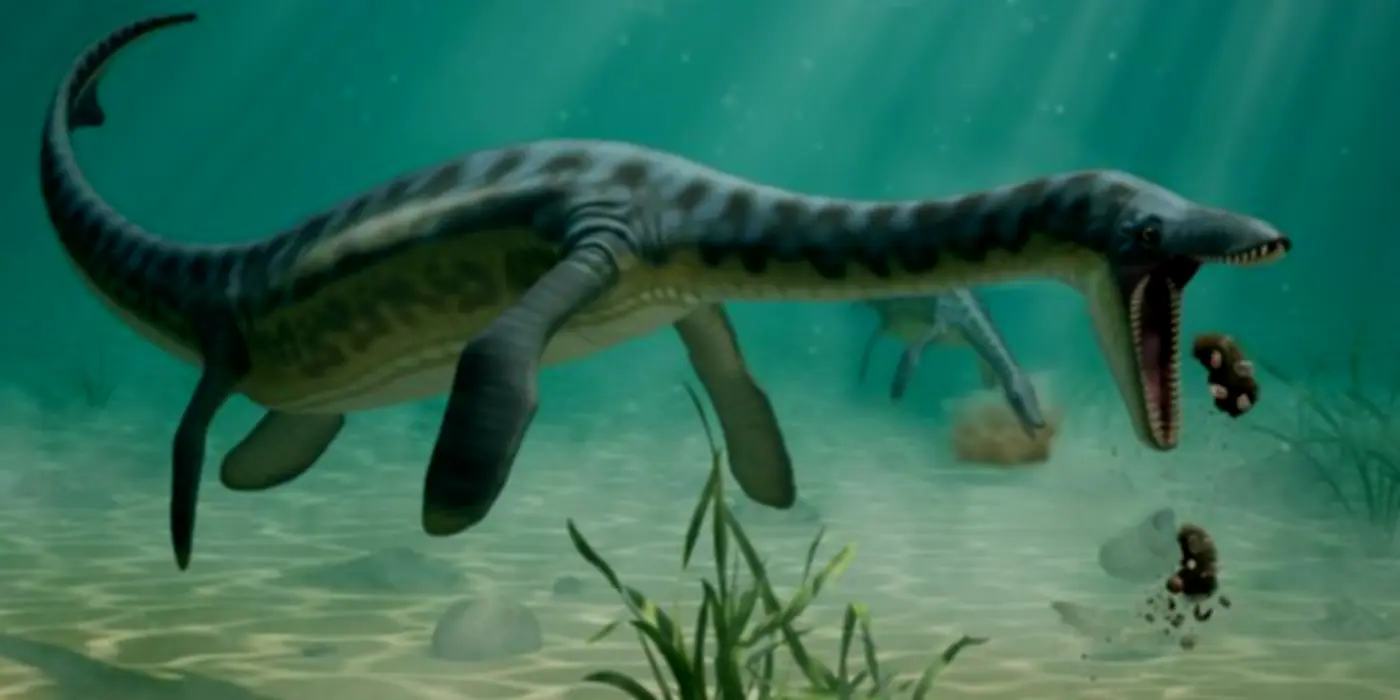
Jurassic monsters sometimes needed to vomit. When they did, they went to shore.
Jurassic monsters sometimes needed to vomit. When they did, they went to shore.


It's an urban legend we've all read - you meet some nice girl in Thailand and you black out and wake up in a bathtub without a kidney.
Kidneys, and other replaceable organs, have value because the wait list is long and someone has to die to donate them.
Arthur Matas, Professor of Surgery at the University of Minnesota, writing in this week's BMJ says a regulated system of compensation for living donors may be the solution to the growing shortage of kidneys for transplantation.
But Jeremy Chapman, from the Centre for Transplant and Renal Research in Sydney, argues that this could reduce the supply of all organs. He believes that the idea of the regulated market is a myth, which could have devastating consequences on the less easily regulated environments of Asia and Africa.
New evidence that chemical contaminants are finding their way into the deep-sea food web has been found in deep-sea squids and octopods, including the strange-looking "vampire squid". These species are food for deep-diving toothed whales and other predators.
In a study to be published in the journal Marine Pollution Bulletin, Michael Vecchione of NOAA Fisheries' National Systematics Laboratory and colleagues Michael Unger, Ellen Harvey and George Vadas at the Virginia Institute of Marine Science of The College of William and Mary report finding a variety of chemical contaminants in nine species of cephalopods, a class of organisms that includes octopods, squids, cuttlefishes and nautiluses.
Cephalopods are important to the diet of cetaceans, a class of marine mammals which includes whales, dolphins and porpoises. Cephalopods are the primary food for 28 species of odontocetes, the sub-order of cetaceans that have teeth and include beaked, sperm, killer and beluga whales and narwhals as well as dolphins and porpoises.
Fragile X syndrome (FXS) robs the brain of a protein that plays a major role in the way neurons communicate and that is essential for brain development, learning and memory.
A team of scientists has discovered new information about how FXS interferes with signaling between the nucleus of neurons and the synapse, the outer reaches of the neuron where two neurons communicate via chemical and electrical signals. The discovery should help lead the way to the development of new treatments for FXS, the most common form of inherited mental retardation and also a genetic contributor to some types of autism and epilepsy.
Translation of an organism's genetic information begins in the nucleus of a cell, where the DNA sequence (gene) is copied into an mRNA molecule, then exported into the cell's cytoplasm and translated into protein molecules.
An important component of early genetic material found in meteorite fragments is extraterrestrial in origin, say scientists from Europe and the USA. They say their research in Earth and Planetary Science Letters provides evidence that life’s raw materials came from sources beyond the Earth.
The materials they have found include the molecules uracil and xanthine, which are precursors to the molecules that make up DNA and RNA, and are known as nucleobases. The team discovered the molecules in rock fragments of the Murchison meteorite, which crashed in Australia in 1969.
They tested the meteorite material to determine whether the molecules came from the solar system or were a result of contamination when the meteorite landed on Earth. The analysis shows that the nucleobases contain a heavy form of carbon which could only have been formed in space. Materials formed on Earth consist of a lighter variety of carbon.
Today Doritos makes history, taking the UK’s first step in communicating with aliens as they broadcast the first ever advert directed towards potential extra terrestrial life.
The transmission is being undertaken as part of the Doritos Broadcast Project, which invited the UK public to create a 30 second video clip that could be beamed out to the universe offering a snap shot of life on earth to anyone ‘out there’.
61% of the UK public believe this is just the start of communication with ET life and that we will enter into regular communication with an alien species at some stage in the future.
The winning space-ad entitled ‘Tribe’ was voted for by the British public and directed by 25-year-old Matt Bowron. It will officially be entered into the Guinness Book of Records and will be aired on the more conventional medium of television on Sunday 15th June on ITV at 7.44pm in the ad break of the final Group B game of Euro 2008.
CARLISLE, England, June 13 /PRNewswire/ --
Published today, The Pattern Recognition Theory of Humour, by Alastair Clarke, answers the eternal question about the nature of humor. Clarke explains how and why we find things funny and identifies the reason humor is common to all human societies, its fundamental role in the evolution of humans and its continuing importance in the cognitive development of infants.
Clarke explains: "For some time now it's been assumed that a global theory of humour is impossible. This theory changes thousands of years of incorrect analyses and mini-theories that have applied to only a small proportion of instances of humour. It offers a vital answer as to why humour exists in every human society."
Practice makes perfect, but a question that still remains a mystery is why it is so difficult to transfer learning from a trained to an untrained task? Why are we no better at remembering faces when we have been training our memory for words? Scientists at Umeå University and Karolinska Institutet in Sweden now show in the journal Science that the answer lies in the brain areas activated by each task.
The scientists studied the brain activity of healthy subjects as they performed a task that was part of a training program and two untrained tasks. Their performance on the trained task and one of the untrained tasks improved. What these two tasks had in common was the activation of the striatum, a cluster of neuronal nuclei in midbrain.

University of Florida mechanical and aerospace engineering associate professor Subrata Roy has submitted a patent application for a circular, spinning aircraft design reminiscent of the spaceships seen in countless Hollywood films. Roy, however, calls his design a “wingless electromagnetic air vehicle,” or WEAV.
The proposed prototype is small – the aircraft will measure less than six inches across – and will be efficient enough to be powered by on-board batteries.
Roy said the design can be scaled up and theoretically should work in a much larger form. Even in miniature, though, the design has many uses.
New research from the American Museum of Natural History says that global warming is forcing species to move up tropical mountains. Christopher Raxworthy, Associate Curator in the Department of Herpetology, predicts that at least three species of amphibians and reptiles found in Madagascar's mountainous north could go extinct between 2050 and 2100 because of habitat loss associated with rising global temperatures.
These species, currently moving up-slope to compensate for habitat loss at lower and warmer altitudes, will eventually have no place to move to. The mountains can only go so high.
In a paper published this month in Global Change Biology, Raxworthy and colleagues found overall trends for elevation changes among 30 species of amphibians and reptiles. Uphill movement is a predicted response to increased temperatures, and other studies, including that of J. Alan Pounds in Costa Rica, have provided some empirical evidence of how tropical animals respond to climate change.
Star players make better basketball coaches, according to research by scholars at the University of Warwick and Cornell University. The research is further evidence that experts in their field rather than generalists typically make the best leaders in organizations.
Using data from 15,000 basketball games between 1996 and 2004, the authors learned that the US’s premier basketball teams in the NBA tend to win more games if led by coaches who were good players or if they had long playing careers, controlling for other factors that affect team performance. That upholds the authors’ hypothesis that, across many kinds of industry, it is experts in their field who typically make the best leaders.
In the current US NBA finals, the Lakers’ coach, Phil Jackson, is tied with the Celtics’ legendary Red Auerbach for the most championships as a head coach (nine) and has the second best career regular-season winning percentage (0.700) of all time.
Researchers in Spain have proven that metamaterials, materials defined by their unusual man-made cellular structure, can be designed to produce an acoustic cloak - a cloak that can make objects impervious to sound waves, literally diverting sound waves around an object.
The research, 'Acoustic cloaking in two dimensions: a feasible approach', published today, Friday, 13 June, 2008, in the New Journal of Physics (NJP), builds on recent theoretical research which has sought ways to produce materials that can hide objects from sound, sight and x-rays.
Daniel Torrent and José Sánchez-Dehesa from the Wave Phenomena Group, Department of Electronics Engineering at the Polytechnic University of Valencia, cite theoretical work published early last year in NJP by researchers from Duke University in North Carolina, US, as the starting point for their more practical approach.

With the proper spin, forests can be the cause of global warming. They produce methane. American environmentalists have an irrational dislike of nuclear power so they forced America to use more coal so they can be blamed for the spike in CO2.
It takes understanding to go beyond perspective and detailed analysis of the forests impact on climate change is still sketchy. There are roughly 42 million square kilometers of forest on Earth, a swath that covers almost a third of the land surface, and those wooded environments play a key role in both mitigating and enhancing global warming.
The teeming life of forests, and the physical structures containing them, are in continuous flux with incoming solar energy, the atmosphere, the water cycle and the carbon cycle--in addition to the influences of human activities. The complex relationships both add and subtract from the equations that dictate the warming of the planet.