News Articles

News Account

News Account

News Releases From All Over The World, Right To You
RSS Feed
Gentle Cancer Treatment Using Nanoparticles Works

Gentle Cancer Treatment Using Nanoparticles Works

Cancer treatments based on laser irridation of tiny nanoparticles that are injected directly into the cancer tumor are working and can destroy the cancer from within. Researchers from the Niels Bohr Institute and the Faculty of Health Sciences at the University of Copenhagen have developed a method that kills cancer cells using nanoparticles and lasers. The treatment has been tested on mice and it has been demonstrated that the cancer tumors are considerably damaged. The results are published in the scientific journal, Scientific Reports.

Researchers Discover Sandman's Role In Sleep Control

Researchers Discover Sandman's Role In Sleep Control

Oxford University researchers have discovered what causes a switch to flip in our brains and wake us up. The discovery, published in the journal Nature, brings us closer to understanding the mystery of sleep.
Sleep is governed by two systems--the circadian clock and the sleep homeostat. While the circadian clock is quite well understood, very little is known about the sleep homeostat.
Professor Gero Miesenböck, in whose laboratory the new research was conducted, explained: 'The circadian clock allows us to anticipate predictable changes in our environment that are caused by the Earth's rotation. As such, it makes sure we do our sleeping when it hurts us least, but it doesn't speak to the mystery of why we need to sleep in the first place.

The Force Is Strong With Embryo Cells

The Force Is Strong With Embryo Cells

For a cell in an embryo, the secret to becoming part of the baby's body instead of the placenta is to contract more and carry on dancing, scientists at EMBL have found. The study, published today in Nature, could one day have implications for assisted reproduction.
After a sperm cell fertilises an egg cell, that fertilised egg divides repeatedly, forming a ball of cells. Shortly before the embryo implants in the womb, some of those cells move inwards. These are the cells that will develop into all the baby's body parts. The cells left on the surface will become the placenta, connecting the embryo to the mother's uterus.

Sprinkling Of Neural Dust Opens Door To Electroceuticals

Sprinkling Of Neural Dust Opens Door To Electroceuticals

University of California, Berkeley engineers have built the first dust-sized, wireless sensors that can be implanted in the body, bringing closer the day when a Fitbit-like device could monitor internal nerves, muscles or organs in real time.
Because these batteryless sensors could also be used to stimulate nerves and muscles, the technology also opens the door to "electroceuticals" to treat disorders such as epilepsy or to stimulate the immune system or tamp down inflammation.

Cancer Checkpoint Drug Target Governs Metabolic Changes In Exhausted T Cells

Cancer Checkpoint Drug Target Governs Metabolic Changes In Exhausted T Cells

PHILADELPHIA - Reprogramming of the molecular pathways underlying normal metabolism is essential for T cell infection-fighting function and for the immune system to form a "memory" of the microbes it has already encountered. But exactly how metabolism in exhausted T cells is maintained in chronic infections and cancer is a missing element in this line of research. Now, a new study suggests that tweaking metabolic steps in combination with checkpoint blockade drugs may improve some cancer therapies, according to new research from the Perelman School of Medicine at the University of Pennsylvania. The team published their findings this week in Immunity.

Trading Farmland For Nitrogen Protection

Trading Farmland For Nitrogen Protection

Excess nitrogen from agricultural runoff can enter surface waters with devastating effects. Algal blooms and fish kills are a just a couple of possible consequences. But riparian buffer zones - areas of grasses, perennials, or trees - between farmlands and streams or rivers can help.
"Riparian buffer zones are nature's hydraulic shock absorbers," says Deanna Osmond, a soil scientist at North Carolina State University. They can reduce pollution and provide habitat for wildlife. Trees can hold stream banks together and provide food for animals. These buffer zones can also dampen the flow of agricultural runoff. This can lead to lower amounts of nitrogen reaching streams and rivers.

Researchers Inhibit Tumor Growth In New Subtype Of Lung Cancer

Researchers Inhibit Tumor Growth In New Subtype Of Lung Cancer

BOSTON - Lung cancer is the most common cause of cancer deaths, accounting for about a third of all tumor-related deaths. Adenocarcinomas, a non-small cell lung cancer (NSCLC), account for about 40 percent of cancer diagnoses, but few treatments are available for the disease.

'Second Skin' Protects Soldiers From Biological And Chemical Agents

'Second Skin' Protects Soldiers From Biological And Chemical Agents

In work that aims to protect soldiers from biological and chemical threats, a team of Lawrence Livermore National Laboratory scientists has created a material that is highly breathable yet protective from biological agents.
This material is the first key component of futuristic smart uniforms that also will respond to and protect from environmental chemical hazards. The research appears in the July 27 edition of the journal, Advanced Materials.

Contagion In Popular Places: From Zika To Political Extremism

Contagion In Popular Places: From Zika To Political Extremism

Coral Gables, FL (August 3, 2016) - The alert is out and South Floridians are taking heed. With the Centers for Disease Control and Prevention issuing a warning for visitors and locals to avoid a neighborhood in Miami after more than a dozen individuals contracted Zika, a team of University of Miami researchers have presented a new study that shows how the flow of visitors through a popular place, such as the affected Wynwood area of Miami, determines the eventual severity and duration of such an outbreak.
The study entitled, "Anomalous contagion and renormalization in networks with nodal mobility," was published in the journal Europhysics Letters on August 1 while a related paper by the same team will appear shortly in Physical Review E.

High Schoolers With Mental Health Issues More Likely To Use Alcohol, Tobacco, & Marijuana

High Schoolers With Mental Health Issues More Likely To Use Alcohol, Tobacco, & Marijuana

August 2, 2016 -- Researchers at Columbia University's Mailman School of Public Health with collaborators at the Federal University of Sao Paulo studied the relationship between psychiatric symptoms and patterns of substance use among high school students in Brazil and found that respondents with clinically significant scores on a behavioral screening questionnaire were more likely to use alcohol, tobacco, and marijuana in the past month compared to those without symptoms. The study is among the first to highlight the link between psychiatric symptoms and substance use among teenagers in a middle-income country with high levels of social inequalities. The paper is published online in The American Journal on Addictions.

More Accurate Prostate Cancer Prognosis

More Accurate Prostate Cancer Prognosis

Men diagnosed with prostate cancer can be provided with a more accurate estimate of their risk of death from the disease, and treatment planned accordingly, according to a Research Article published by Vincent J. Gnanapragasam, of the University of Cambridge, Cambridge, UK and colleagues in PLOS Medicine.
Prostate cancer is one of the most common cancers affecting men, and the risk of disease progression and death is very variable when the disease is diagnosed while it is localized to the prostate gland. Providing as accurate an estimate as possible of the individual risk is important in planning appropriate treatment, which could range from surgery to management by regular observation, as well as in providing advice and support to patients.

Where There's Smoke -- And A Mutation -- There May Be An Evolutionary Edge For Humans

Where There's Smoke -- And A Mutation -- There May Be An Evolutionary Edge For Humans

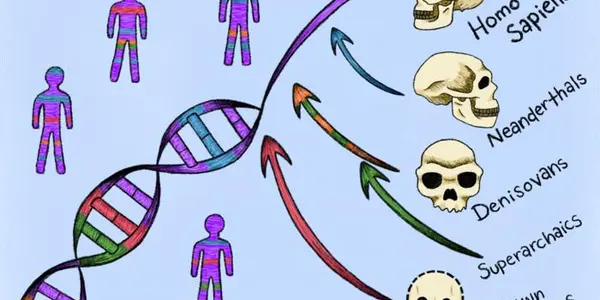
UNIVERSITY PARK, Pa. -- A genetic mutation may have helped modern humans adapt to smoke exposure from fires and perhaps sparked an evolutionary advantage over their archaic competitors, including Neandertals, according to a team of researchers.
Modern humans are the only primates that carry this genetic mutation that potentially increased tolerance to toxic materials produced by fires for cooking, protection and heating, said Gary Perdew, the John T. and Paige S. Smith Professor in Agricultural Sciences, Penn State. At high concentrations, smoke-derived toxins can increase the risk of respiratory infections. For expectant mothers, exposure to these toxins can increase the chance of low birth weight and infant mortality.