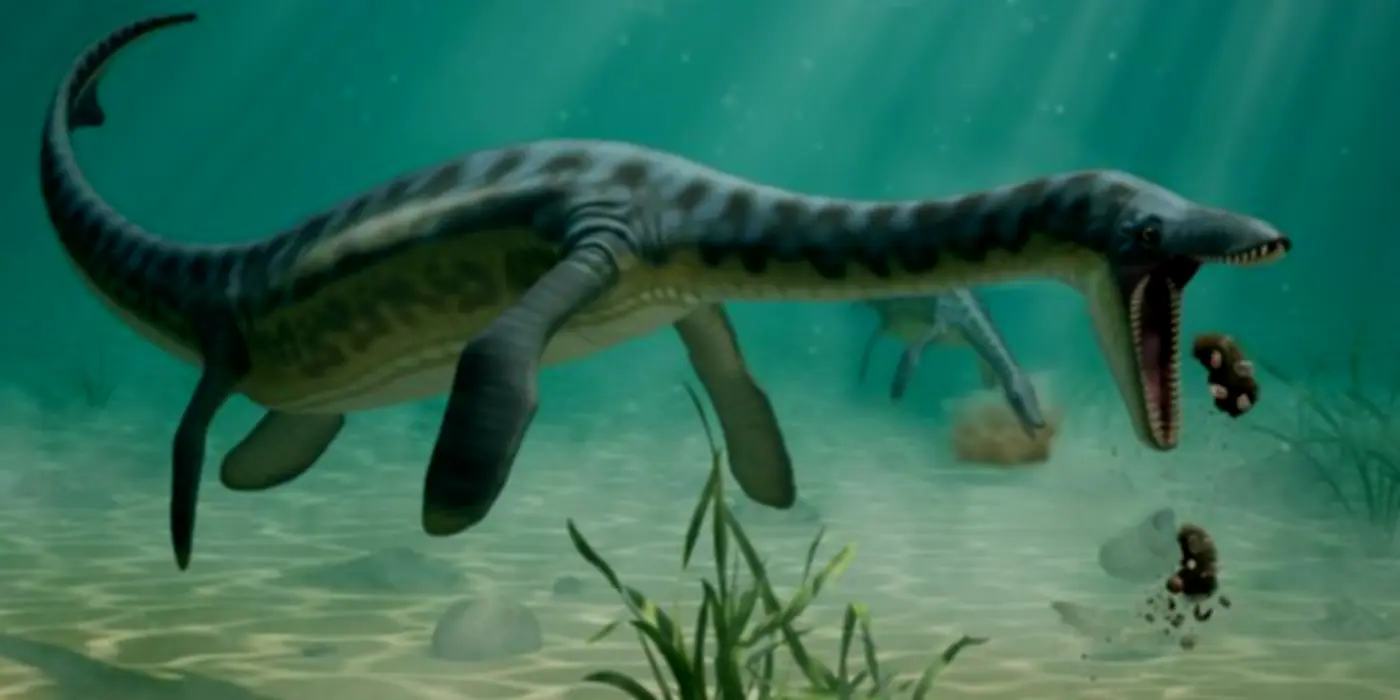
Jurassic Puke: Plesiosaurs Knew Not To Vomit Where They Eat
Jurassic monsters sometimes needed to vomit. When they did, they went to shore.
Jurassic monsters sometimes needed to vomit. When they did, they went to shore.


A non-invasive diagnostic tool to detect surface cancers quickly and painlessly using technology currently employed by gyms to calculate body composition has been developed by a QUT PhD medical physics researcher.
Jye Smith from QUT’s School of Physical and Chemical Sciences has developed a new diagnostic technique using bioimpedance spectroscopy to diagnose cervical and skin cancers. Bioimpedance measures the electrical characteristics of biological tissue and is used by gyms to calculate amounts of lean tissue, water and fat.
Do antioxidant supplements reduce the risk of cancer and deaths related to cancer?
While some trials have suggested that antioxidants have beneficial effects, results from other trials have been negative. It has been unclear which antioxidant compounts are more beneficial (or more harmful), and how individual antioxidants affect target organs and specific patient populations. To examine these issues, Mayo researchers writing in Mayo Clinic Proceedings conducted a systematic review on the topic.
A study led by McGill University researchers has demonstrated that small differences between individuals at the DNA level can lead to dramatic differences in the way genes produce proteins. These, in turn, are responsible for the vast array of differences in physical characteristics between individuals.
The study was originally initiated by Dr. Tom Hudson, former director of the McGill University and Genome Quebec Innovation Centre, and drew upon the data collected by the vast HapMap (Haplotype Map) Project, a global comparative map of the human genome, which Hudson and his colleagues were instrumental in completing.
Excavation works carried out by national and foreign archeological teams in the central Syrian Governorate of Hama has yielded several important findings in Tal al-Homsi, Apamea, al-Rawda, Ba'arin Cemetery, Tal al-Qarqour.
The teams also executed many restoration works in the ancient Shaizar Castle.
Head of Hama Department of Ruins Jamal Ramadan said significant parts of Apamea ancient city were unearthed, particularly in the northeastern corners, as well as discovering some findings including a stone statue with intact face.
Mr. Ramadan added that the Syrian-German crew discovered a stone statue of a lioness which was the Symbol of Mamlouki state.
Texas Children’s Hospital has been named the national lead center for a 12-hospital, 36-month clinical trial of the German-manufactured pediatric heart pump called Berlin Heart EXCOR® Pediatric Ventricular Assist Device (VAD).
Charles D. Fraser, Jr., MD, chief of pediatric and congenital heart surgery at Texas Children’s and professor, Michael E. DeBakey Department of Surgery at Baylor College of Medicine, will serve as the National Principal Investigator for the Investigational Device Exemption prospective study.
As levels of carbon dioxide in the atmosphere rise in the 21st century, the nutritional value of many major food crops could decrease, according to a study conducted at Southwestern University.
Max Taub, an associate professor of biology at Southwestern, did a "meta-analysis" of previous research that had been done on the effect of increased atmospheric carbon dioxide on the protein concentrations in barley, rice, wheat, soybean and potato.
His study found that the crops had significantly lower protein concentrations when grown in atmospheres containing elevated levels of carbon dioxide. Potatoes showed a nearly 14 percent decrease in protein, while the grain crops of barley, rice and wheat showed reductions of 15.3 percent, 9.9 percent and 9.8 percent respectively.
You don't need other people to feel less lonely. You just need things you think are people.
Social scientists call this tendency “anthropomorphism.” As a research topic, the phenomenon carries important therapeutic and societal implications, says Nicholas Epley, Assistant Professor of Behavioral Science at the University of Chicago’s Graduate School of Business.
The behaviors described in the paper are not limited to the lonely. Nevertheless, they are well-known to casual observers, from the stereotype of the woman who lives alone surrounded by her menagerie of cats, to the movie portrayal by Tom Hanks of a tropical island castaway talking to a volleyball.
Why is it difficult to pick out even a familiar face in a crowd? We all experience this, but the phenomenon has been poorly understood until now.
The results of a recent study may have implications for individuals with face-recognition disorders and visual-attention related ailments — and eventually could help scientists develop an artificial visual system that approaches the sophistication of human visual perception.
The study is part of a recently completed Journal of Vision special issue titled “Crowding: Including illusory conjunctions, surround suppression, and attention”. “Crowding” is a failure to recognize an individual object in a cluttered environment.
Water has fascinated scientists for thousands of years. Along with being the elixir of life, it acts in counter-intuitive ways like expanding when frozen while most liquids contract.
Sometimes the best way to understand a mystery is to create one just like it. Chemical engineer Pablo Debenedetti and collaborators at three other institutions found a highly simplified model molecule that behaves in much the same way as water, a discovery that upends long-held beliefs about what makes water so special.
“This model is so simple it is almost a caricature,” Debenedetti said. “And yet it has these very special properties. To show that you can have oil-water repulsion without hydrogen bonds is quite interesting.”
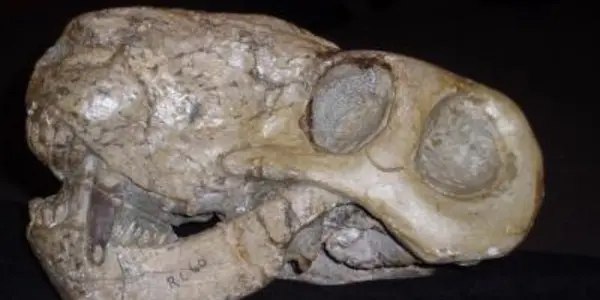
New research by Professor Michael Benton and our own Sarda Sahney at the University of Bristol indicate in a Proceedings of the Royal Society B paper that specialized animals forming complex ecosystems, with high biodiversity, complex food webs and a variety of niches, took over 30 million years to recover from the last major extinction.
About 250 million years ago, at the end of the Permian period, a major extinction event killed over 90 per cent of life on earth, including insects, plants, marine animals, amphibians, and reptiles. Ecosystems were destroyed worldwide, communities were restructured and organisms were left struggling to recover.
Labels such as “European American”, “white”, or “Caucasian” are often viewed as representing a homogeneous category in gene mapping studies and census reports, but each of these labels actually groups together multiple populations, which have diverse origins due to the complex history of European immigration to the United States.
In a recent study, published PLoS Genetics an international team of researchers provide the first genetic dissection of the population structure of European Americans, focusing on identifying the contributions from different genetic ancestries that are important for disease gene mapping.
Entamoeba histolytica, which causes inflammation of the colon (colitis), plays dirty. It attacks and kills human immune cells in seconds. Then the parasite hides the evidence by eating the cells’ corpses. While doing so, it kills nearly 100,000 people each year.
Researchers from the University of Virginia and the University of Vermont have discovered a means of inhibiting this most voracious of parasites. The study targets a protein which aids the parasite in its ingestion of immune cell corpses.
The research team, led by Dr. William Petri, hypothesized that identifying molecules involved in the corpse ingestion might provide insight into how the amebae cause colitis in children.