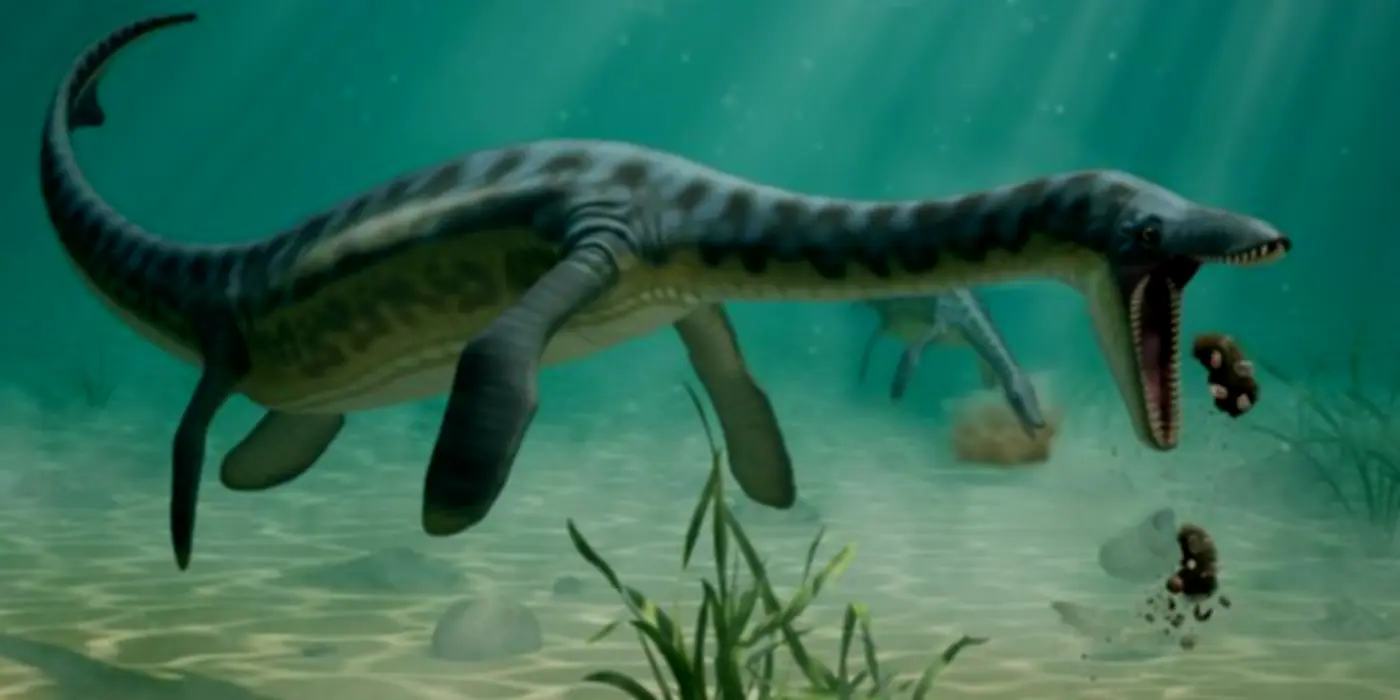
Jurassic Puke: Plesiosaurs Knew Not To Vomit Where They Eat
Jurassic monsters sometimes needed to vomit. When they did, they went to shore.
Jurassic monsters sometimes needed to vomit. When they did, they went to shore.


Astronomers at the Harvard-Smithsonian Center for Astrophysics (CfA) have found that a supernova discovered last year was caused by two colliding white dwarf stars. The white dwarfs were siblings orbiting each other. They slowly spiraled inward until they merged, touching off a titanic explosion. CfA observations show the strongest evidence yet of what was, until now, a purely theoretical mechanism for creating a supernova.
"This finding shows that nature may be richer than we suspected, with more than one way to make a white dwarf explode," said Harvard graduate student and first author Malcolm Hicken.

More than 10 million people use Flickr to show pictures of actual 3D locations. Now a group at the University of Washington is doing the reverse – downloading thousands of photos from Flickr and using them to recreate the original scenes.
A presentation in October at the International Conference on Computer Vision showed how photos from online sites such as Flickr can be used to create a virtual 3D model of landmarks, including Notre Dame Cathedral in Paris and the Statue of Liberty in New York City.
Creating 3D reconstructions of individual buildings is a first step in a long-term effort to recreate an entire city using online photographs.
The largely unnoticed collision of the global epidemics of HIV and tuberculosis (TB) has exploded to create a deadly co-epidemic that is rapidly spreading in sub-Saharan Africa.
However, health systems cannot adequately diagnose, treat, or contain the co-epidemic due to unanswered scientific and medical questions, according to a report issued today by The Forum for Collaborative HIV Research and amplified by experts from leading global health organizations.
Case Western Reserve University researchers have bred a line of 'super mice' (PEPCK-Cmus mice) that have the capability of running five to six kilometers at a speed of 20 meters per minute on a treadmill for up to six hours before stopping.
“They are metabolically similar to Lance Armstrong biking up the Pyrenees; they utilize mainly fatty acids for energy and produce very little lactic acid,” said Richard W. Hanson.
These genetically engineered mice also eat 60 percent more than controls, but remain fitter, trimmer and live and breed longer than wild mice in a control group. Some female PEPCK-Cmus mice have had offspring at 2.5 years of age, an amazing feat considering most mice do not reproduce after they are one year old.
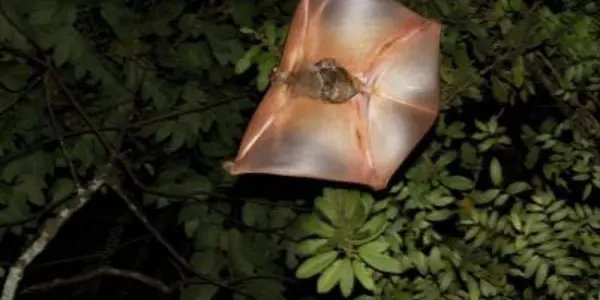
While the human species is unquestionably a member of the Primate group, the identity of the next closest group to primates within the entire class of living mammals has been hotly debated. Now, new molecular and genomic data gathered by a team including Webb Miller, a professor of biology and computer science and engineering at the Penn State University, has shown that the colugos -- nicknamed the flying lemurs -- is the closest group to the primates. The team was led by William J. Murphy, associate professor in the Department of Veterinary Integrative Biosciences at Texas A & M University.
Debates over which of several mammalian groups is the closest relative to the primates have become more intense in the last ten years because of new fossil and molecular evidence.

Rutgers University physicists have performed computer simulations that show how electrons become one thousand times more massive in certain metal compounds when cooled to temperatures near absolute zero – the point where all motion ceases.
Cancer cells treated with carbon nanotubes can be destroyed by non-invasive radio waves that heat up the nanotubes while sparing untreated tissue, a research team led by scientists at The University of Texas M. D. Anderson Cancer Center and Rice University has shown in preclinical experiments.
In a paper posted Cancer, researchers show that the technique completely destroyed liver cancer tumors in rabbits. There were no side effects noted. However, some healthy liver tissue within 2-5 millimeters of the tumors sustained heat damage due to nanotube leakage from the tumor.
"These are promising, even exciting, preclinical results in this liver cancer model," says senior author Steven Curley, M.D., professor in M. D. Anderson's Department of Surgical Oncology.
Nursing mothers needn't worry. A new study shows that breastfeeding does not increase breast sagging. University of Kentucky plastic surgeon Dr. Brian Rinker and his colleagues conducted the study with patients at UK HealthCare Cosmetic Surgery Associates. The study found that breastfeeding does not adversely affect breast shape.
"A lot of times, if a woman comes in for a breast lift or a breast augmentation, she'll say 'I want to fix what breastfeeding did to my breasts'," Rinker said. As a result, Rinker decided to find out if breast sagging was a direct result of breastfeeding.
The running joke in science has always been that the metric system was invented by the French to combat English predominance culturally - and they got the measurement wrong.
Still, it caught on ( though the French calendar didn't ) and that International System of Units (SI) is used on everything from beer cans to Olympic races. But some of it still isn't entirely accurate, as discussed in Making A More Accurate Kilogram ( along with that same poke at the French ) because man-made objects can change.
The English could have the last laugh. U.K.
There are multiple reasons why the world is still plagued by diseases we cannot treat or vaccinate against and the overall complexity of the human immune system is one of them - in fact, say Danish researchers, each of our immune systems has a unique code-like mechanism that prevents it from being deceived.
They have developed a method to expose this crucial part of the immune system's defense mechanisms which could lead to entirely new vaccines and treatments.
The researchers from BioCentrum DTU and the Faculty of Health Sciences at the University of Copenhagen have created models of neural networks which can simulate how the immune system defends itself from disease.
A report that appears in the scientific journal Genome Research details the first assembly, annotation, and comparative analysis of the domestic cat genome (Felis catus).
The DNA of a 4-year-old Abyssinian cat named Cinnamon, whose well-documented lineage can be traced back several generations to Sweden, has been sequenced. Cinnamon is one of several mammals that are currently being analyzed using “light” (two-fold) genome sequence coverage. To make sense of Cinnamon’s raw sequence data, a multi-center collaboration of scientists leveraged information from previously sequenced mammalian genomes as well as previous gene-mapping studies in the cat.
Large-scale fires may have pumped as much carbon dioxide into the atmosphere in a few weeks as motor vehicle traffic does in a year, according to research by scientists at the National Center for Atmospheric Research (NCAR) and the University of Colorado at Boulder.
However, they caution that their estimates have a margin of error of about 50 percent, both because of inexact data about the extent of fires and varying estimates of the amount of carbon dioxide emitted by different types of blazes.
Researchers Christine Wiedinmyer of NCAR and Jason Neff of the University of Colorado, used satellite observations of fires and a new computer model, developed by Wiedinmyer, that estimates carbon dioxide emissions based on the mass of vegetation burned.