Carbon Nanotube Has EMI And Hides Heat
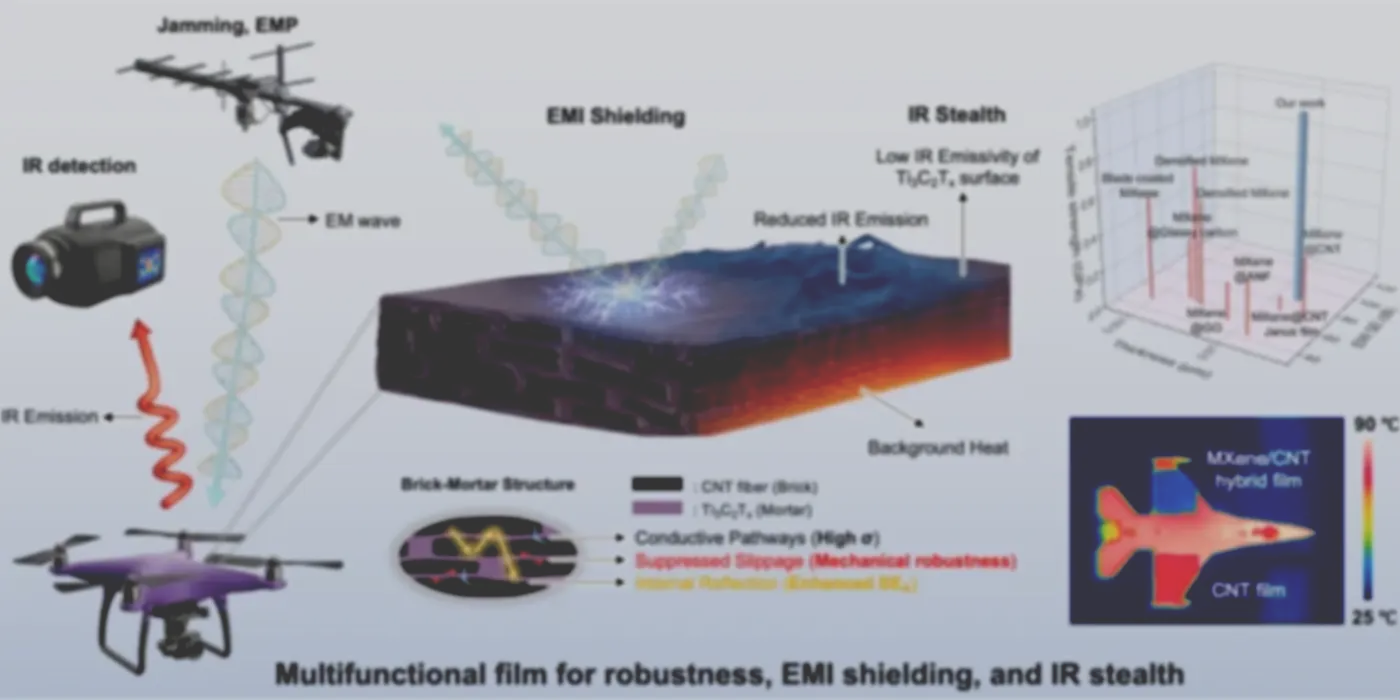
Researchers have developed a composite film that combines electromagnetic interference shielding, infrared stealth, and high mechanical strength using carbon nanotube fibers and MXene.
Researchers have developed a composite film that combines electromagnetic interference shielding, infrared stealth, and high mechanical strength using carbon nanotube fibers and MXene.


Botox is not just for keeping aging actresses looking eerily young any more. Injecting botulinum toxin A, or Botox, into the prostate gland of men with enlarged prostates eased symptoms and improved quality of life for up to a year after the procedure.
The study was based on 37 men with benign prostatic hyperplasia (BPH).
UCLA and Dartmouth scientists have identified a crucial enzyme in plant vitamin C synthesis, which could lead to enhanced crops. The discovery now makes clear the entire 10-step process by which plants convert glucose into vitamin C, an important antioxidant in nature.
"If we can find ways to enhance the activity of this enzyme, it may be possible to engineer plants to make more vitamin C and produce better crops," said Steven Clarke, UCLA professor of chemistry and biochemistry, director of UCLA's Molecular Biology Institute and co-author of the research study, to be published as a 'Paper of the Week' in the Journal of Biological Chemistry and currently available online.
Professionally speaking, things in David Damanik's world don't line up – and he can prove it.
In new research, Damanik and colleague Serguei Tcheremchantsev offer a key proof in the study of quasicrystals, crystal-like materials whose atoms don't line up in neat, unbroken rows like the atoms found in crystals.
A data-driven computational approach developed by a University of Illinois statistician is revealing secrets about inner Earth and discovering unique gene expressions in fruit flies, zebra fish and other living organisms.
"Using mathematical concepts from inverse scattering and modern statistics, we let the data 'speak,' and automatically generate an appropriate model," said Ping Ma, a professor of statistics at the U. of I. and lead author of a paper describing the technique that has been accepted for publication in the Journal of Geophysical Research.
You may not be able to relive your youth, but part of your brain can. Johns Hopkins researchers have found that newly made nerves in an adult brain's learning center experience a one-month period when they are just as active as the nerves in a developing child. The study, appearing this week in Neuron, suggests that new adult nerves have a deeper role than simply replacing dead ones.
Shire plc announced today the positive results of studies of the investigational medication guanfacine extended release (GXR, previously referred to as SPD503), a selective alpha-2A-adrenoceptor agonist. These data from two short-term phase III placebo-controlled studies and two long-term phase III open-label studies, presented at the 2007 American Psychiatric Association (APA) annual meeting, demonstrated that GXR significantly improved all core symptoms of Attention-Deficit/Hyperactivity Disorder (ADHD) in children aged 6 to 17 years.
Shire plc announced that DAYTRANATM (methylphenidate transdermal system), the first and only non-oral medication approved for treatment of Attention Deficit Hyperactivity Disorder (ADHD) in children aged 6 to 12 years, provided significant improvement in symptom control and tolerability, according to results of a 12-month open-label study presented at the American Psychiatric Association (APA) annual meeting in San Diego.
Findings presented today at Digestive Disease Week® 2007 (DDW), from long-term extensions of the ACT trials (Active Ulcerative Colitis 1 & 2) show that subjects with moderately to severely active ulcerative colitis (UC) who had responded to REMICADE® (infliximab) in the blinded phase of the trials maintained improvement in their clinical symptoms for up to two years.
New evidence indicates that small pieces of noncoding genetic material known as microRNAs (miRNAs) might influence cancer susceptibility. Differences in certain miRNAs may predispose some individuals to develop cancer, say researchers.
MiRNAs play a number of roles in biological regulation, including development and cell differentiation, helping to determine what type a cell ultimately becomes. But when damaged, they can contribute to cancer by either turning on cancer-causing genes or by inhibiting tumor-blocking genes. The ways that MiRNAs are expressed have been used to profile tumor types in humans.
Women who regularly enjoy an alcoholic drink or two have a significantly lower risk of having a non-fatal heart attack than women who are life-time abstainers, epidemiologists at the University at Buffalo have shown.
Moderation is the key, however. Women in the study who reported being intoxicated at least once a month were nearly three times more likely to suffer a heart attack than abstainers, results showed.
The genome of the organism that produces the world's most lethal toxin is revealed today. This toxin is the one real weapon in the genome of Clostridium botulinum and less than 2 kg - the weight of two bags of sugar - is enough to kill every person on the planet. Very small amounts of the same toxin are used in medical treatments, one of which is known as Botox®.
The genome sequence, reported in Genome Research, shows that C. botulinum doesn't have subtle tools to evade our human defences or tricky methods of acquiring resistance to antibiotics. It lives either as a dormant spore or as a scavenger of decaying animal materials in the soil, and doesn't interact with human or other large animal hosts for prolonged periods of time.
Next time there is a global pandemic, contaminated water caused by flooding, or questionable-looking meat in a supermarket, we may be reaching for a piece of paper.
It won’t be just any type of paper but a Canadian-invented bioactive paper that contains the ingredients to detect and ward off life-threatening bacteria and viruses like E-coli, salmonella and SARS, to name just a few.