Carbon Nanotube Has EMI And Hides Heat
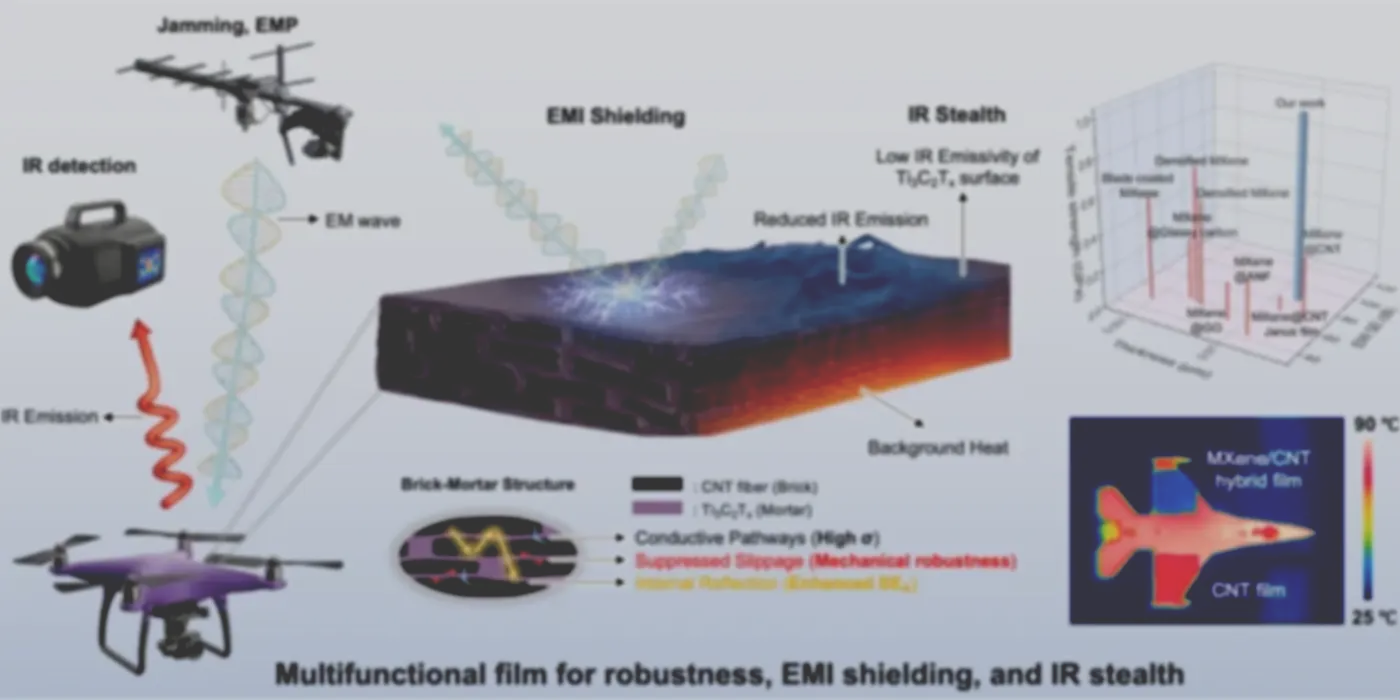
Researchers have developed a composite film that combines electromagnetic interference shielding, infrared stealth, and high mechanical strength using carbon nanotube fibers and MXene.
Researchers have developed a composite film that combines electromagnetic interference shielding, infrared stealth, and high mechanical strength using carbon nanotube fibers and MXene.


Circadian clocks regulate the timing of biological functions in almost all higher organisms. Anyone who has flown through several time zones knows the jet lag that can result when this timing is disrupted.
Now, new research by Cornell and Dartmouth researchers explains the biological mechanism behind how circadian clocks sense light through a process that transfers energy from light to chemical reactions in cells.
Colonoscopies are considered the gold standard for detecting colon cancer, the second leading cause of cancer deaths in the United States. Research presented today at Digestive Disease Week® 2007 (DDW®) discusses contributing factors that could prevent patients from getting optimal results from their colonoscopy, including age of the patient, location of the screening and proper technician training.
Scientists have refuted a longstanding theory of how HIV slowly depletes the body’s capacity to fight infection, in new research published today.
The researchers were looking at T helper cells, a class of white blood cells which recognise infection and co-ordinate the body’s immune defences. They are attacked by HIV, and their numbers gradually decline in HIV positive patients. It has long been a major puzzle why this process of depletion is so slow, often taking 10 years or more.
Wild relatives of plants such as the potato and the peanut are at risk of extinction, threatening a valuable source of genes that are necessary to boost the ability of cultivated crops to resist pests and tolerate drought, according to a new study released today by scientists of the Consultative Group on International Agricultural Research (CGIAR). The culprit is climate change, the researchers said.
It's a scenario straight out of Gray's Anatomy – a paramedic or doctor plops a mask over the face of a person struggling to breathe and begins dispensing pure oxygen.
Yet growing research suggests that inhaling straight oxygen can actually harm the brain. For the first time, a new UCLA brain-imaging study reveals why. The findings fly in the face of national guidelines for medical practice and recommend a new approach adding carbon dioxide to the gas mix to preserve brain function in patients.
Applying topical retinol to the skin appears to improve the wrinkles associated with natural aging and may help to promote the production of skin-building compounds, according to a report in the May issue of Archives of Dermatology.
The wrinkles and brown spots associated with aging appear first and most prominently on skin exposed to the sun, according to background information in the article.
The use of peginterferon alone, or in combination with ribavirin, points to a cure for hepatitis C, the leading cause of cirrhosis, liver cancer and the need for liver transplant, a Virginia Commonwealth University researcher said today.
Mitchell Shiffman, M.D., professor in the VCU School of Medicine, and chief of hepatology and medical director of the Liver Transplant Program at the Virginia Commonwealth University Medical Center, is one of the lead investigators in the study, which was presented at the 38th annual Digestive Disease Week conference in Washington, D.C. VCU was among about 40 sites worldwide studying pegylated interferon alfa-2a, manufactured by Roche Inc.

Researchers at Boston University School of Medicine (BUSM) and McLean Hospital have found that practicing yoga may elevate brain gamma-aminobutyric (GABA) levels, the brain's primary inhibitory neurotransmitter. The findings suggest that the practice of yoga be explored as a possible treatment for depression and anxiety, disorders associated with low GABA levels.
The World Health Organization reports that mental illness makes up to fifteen percent of disease in the world. Depression and anxiety disorders both contribute to this burden and are associated with low GABA levels. Currently, these disorders have been successfully treated with pharmaceutical agents designed to increase GABA levels.
New research into urologic conditions – such as erectile dysfunction – indicate that these disorders could be associated with or precursors to more serious conditions, and suggest a need for practitioners to view these diseases in the greater context of total health as opposed to isolated disorders.
Here are some new studies showing links between ED and other diseases:
ENDOTHELIAL DYSFUNCTION AND OXIDATIVE STRESS ASSOCIATED WITH THE METABOLIC SYNDROME CAN BE REVERSED BY A CHRONIC TREATMENT WITH SILDENAFIL

Researchers at Harvard University and Princeton University have made a crucial step toward building biological computers, tiny implantable devices that can monitor the activities and characteristics of human cells. The information provided by these "molecular doctors," constructed entirely of DNA, RNA, and proteins, could eventually revolutionize medicine by directing therapies only to diseased cells or tissues.
This work is a crucial step towards building biological computers, tiny implantable devices that can monitor the activities and characteristics of human cells.
Tissue engineering and regenerative medicine offer future patients greater options for treatment and cure of a wide array of urologic conditions, and controversies surrounding the sources of stem cells as well as their use have fueled increased research.
Here are highlights from the latest research:
ISOLATION OF HUMAN SPERMATOGONIAL STEM CELLS FROM TESTICULAR PARENCHYMA AND DIFFERENTIATION TOWARDS DIFFERENT TISSUES OF THE THREE HUMAN GERM LAYERS
The world's oldest wooden anchor was discovered during excavations in the Turkish port city of Urla, the ancient site of Liman Tepe -- the Greek 1st Millennium BCE colony of Klazomenai, by researchers from the Leon Recanati Institute for Maritime Studies of the University of Haifa. The anchor, from the end of the 7th century BC, was found near a submerged construction, imbedded approximately.1.5 meters underground.
Anchor found at the site. Credit: University of Haifa