Carbon Nanotube Has EMI And Hides Heat
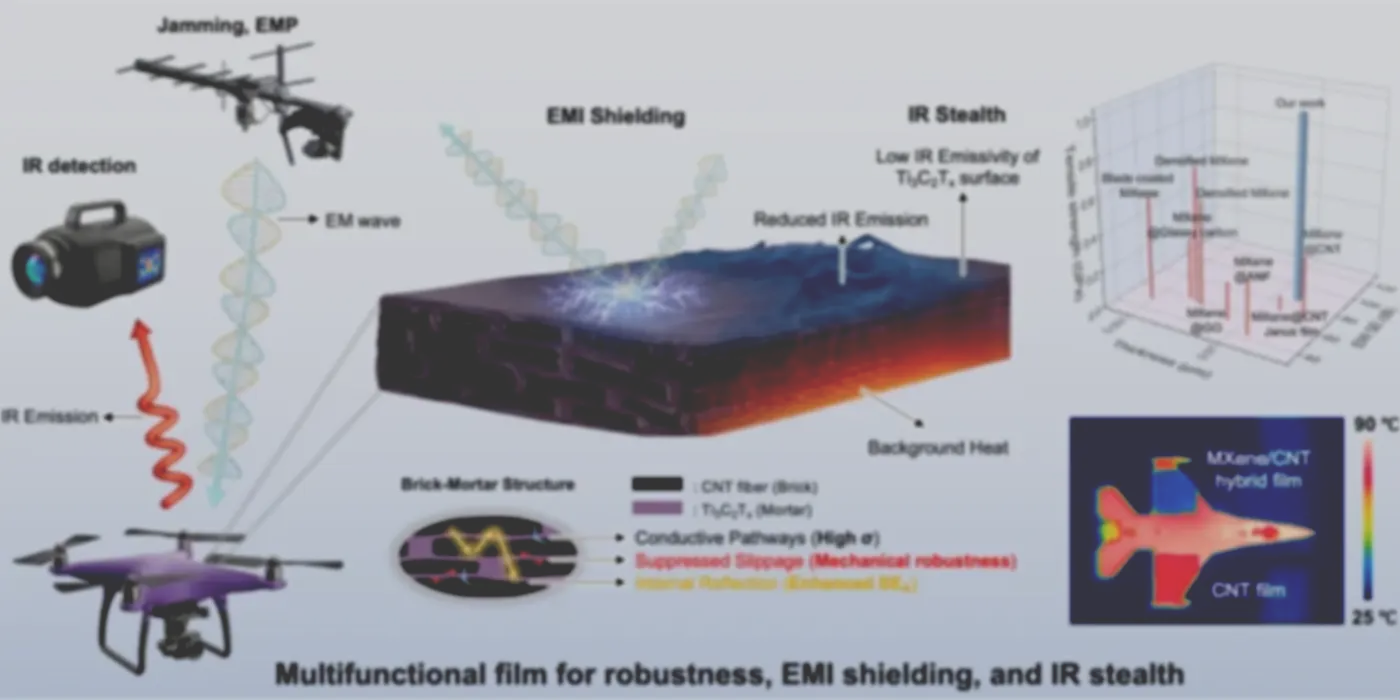
Researchers have developed a composite film that combines electromagnetic interference shielding, infrared stealth, and high mechanical strength using carbon nanotube fibers and MXene.
Researchers have developed a composite film that combines electromagnetic interference shielding, infrared stealth, and high mechanical strength using carbon nanotube fibers and MXene.


Scientists have found evidence that the cox-2 inhibitor celecoxib, a common pain reliever used to treat arthritis, may offer a new way to reduce the risk of the most common cause of brain damage in babies born prematurely.
The work involves shoring up blood vessels in a part of the brain that in premature infants is extremely fragile and vulnerable to dangerous bleeding, which affects an estimated 12,000 children a year, leaving many permanently affected by cerebral palsy, mental retardation, and seizures.
Most animals appear symmetrical at first glance, but we're full of internal lop-sidedness. From the hand used to pick up a pencil or throw a baseball, to where language is generated in the brain, to the orientation of our internal organs, humans are a glut of asymmetries. Worms aren't so different: The roundworm Caenorhabditis elegans has nerves on its left and right sides that perform different functions. Like handedness, the determination of which nerves develop on which side seems random from worm to worm.
Scientists at the Universitat Autònoma de Barcelona (UAB), in cooperation with the CSIC, have developed a new electro-chemical biosensor which detects the presence, in food, of very small amounts of atrazine –one of the most widely used herbicides in agriculture and which also has very long lasting effects on the environment- as well as antibiotics in food.
The biosensor is faster, more portable and economic than the expensive laboratory methods which are used to detect contaminants, while having a very similar sensitivity. The system has been tested successfully to detect pesticides in samples of drinking water and commercial orange juice, as well as to detect traces of antibiotics in cow's milk.
A key aspect of how embryos create the cells which secrete insulin is revealed in a new study published tomorrow (18 May) in the Journal of Biological Chemistry. The researchers hope that their findings will enable the development of new therapies for diabetes, a condition caused by insufficient levels of insulin.
The research reveals that glucose plays a key role in enabling healthy beta cells, which secrete insulin, to develop in the pancreas of an embryo. Glucose prompts a gene called Neurogenin3 to switch on another gene, known as NeuroD, which is crucial for the normal development of beta cells. If glucose levels are low this gene is not switched on.
Protected by its own nutrients and blood supply, a beating heart supported by an investigational organ preservation device was successfully transplanted into a 47-year-old man with congestive heart failure and pulmonary hypertension on Sunday, April 8. The surgery was performed at UPMC by Kenneth R. McCurry, M.D., assistant professor of surgery, division of cardiothoracic surgery at the University of Pittsburgh School of Medicine and director of cardiopulmonary transplantation at UPMC's Heart, Lung and Esophageal Surgery Institute.
Passive immunization through the development of fully human antibodies specific to Plasmodium falciparum may be effective at controlling the disease, report researchers led by Dr. Richard S. McIntosh from the University of Nottingham. The researchers developed these novel reagents by antibody repertoire cloning generated from immune Gambian adults.
Now that the genome sequences of hundreds of bacteria and viruses are known, we can design tests that will rapidly detect the presence of these species based solely on their DNA. These tests can detect a pathogen in a complex mixture of organic material by recognizing short, distinguishing sequences—called DNA signatures—that occur in the pathogen and not in any other species.
Adam Phillippy and colleagues from the University of Maryland, USA, have developed a computer program that can identify these signatures with a higher degree of accuracy than ever before. They describe this new computational system, called Insignia, and the results of its successful application on 46 Vibrio cholerae strains this week in the journal PLoS Computational Biology.
Up to 25,000 people may die needlessly each year due to the failure to prevent blood clots known as venous thromboembolisms (VTE) in UK hospitals, say experts in this week's BMJ.
Their warning follows the publication of official guidelines on the issue last month by the National Institute for Health and Clinical Excellence (NICE), which are also summarised in this week's journal.
Analyzing 30 years of data detailing a large rabies virus outbreak among North American raccoons, researchers at Emory University have revealed how initial demographic, ecological and genetic processes simultaneously shaped the virus's geographic spread over time. The study appears online in the Proceedings of The National Academy of Sciences.
"Our study demonstrates the combined evolutionary and population dynamic processes characterizing the spread of a pathogen after its introduction into a susceptible host population," says Leslie Real, PhD, Emory University Asa G. Candler professor of biology.
Illinois State University’s Board of Trustees today approved a new bachelor’s degree in renewable energy, which will include a technical sequence and an economics and public policy sequence.
The degree is a multi-disciplinary undergraduate major that provides a broad overview of renewable energy industries. Renewable energy is a fast-growing industry that will call for many new workers in the future.

Two astrophysicists at NASA’s Goddard Space Flight Center in Greenbelt, Md., Nikolai Shaposhnikov and Lev Titarchuk, have successfully tested a new method for determining the masses of black holes.
This elegant technique, which Titarchuk first suggested in 1998, shows that the black hole in a binary system known as Cygnus X-1 contains 8.7 times the mass of our sun, with a margin of error of only 0.8 solar mass.
CLICK IMAGE FOR LARGER VERSION.

Researchers at Rensselaer Polytechnic Institute have developed a new method to bond materials that don’t normally stick together. The team’s adhesive, which is based on self-assembling nanoscale chains, could impact everything from next-generation computer chip manufacturing to energy production.
Less than a nanometer – or one billionth of a meter – thick, the nanoglue is inexpensive to make and can withstand temperatures far higher than what was previously envisioned. In fact, the adhesive’s molecular bonds strengthen when exposed to heat.