Carbon Nanotube Has EMI And Hides Heat
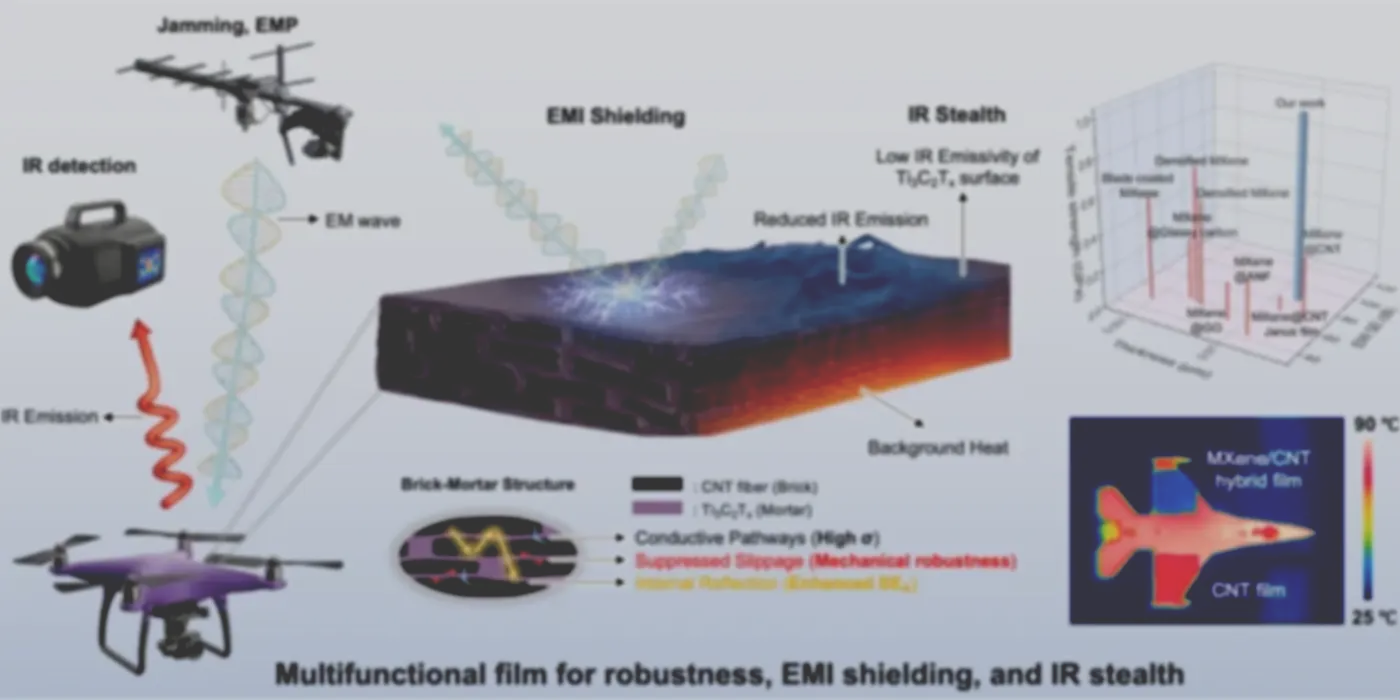
Researchers have developed a composite film that combines electromagnetic interference shielding, infrared stealth, and high mechanical strength using carbon nanotube fibers and MXene.
Researchers have developed a composite film that combines electromagnetic interference shielding, infrared stealth, and high mechanical strength using carbon nanotube fibers and MXene.


Automobile crashes remain the leading cause of death for adolescents and young adults, compounded by the effects of alcohol and failure to use seatbelts. Although males have tended to be associated with alcohol-related crashes, a study to be presented at the 2007 Society for Academic Emergency Medicine (SAEM) Annual Meeting shows that young females are beginning to show an alarming increase in fatal automobile crashes related to alcohol use and a failure to use seatbelts.
Mayo Clinic researchers and a group of international collaborators have discovered a correlation between an extreme form of sleep disorder and eventual onset of parkinsonism or dementia.
Clinical observations and pathology studies, as well as research in animal models, led to the findings that patients with the violent rapid eye movement sleep (REM) behavior disorder (RBD) have a high probability of later developing Lewy body dementia, Parkinson’s disease or multiple system atrophy (a Parkinson’s-like disorder), because all of these conditions appear to stem from a similar neurodegenerative origin.
Scientists have found hundreds of new marine creatures in the vast, dark deep-sea surrounding Antarctica. Carnivorous sponges, free-swimming worms, crustaceans, and molluscs living in the Weddell Sea provide new insights into the evolution of ocean life.
They describe how creatures in the deeper parts of the Southern Ocean - the source for much of the deep water in the world ocean – are likely to be related to animals living in both the adjacent shallower waters and in other parts of the deep ocean.
Cracks in the icy surface of Saturn's moon Enceladus open and close daily under the pull of Saturn's gravity, according to new calculations by NASA-sponsored researchers.
"Tides generated by Saturn's gravity could control the timing of eruptions from cracks in the southern hemisphere of Enceladus," said Dr. Terry Hurford of NASA's Goddard Space Flight Center, Greenbelt, Md. Hurford is lead author of a paper on this research appearing in Nature May 17.
Chemical "relaxers" used to straighten hair are not associated with an increased risk of developing breast cancer among African-American women, say researchers who followed 48,167 Black Women's Health Study participants.
In the May issue of Cancer Epidemiology, Biomarkers & Prevention, researchers from Boston University and Howard University Cancer Center found no increase in breast cancer risk due to the type of hair relaxer used or the frequency and duration of use. Women who used relaxers seven or more times a year over a 20 year span or longer had the same risk as women who used the chemicals for less than a year, researchers say.
Multidrug-resistant strains of the Acinetobacter calcoaceticus-baumannii complex have been infecting injured soldiers treated in US military hospitals in Iraq. US soldiers in Iraq do not carry the bacteria responsible for these difficult-to-treat wound infections.
Investigator Matthew E. Griffith, MD, (Brooke Army Medical Center at Fort Sam Houston, San Antonio, Texas) and colleagues found that drug-resistant strains of Acinetobacter calcoaceticus-baumannii complex are not present on the skin of uninjured soldiers in Iraq, as had been expected.
Free will and true spontaneity exist … in fruit flies. This is what scientists report in a groundbreaking study in the May 16, 2007 issue of the open-access journal PLoS ONE.
"Animals and especially insects are usually seen as complex robots which only respond to external stimuli," says senior author Björn Brembs from the Free University Berlin. They are assumed to be input-output devices. "When scientists observe animals responding differently even to the same external stimuli, they attribute this variability to random errors in a complex brain."

A gene thought to be essential in helping chemotherapy kill cancer cells, may actually help them thrive. In a new study of chemo patients, scientists at the Georgia Institute of Technology and the Ovarian Cancer Institute found that 70 percent of subjects whose tumors had mutations in the gene p53 were still alive after five years. Patients with normal p53 displayed only a 30 percent survival rate. The findings raise the possibility of a new strategy for fighting cancer - namely, developing drugs to disable the functioning of this gene in the tumors of patients undergoing chemotherapy.
Dark stains indicated that the gene p53 is mutated in these ovarian cancer cells.
Tropical deforestation is the source of nearly a fifth of annual, human-induced emissions of heat-trapping gases to the atmosphere. During droughts, emissions from tropical rainforest fires can be double that. Halving deforestation rates by mid-century would account for 12 percent of total emissions reductions needed to keep concentrations of heat-trapping gases in the atmosphere at safe levels.
A policy mechanism is needed that rewards those tropical nations that succeed in lowering their emissions of heat-trapping gases from deforestation and forest degradation. This is a particularly urgent need since most of these emissions are associated with only modest economic gains, but provoke high losses of biodiversity.
A smokeless cannabis-vaporizing device delivers the same level of active therapeutic chemical and produces the same biological effect as smoking cannabis, but without the harmful toxins, according to UCSF researchers.
"We showed in a recent paper in the journal ‘Neurology’ that smoked cannabis can alleviate the chronic pain caused by HIV-related neuropathy, but a concern was expressed that smoking cannabis was not safe. This study demonstrates an alternative method that gives patients the same effects and allows controlled dosing but without inhalation of the toxic products in smoke," said study lead author Donald I. Abrams, MD, UCSF professor of clinical medicine.
It's a cooker, a fridge and a generator in one, it uses thermoacoustics to convert biofuels to energy — and it could have a huge impact on the lives of people in the world's poorest communities, where access to electricity is extremely limited.
The SCORE (Stove for Cooking, Refrigeration and Electricity) project brings together experts from across the world to develop a wood-powered generator capable of both cooking and cooling food.
Astronomers have long suspected the existence of the invisible substance of dark matter as the source of additional gravity that holds together galaxy clusters. Otherwise, astronomers say, the clusters would fly apart if they relied only on the gravity from their visible stars. Although astronomers don't know what dark matter is made of, they hypothesize that it is a type of elementary particle that pervades the Universe.
In a result just published, astronomers using the NASA/ESA Hubble Space Telescope report the discovery of a ring of dark matter in the cluster ZwCl0024+1652.