Carbon Nanotube Has EMI And Hides Heat
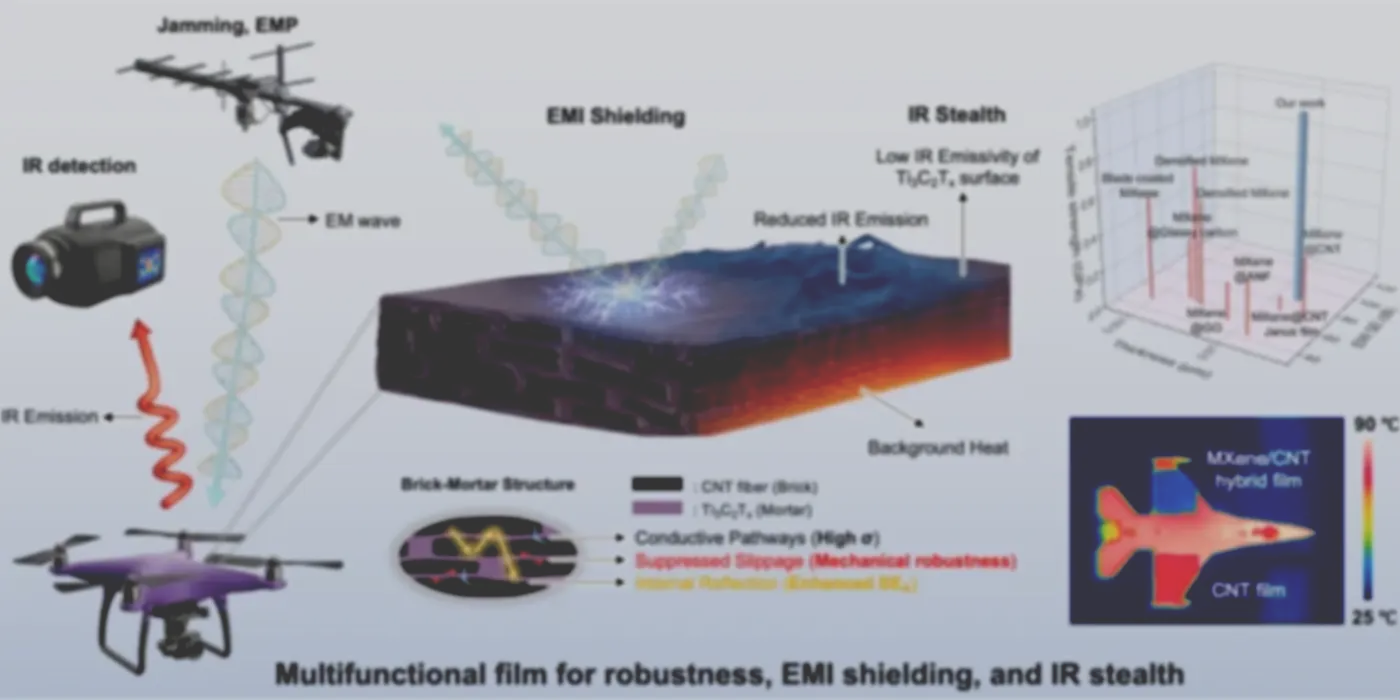
Researchers have developed a composite film that combines electromagnetic interference shielding, infrared stealth, and high mechanical strength using carbon nanotube fibers and MXene.
Researchers have developed a composite film that combines electromagnetic interference shielding, infrared stealth, and high mechanical strength using carbon nanotube fibers and MXene.


Professor of Women's Health Psychology at the University of Western Sydney, Jane Ussher, has been researching the issue for 20 years and says that women are being controlled by medical practices which position their unhappiness as a biomedical condition.
Women are being sold the idea that their bodies are biologically faulty and they need medication for PMS, post-natal depression and menopausal outbursts when in fact the pressures of being 'superwoman' are more likely to blame.

What do mutual grooming, politeness, priestly celibacy, military heroism, car insurance, and overwork have in common?
All are probable examples of the recently discovered evolutionary mechanism called "reciprocal altruism." Put simply, the concept means, "You scratch my back and I'll scratch yours." Although rare in animals, reciprocal altruism colors much of human emotion and social behavior.
The Beatles' George Harrison wondered in his famous love song about the "something" that "attracts me like no other lover." A University at Buffalo expert explains that that "something" is actually several physical elements that -- if they occur in a certain order, at the right time and in the right place -- can result in true love.
"There are several types of chemistry required in romantic relationships," according to Mark Kristal, professor of psychology at UB. "It seems like a variety of different neurochemical processes and external stimuli have to click in the right complex and the right sequence for someone to fall in love."
Cerebral malaria (CM) is a severe form of malaria that affects the brain and is fatal in about 30-50% of the cases. But researchers in Portugal report a gene – Hmox1 – that protects against the disease by releasing CO into the host blood stream counteracting CM inflammatory processes (CO is known to have anti-inflammatory properties) and inhibiting the development of the infection in the brain.
Maria M Mota, one of the leaders of the study believes that their results in mice will be relevant to treat human cerebral malaria and, supporting this idea, the protein produced by Hmox1 has already been reported in cerebral malaria patients.
At proper frequencies, air itself can make information transmissions difficult to intercept. Stability of the signal is a problem in applications such as that but researchers at NIST have discovered a technique they say will preserve signals better.
Their fiber-optic network that can be tuned across a range of visible and near-infrared frequencies while synchronizing the oscillations of light waves from different sources.
Research conducted by Wayne Hochwarter, a professor of management in FSU’s College of Business, documents that Americans’ work attitudes have been affected as the cost to fill a tank of gas has nearly doubled over the past few years. In his research, approximately 1,000 full-time employees were asked to note how gas prices have affected their disposable spending patterns. They also were asked how these changes affected their stress levels and willingness to participate at work.
With a nod to one of nature's best surface chemists—an obscure desert beetle—polymer scientists at the National Institute of Standards and Technology (NIST) have devised a convenient way to construct test surfaces with a variable affinity for water, so that the same surface can range from superhydrophilic to superhydrophobic, and everything in between.
When repairing severed or damaged motor nerves with a donor nerve graft, surgeons have traditionally used a sensory nerve from another area of the patient's body. However, these patients often do not fully regain function in the injured area.
But now a team of surgeons at Washington University School of Medicine in St. Louis and Barnes-Jewish Hospital has found that repairing a motor nerve in rats with an intact motor nerve yields better results than using a sensory nerve. The research appeared in the March issue of the journal Microsurgery.
Some states spend as little as $35 per person each year on home- and community-based services for seniors, while other states spend more than $1,300 per person annually, according to previous research.
Regardless of how much was spent on home- and community-based services, the researchers found that doubling states' spending on services would reduce the risk of nursing home admission among childless seniors by 35 percent. Seniors who do not have children to help care for them are less likely to have to go into a nursing home if they live in a state that spends more on home- and community- based services, researchers have found.
Thousands of men facing surgical removal of the prostate due to cancer may someday have one less thing to worry about: post-surgical urinary incontinence.
That's because a team of expert urologic surgeons at NewYork-Presbyterian Hospital/Weill Cornell Medical Center has devised a simple, effective means of reconstructing key anatomical structures that ensure continence.
To download the 8 meter X 4 meter 900M resolution poster it is ony available through BitTorrent, the size is 3.89 GB and it can be downloaded here.
Smaller resolutions below.
The most detailed portraits ever of the Earth's land surface have been created with ESA's Envisat environmental satellite. The portraits are the first products produced as part of the ESA-initiated GlobCover project and are available online.
Bimonthly global composites for May to June 2005 and March to April 2006 can be accessed through a newly developed map server tool on ESA’s GlobCover website.
A research team, including Kent State Professor of Geology Dr. Joseph Ortiz, tracing the origin of the large carbon dioxide increase in Earth’s atmosphere at the end of the last ice age has detected two ancient "burps" that originated from the deepest parts of the southern ocean around Antarctica.
The new study showed carbon that had built up in the ocean over millennia was released in two big pulses at about 18,000 years ago and 13,000 years ago, says Dr. Thomas Marchitto of the University of Colorado at Boulder, who jointly led the study with colleague Dr. Scott Lehman.