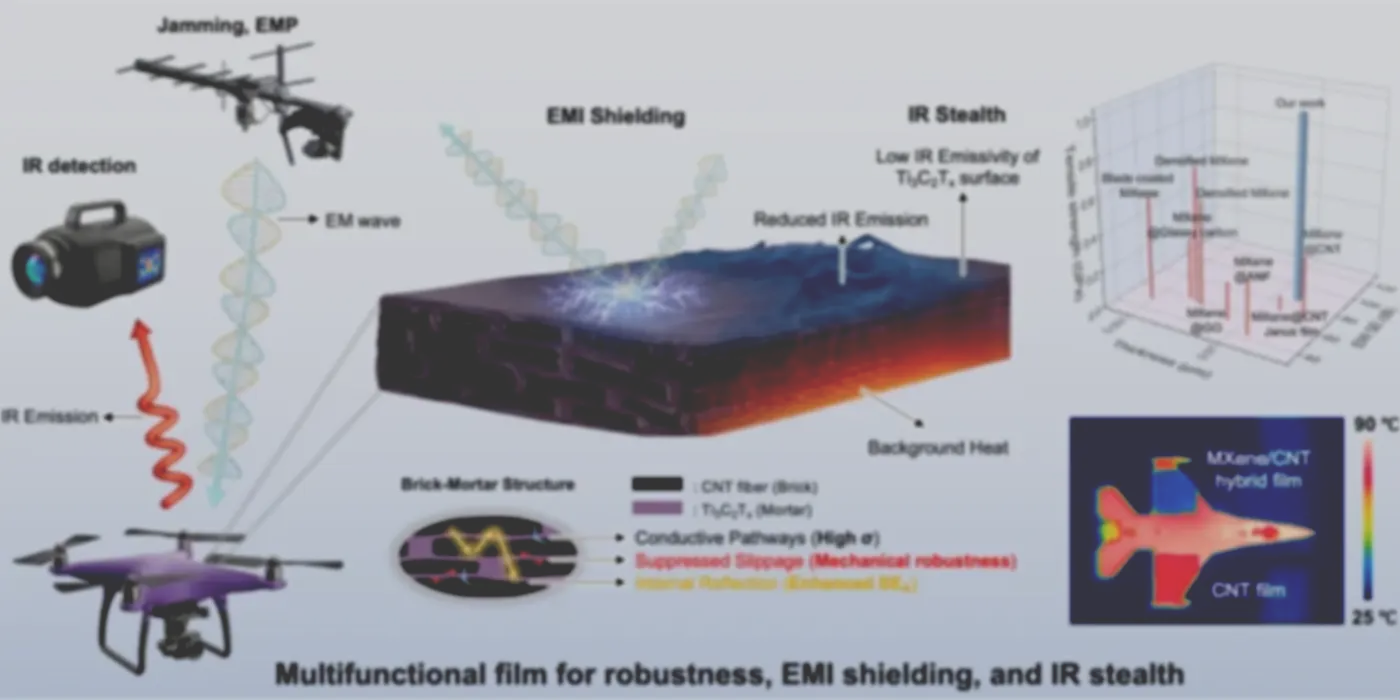
Carbon Nanotube Has EMI And Hides Heat
Researchers have developed a composite film that combines electromagnetic interference shielding, infrared stealth, and high mechanical strength using carbon nanotube fibers and MXene.
Researchers have developed a composite film that combines electromagnetic interference shielding, infrared stealth, and high mechanical strength using carbon nanotube fibers and MXene.


The increase in the number of diagnosed cases of autism in recent years has sparked concern that environmental toxins may cause this complex disorder. A new study found, however, that exposure to Rh immune globulin preserved with mercury-containing thimerosal before birth was no higher for children with autism. The study was led by Judith Miles at the University of Missouri-Columbia.

The small ice caps of Mont Blanc and the Dôme du Goûter are not melting, or at least, not yet. This is what CNRS researchers have announced in the Journal of Geophysical Research. At very high altitudes (above 4200 meters), the accumulation of snow and ice has varied very little since the beginning of the 20th century. But if summer temperatures increase by a few degrees during the 21st century, the melt could become more marked, and could affect the "permanent" ice fields.
Figure 1 – Researchers from the Glaciology Laboratory taking an ice core sample on top of Mont Blanc, in 2005. © C. Vincent, CNRS 2007.
When it comes to growing cells in a lab, technique matters. A new Brown University study shows that nerve cells grown in three-dimensional cultures use 1,766 genes differently compared to nerve cells grown in standard two-dimensional petri dishes.
The study, published in the May issue of Tissue Engineering, adds to a growing body of research showing that culture techniques can significantly affect cell growth and function.
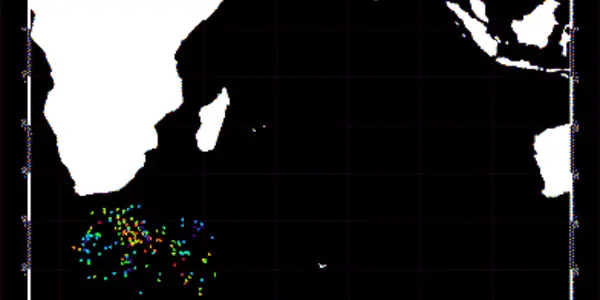
The origin and movement of waves reaching up to 11 metres that devastated France's Reunion Island in the Indian Ocean on Saturday evening have been detected with ESA's Envisat satellite.
The waves that thrashed the southern port of Saint Pierre, leaving two fishermen missing, causing several piers to collapse and flooding several homes and businesses, originated south of Cape Town, South Africa, and travelled northeast for nearly 4000 km over a period of three days before slamming into Reunion Island.
If you have Mom's smile, Dad's eyes and Grandpa's laugh, you might wonder what other traits you picked up from the genealogic fabric of the ol' family tree.
Scientists at the Texas A&M University System Agricultural Research and Extension at Lubbock are studying the family tree of cotton for much the same reason.
Mark Arnold, Experiment Station research associate, looks for thrips damage on young cotton plants. Identifying resistant and non-resistant cotton lines (top right) will help breeders develop varieties that can withstand thrips feeding damage to the first four true seedling leaves. Credit: Texas Cooperative Extension photos by Tim W. McAlavy
A new study says that Pycnogenol natural pine bark extract from the French maritime pine tree helps prevent damage that high blood pressure causes to the heart. The study demonstrates Pycnogenol counteracts the "wearing out" of the heart, which may aid the five million Americans living with heart failure.
Previous studies have shown Pycnogenol supplementation to be associated with improved cardiovascular health, such as cholesterol reduction, blood pressure control and prevention of thrombosis.
"Hope is being given to patients with malignant and ultimately fatal spinal tumors where hope was never before available," said Dr. Isabelle Germano, Professor of Neurosurgery and Co-Director of The Radiosurgery Program at The Mount Sinai Medical Center. "All it takes is one thirty-minute out-patient treatment of pinpointed radiation and the tumor shrinks along with the pain from the cancer. Now cancer spreading to the spine doesn't mean a lifetime of pain or a wheelchair for a patient anymore."
Implanting dopamine generators (dopaminergics) in brain cells has produced improvement in the symptoms in Parkinson's, according to the results of tests carried out with monkeys by the Navarra University Hospital, led by Dr María Rosario Luquin Piudo, neurologist at the Hospital and at the other Navarra University-based medical centre, CIMA (the Research Centre for Applied Medicine).
The results have been published in the latest issue of the British scientific journal specialising in Neurology, Brain, and have corroborated the conclusions of a previous study, published in 1999 by the same research team in the specialist journal, Neuron.
A challenging goal in biology is to understand how the principal cellular functions are integrated so that cells achieve viability and optimal fitness under a wide range of nutritional conditions. Scientists from the French research centers INRA and CNRS showed by genetic approaches that, in the model bacterium Bacillus subtilis, central carbon metabolism (which generates energy from nutrients) and replication (which synthesizes DNA), two key functions in the fields of nutrition and heredity, are tightly linked.
The discovered link involves the activity of a small region of the central carbon metabolism (the terminal reactions of a process called glycolysis that burns sugars) and several enzymes of the replication machinery that synthesizes DNA.
Despite hundreds of families being told their children have peanut allergies every year, many of the children may be able to eat peanuts safely, a study by researchers at the University of New South Wales (UNSW) and Sydney Children's Hospital has found.
Peanut allergies occur in one in 200 infants, according to the Australasian Society of Clinical Immunology and Allergy.
Clinical research conducted in the Department of Communication Disorders at the University of Haifa revealed that some children who are born deaf "recover" from their deafness and do not require surgical intervention.
To date, most babies who are born deaf are referred for a cochlear implant. "Many parents will say to me: 'My child hears; if I call him, he responds'. Nobody listens to them because diagnostic medical equipment did not register any hearing. It seems that these parents are smarter than our equipment," said Prof. Joseph Attias, a neurophysiologist and audiologist in the Department of Communication Disorders at the University of Haifa, who made the discovery.
Scientists from the University of Nebraska-Lincoln and the National Agricultural Research Organization in Uganda teamed up with local, eastern Ugandan farmers to evaluate the effectiveness of low-cost alternatives for soil treatment. By implementing alternative soil fertility management and a reduction in crop tillage, scientists hope to help small-scale farmers to increase crop outputs.