Brain Circuit Linked To Pregnancy Food Cravings Identified
Pregnant women have experienced exotic food cravings since recorded history began. This may be why.
Pregnant women have experienced exotic food cravings since recorded history began. This may be why.


Researchers at Texas A&M University are shedding light on a rare form of early blindness, identifying the cells involved and paving the way for possible therapies to treat or even prevent what is currently an incurable disease.
The findings, funded by Fight for Sight and the National Institutes of Health, are published in the March 5-9 online Early Edition (EE) of the Proceedings of the National Academy of Sciences.
Since his post-doctoral days at Harvard University, Texas A&M biologist Dr. Brian Perkins has been studying protein transport within photoreceptors—the rod and cone cells that allow organisms to detect their visual worlds—in zebrafish, a vertebrate whose eye physiology is essentially identical to that of a human.

For the very first time, astronomers have witnessed the speeding up of an asteroid's rotation, and have shown that it is due to a theoretical effect predicted but never seen before. The international team of scientists used an armada of telescopes to discover that the asteroid's rotation period currently decreases by 1 millisecond every year, as a consequence of the heating of the asteroid's surface by the Sun.
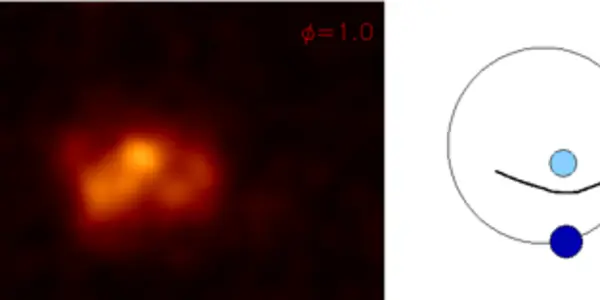
Imagine two stars with winds so powerful that they eject an Earth's worth of material roughly once every month. Next, imagine those two winds colliding head-on. Such titanic collisions produce multimillion-degree gas, which radiates brilliantly in X-rays. Astronomers have conclusively identified the X-rays from about two-dozen of these systems in our Milky Way. But they have never seen one outside our galaxy — until now.
Thanks to the European Space Agency's XMM-Newton X-ray observatory, with help from NASA's Chandra X-ray Observatory, an international team led by Dr Yaël Nazé of the Université de Liège in Belgium has found such a system in a nearby galaxy. This galaxy, the Small Magellanic Cloud, orbits the Milky Way and is located about 170 000 light-years from Earth.
Having a twin sister could put male saiga antelopes at a reproductive disadvantage, says new research published today. The study shows that male twins with a sister are born lighter than those with a brother, making them smaller than the optimal size for males. The research also shows that saigas are the supermums of the hoofed animal world with no other similar species investing more in their offspring during pregnancy.
The study's results call into question current understanding of the development of male and female foetuses of this species, and give scientists a new insight into the importance of sibling sex and what implications this may have for the animals as they mature.
David Houle touched on this in his Berkeley and Nanotechnology article and now lots of other people are wondering the same thing. Will it be regarded as hazardous materials or tools of big corporate evildoers or as benevolent forces for change in society?
"The U.S. public's perception of nanotechnology is up for grabs. It could divide along the lines of nuclear power, global warming and other contentious environmental issues absent a major public education and engagement effort by industry, government, civic groups and scientists.

Several hundred images taken with NASA's Hubble Space Telescope have been woven together into a rich tapestry of at least 50,000 galaxies. The Hubble view is yielding new clues about the universe's youth, from its "pre-teen" years to young adulthood.
The snowstorm of galaxies in the Hubble panorama does not appear evenly spread out. Some galaxies seem to be grouped together. Others are scattered through space. This uneven distribution of galaxies traces the concentration of dark matter, an invisible web-like structure stretching throughout space.
Solar energy has the power to reduce greenhouse gases and provide increased energy efficiency, says a scientist at the U.S. Department of Energy's Argonne National Laboratory, in a report (view it online) published in the March issue of Physics Today.
Last month, The Intergovernmental Panel on Climate Change (IPCC) of the United Nations released a report confirming global warming is upon us and attributing the growing threat to the man-made burning of fossil fuels.
A Georgia Tech researcher has discovered that for tasks involving spatial processing, preparing for the task and performing it are not two separate brain processes, but one – at least when there are a small number of actions to choose from.
Drinking a specially-made cocoa beverage daily may have the potential to reverse impairments in the functioning of blood vessels, according to a first-of-its-kind study published in the Journal of Cardiovascular Pharmacology. The cocoa used in the study was rich in flavanols, naturally-occurring compounds abundant in freshly harvested cocoa prior to their destruction during the typical processing and manufacture of cocoa and chocolate products.
These results suggest this flavanol-rich cocoa could have important implications for cardiovascular health since reduced endothelial function is recognized as an early stage in blood vessel diseases such as atherosclerosis.
Scientists have identified a molecular switch that causes the differentiation of neurons in the cerebellum, a part of the brain that helps to regulate motor functions.
A study published this week in the scientific journal PNAS provides new information on the origin of different cells in the cerebellum, an important component of the central nervous system found in all vertebrates, including humans, and the part of the brain that controls movement. The study was completed by researchers from the Institute for Research in Biomedicine (IRB Barcelona), the Department of Cell Biology of the University of Barcelona (UB), the IMIM-Hospital del Mar, Pompeu Fabra University (UPF) and Vanderbilt University (Nashville, Tennessee, USA). The main authors of the study are Dr.
Leafy greens and beans aren't the only foods that pack a punch of folate, the vitamin essential for a healthy start to pregnancy.
Researchers now have used genetic engineering--manipulating an organism's genes--to make tomatoes with a full day's worth of the nutrient in a single serving. The scientists published their results in this week's online edition of the journal PNAS, Proceedings of the National Academy of Sciences.
Researchers have been able to bioengineer tomatoes that pack 25 times the normal amount of folate (molecule shown in lower left). Credit: Zina Deretsky
Multiple sclerosis, diabetes, and arthritis are among a variety of autoimmune diseases that are aggravated when one type of white blood cell, called the immune regulatory cell, malfunctions. In humans, one cause of this malfunction is when a mutation in the FOXP3 gene disables the immune cells’ ability to function. In a new study published online this week in the Proceedings of the National Academy of Sciences, researchers at the University of Pennsylvania School of Medicine have discovered how to modify enzymes that act on the FOXP3 protein, in turn making the regulatory immune cells work better.