You Feel Colder As You Age: The Science Reason Why
Older people report feeling colder, enough that it is clearly happening, but why has been a mystery. Until now.
Older people report feeling colder, enough that it is clearly happening, but why has been a mystery. Until now.

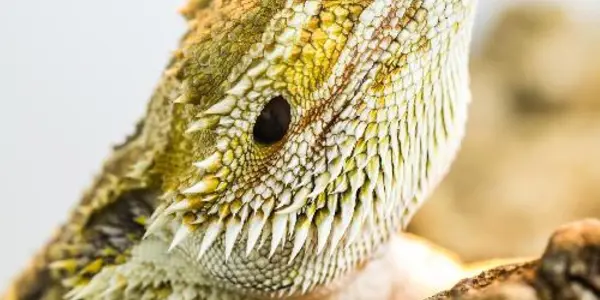
A new study reveals that the sleep patterns previously thought exclusive to mammals and birds - REM and slow-wave sleep patterns - are also found in reptiles. The results shake up our understanding of the evolution of sleep. Amniotes are a group of tetrapod vertebrates comprising reptiles, birds and mammals. Because slow-wave sleep (SWS) and rapid eye movement sleep (REMS) are thought to be exclusive to mammals and birds, it's believed that these sleep states evolved twice after mammals and birds diverged from reptiles. However, results by Mark Shein-Idelson et al. now reveal SWS and REM sleep patterns in the Australian bearded dragon, Pogona vitticeps, suggesting that the sleep states may have evolved in a common ancestor of all amniotes, more than 300 million years ago.

Metal on metal hip replacements implanted since 2006 are more prone to failure and the need for further surgery, finds research looking at revision rates at one hospital trust for the DePuy Pinnacle device, and published in the online journal BMJ Open.
A higher rate of manufacturing issues since 2006, with more than a third of hips manufactured outside the stated specifications, may be to blame, suggest the researchers.
They looked specifically at the long term performance of the 36 mm Pinnacle metal on metal hip--the most commonly implanted metal hip in the world--in a bid to uncover the risk factors associated with early failure and the need for further surgery.
Studying the way that solitary hunters such as tigers, bears or sea turtles chase down their prey turns out to be very useful in understanding the interaction between individual white blood cells and colonies of bacteria. Reporting their results in the Journal of Physics A: Mathematical and Theoretical, researchers in Europe have created a numerical model that explores this behaviour in more detail.
Using mathematical expressions, the group can examine the dynamics of a single predator hunting a herd of prey. The routine splits the hunter's motion into a diffusive part and a ballistic part, which represent the search for prey and then the direct chase that follows.
Researchers have found that long-term exposure to environmental pollutants was associated with increased risk of mortality for many types of cancer in an elderly Hong Kong population.
The study between the University of Birmingham and University of Hong Kong, published in Cancer Epidemiology, Biomarkers & Prevention, a journal of the American Association for Cancer Research, adds to growing concern around the health risks of prolonged exposure to ambient fine particulate matter.
How does the image-recognition technology in a self-driving car respond to a blurred shape suddenly appearing on the road? Researchers from KU Leuven, Belgium, have shown that machines can learn to respond to unfamiliar objects like human beings would.
Imagine heading home in your self-driving car. The rain is falling in torrents and visibility is poor. All of a sudden, a blurred shape appears on the road. What would you want the car to do? Should it hit the brakes, at the risk of causing the cars behind you to crash? Or should it just keep driving?
COLUMBUS, Ohio - Getting more nutritious meals on the tables of low-income Americans could depend on the hours the stores in their neighborhoods keep.
Stores likely to sell fresh produce aren't open as long in areas with more socioeconomic struggles, and that problem is more pronounced in neighborhoods where many African Americans live, new research from The Ohio State University has found.
In affluent neighborhoods, 24-7 access to a wide array of foods is far more common.
"Let's say you're stringing together a few jobs and you get off work at 10 and your market closes at 8. It's a big problem," said researcher Jill Clark, an assistant professor in Ohio State's John Glenn College of Public Affairs.
A research team led by an award-winning genomicist at Western University has developed a new method for identifying mutations and prioritizing variants in breast and ovarian cancer genes, which will not only reduce the number of possible variants for doctors to investigate, but also increase the number of patients that are properly diagnosed.
These potentially game-changing technologies, developed by Peter Rogan, PhD, students and his collaborators from Western's Schulich School of Medicine & Dentistry, reveal gene variants that were missed by conventional genetic testing.

Most people are aware of open-source computer programs. These free programs, accessible by anyone, spread technology to distant corners of the world. Cutting-edge innovations, however, come at a price. As a result, many software companies license their work.
These same concerns exist within the seed-development arena. Some plant researchers support the free exchange of new varieties of seeds and plants. Doing so, they argue, benefits both plant breeders and farmers. Considering seeds "intellectual property" may seem harmful to this free exchange of information.
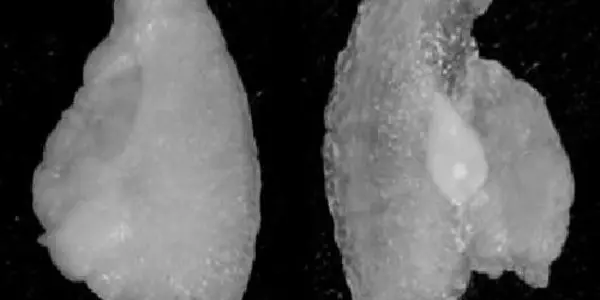
New research published today in the journal Scientific Reports has revealed for the first time that half of the world's farmed fish have hearing loss due to a deformity of the earbone.
Like humans, fish have ears which are essential for hearing and balance, so the findings are significant for the welfare of farmed fish as well as the survival of captive-bred fish released into the wild for conservation purposes.
The University of Melbourne-led study found that half of the world's most farmed marine fish, Atlantic salmon, have a deformity of the otolith or 'fish earbone', much like the inner ear of mammals. The deformity was found to be very uncommon in wild fish.
SAN ANTONIO (April 27, 2016) -- It's an unsettling thought: You could be walking around for 20 years developing Parkinson's disease and not even know it.
And once symptoms appear, it's too late for a cure.
What if a therapy that treats the root causes of Parkinson's, not just the symptoms, could be started earlier?
Scientists identify hundreds of infected cells at different points of initial entry
New technology lights up location of first cells to be infected
Discovery will enable scientists to develop more effective vaccine
'We see the chink in the armor of the virus' and can attack it early to stop it
CHICAGO --- Finding the vulnerable points where HIV enters the female reproductive tract is like searching for needles in a haystack. But Northwestern Medicine scientists have solved that challenge by creating a glowing map of the very first cells to be infected with a HIV-like virus.
What if a map of the brain could help us decode people's inner thoughts?
Scientists at the University of California, Berkeley, have taken a step in that direction by building a "semantic atlas" that shows in vivid colors and multiple dimensions how the human brain organizes language. The atlas identifies brain areas that respond to words that have similar meanings.
The findings, to be published April 28, 2016 in the journal Nature, are based on a brain imaging study that recorded neural activity while study volunteers listened to stories from the "Moth Radio Hour." They show that at least one-third of the brain's cerebral cortex, including areas dedicated to high-level cognition, is involved in language processing.